
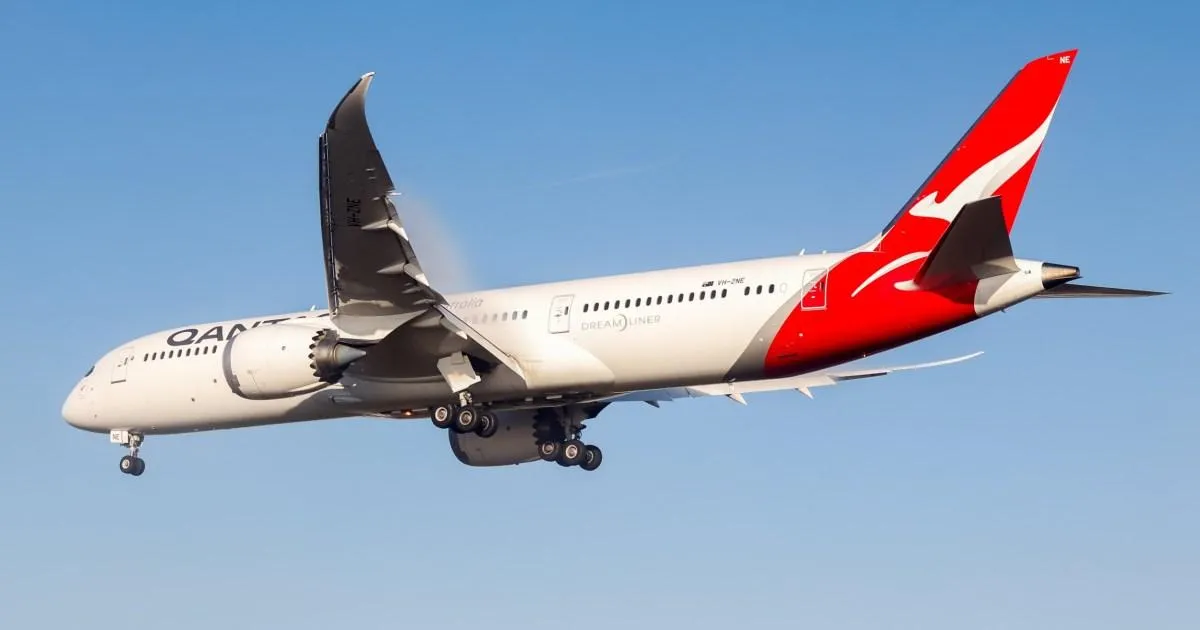
It was supposed to be a long but uneventful flight, the kind of marathon journey passengers endure with a neck pillow, a pair of noise-cancelling headphones and patient dreams of arrival. Qantas flight QF5 had left Perth on Friday, bound for Rome, with hundreds of travelers settling into a nearly seventeen-hour crossing between Australia and Italy. For some, this was a once-in-a-lifetime holiday; for others, a long-awaited reunion with family. The Boeing 787 Dreamliner cruised high above the Indian Ocean, cabins dimmed for sleep, when the first disturbing signs began to emerge. Passengers felt small, sharp bites. Itches turned into red welts. Someone spotted a telltale dark bug moving across a seat cushion, and the quiet hum of the cabin gave way to murmurs and alarm. Bedbugs had been discovered on board, and for the people trapped inside the pressurized tube, there was no escape. Crew members consulted medical advice and handed out antihistamines to those who had been bitten, but the supply reportedly ran out, leaving some passengers to spend the remaining hours with uncomfortable, angry marks and the creeping dread that they might be carrying the tiny invaders home. It is the stuff of every traveler’s nightmare: a seventeen-hour plane ride in which you become an unwilling blood donor to one of the most loathed insects on the planet. The flight continued to Rome, but the damage was done. What had begun as a journey of anticipation had turned into a story of infestation, and the airline would soon face the consequences of an enemy no one could see until it was too late. The physical bites were bad enough, but the psychological unease was worse; every itch for the rest of the trip would be remembered with a shudder.
The immediate crisis did not end when the plane touched down in Rome. The following day, Qantas pulled the Boeing 787 Dreamliner out of service, cancelling the return flight QF6 from Rome to Perth and leaving passengers at the airport to confront the sudden, frustrating reality of disrupted plans. The aircraft, nicknamed Kookaburra, had entered service almost seven years earlier and featured a spacious three-class layout: 42 business seats, 28 premium economy seats and 166 economy seats. On a route where round-trip tickets between Sydney and Rome typically sell for anywhere between £950 and £2,500, the cancellation was not just an inconvenience but a significant blow to travellers who had already endured nearly a full day in the sky. Qantas said passengers were booked into accommodation and offered alternative flights within 48 hours of the original departure time, which was a small mercy for those who simply wanted to get home. A spokesperson for the airline offered a sincere apology to customers for the cancellation of Saturday’s Rome-to-Perth service, explaining that engineers and maintenance teams had carried out a deep clean of the aircraft after an issue was identified on a small number of economy seats. The airline also insisted that its cabins undergo regular cleaning to an extremely high standard and are treated with disinfectant every 50 days as a precautionary measure. For the passengers who had just spent seventeen hours being bitten, these assurances may have felt too little, too late, but at least the response was serious enough to ground the plane. The image of the sleeping Dreamliner being dismantled by cleaners, with seats removed and seams inspected, became a quiet symbol of how vulnerable even the most advanced aviation technology can be to a creature smaller than an apple seed.
Bedbugs are not like mosquitoes or flies. They do not buzz, they do not fly, and they are not known to transmit dangerous diseases, yet they provoke a level of disgust and anxiety that far exceeds their size. Parasite experts say bedbugs usually travel onto airplanes inside luggage or latched onto clothing, meaning any passenger can unknowingly carry them aboard. Once they find a crack, a zipper or a fold of fabric, they wait until the cabin darkens and the passengers are asleep, then crawl out to feed. Their bites are not dangerous, but they can be intensely itchy and uncomfortable, and the emotional aftermath can be even worse. People who have been exposed often find themselves obsessively checking their beds, washing every piece of clothing in scalding water, and inspecting hotel rooms with a torch before daring to unpack. The fear of carrying bedbugs home is entirely rational, because if they slip into a house, getting rid of them is notoriously tricky and costly. Professional pest control in cities like London can cost hundreds or even thousands of pounds, and often requires multiple treatments to fully eradicate the infestation. A single pregnant female bedbug can start a colony that spreads from a bedroom to a living room, from a suitcase to a sofa, from one apartment to the next. That is why the discovery on QF5 was so deeply unsettling: the passengers were not just victims of a nasty bite, they were potential couriers of a problem that could outlive the flight itself. The journey did not end when they landed; for many, it was just the beginning of a frantic, anxious effort to ensure that nothing came home with them.
The Qantas incident was not an isolated horror. In the same period, bedbugs were discovered on trains in southern England, forcing services to be cancelled and earning at least one train between London and Kent the nickname “Bedbug Express.” Drivers reportedly refused to board affected carriages after the pests were found crawling on their belongings, and commuters began to look at every fabric seat with suspicion. London has already seen a surge in bedbug cases since 2025, with one borough reporting a 40% increase during the first half of 2026, and the fear has spread across public transport networks. This current wave of anxiety echoes the 2023 outbreak in Paris, where bedbugs were spotted in cinemas, on the Metro and in schools, sending a shockwave through Europe and prompting Eurostar and Transport for London to step up their cleaning protocols. What makes bedbugs so terrifying on public transport is not just the bites, but the sheer, uncontrollable mobility of the problem. A train carriage, like an airplane cabin, is a sealed space filled with strangers and soft surfaces; once one person unknowingly brings a bedbug on board, dozens of people can be affected in a single journey. There is no way to know who carried it, where it came from, or how far it will spread. The result is a creeping paranoia that turns a simple commute into an ordeal. Every tickle of fabric feels like an insect. Every small dark speck on a seat becomes a threat. The actual harm may be limited to itchy red marks, but the psychological shadow is enormous, especially for parents, elderly people and those who have lived through an infestation before. It is easy to dismiss bedbugs as a minor nuisance, but the Qantas flight and the Bedbug Express show that they can disrupt major international travel and bring entire services to a halt.
To understand why bedbugs cause such visceral disgust, it helps to know exactly what they are. Bedbugs belong to the family Cimicidae, primarily the genus Cimex, and they are small, reddish-brown parasitic insects, typically growing to about the size of an apple seed. They feed on blood from their victim, using a needle-sharp beak to pierce the skin. Once latched on, they insert two tubes: one delivers saliva with numbing properties so the victim does not notice the bite, and the other delivers an anticoagulant to keep the blood flowing. This stealthy design means that by the time a person feels the itch, the bedbug has usually already finished its meal and retreated into hiding. Bedbugs typically feed at night, every five to seven days, although they can survive up to seventy days without feeding, which makes them exceptionally tough to starve out. They hide in mattresses, bed frames, furniture, cracks in walls and behind baseboards, often in spaces too narrow for a credit card to fit. Their eggs are tiny, sticky and easy to miss, and female common bedbugs can lay up to ten eggs a day, and between 200 and 500 eggs in their lifetime. Some people have no reaction to their bites at all, which means an infestation can grow silently for weeks before anyone even notices. Others develop red, itchy marks that can become infected from scratching. The combination of stealth, rapid reproduction and their ability to hide in the tiniest of crevices makes bedbugs one of the most difficult pests to eliminate. A deep clean of an airplane is not just about vacuuming the carpets; it requires dismantling seats, treating fabrics with insecticide, searching seams, and repeating the process until every egg and nymph and adult has been destroyed. That is why Qantas chose to ground the Kookaburra rather than risk another flight, and why experts say swift, thorough action is the only effective response.
For the passengers on Qantas flight QF5, the immediate needs have been met: they were given antihistamines for their bites, accommodation and alternative flights were arranged, and the airline has apologised. But the emotional aftermath is harder to soothe. Bedbugs may not transmit disease, but they violate the basic sense of safety that travellers rely on when they step into an aircraft. They are a reminder that we share these sealed spaces with strangers, and that at any moment something tiny and silent can turn a routine journey into a scandal. Qantas has promised deep cleaning and expressed regret, and for many passengers that will be enough to restore confidence. But the larger lesson is that vigilance must be constant, from airline cleaners to travellers themselves. It is wise to inspect hotel mattresses before settling in, to keep luggage off the floor and away from soft furnishings, and to wash and dry clothes on high heat immediately after returning from a trip. It is also wise to remember that bedbugs are not a sign of moral failure or poor hygiene. They are simply survivors, and they have been travelling with humans for thousands of years. The best defense is awareness: knowing what to look for, what to do when you see it, and how to limit the spread. There is no vaccine or repellent that guarantees protection, but there is common sense. As the Qantas incident shows, no airline, railway or home is entirely immune. Yet with prompt action, honest communication and compassion for the people affected, public authorities and travel companies can respond in ways that put passengers first. For the unlucky travelers who spent seventeen hours with bedbugs, the memory will linger like an itch. But perhaps their ordeal will serve as a wake-up call for the rest of us, inspiring more robust cleaning standards and a more realistic understanding of the tiny creatures that occasionally share our journeys. The skies may be friendly, but they are not sterile, and a little extra care before boarding may save everyone a lot of trouble after landing.