
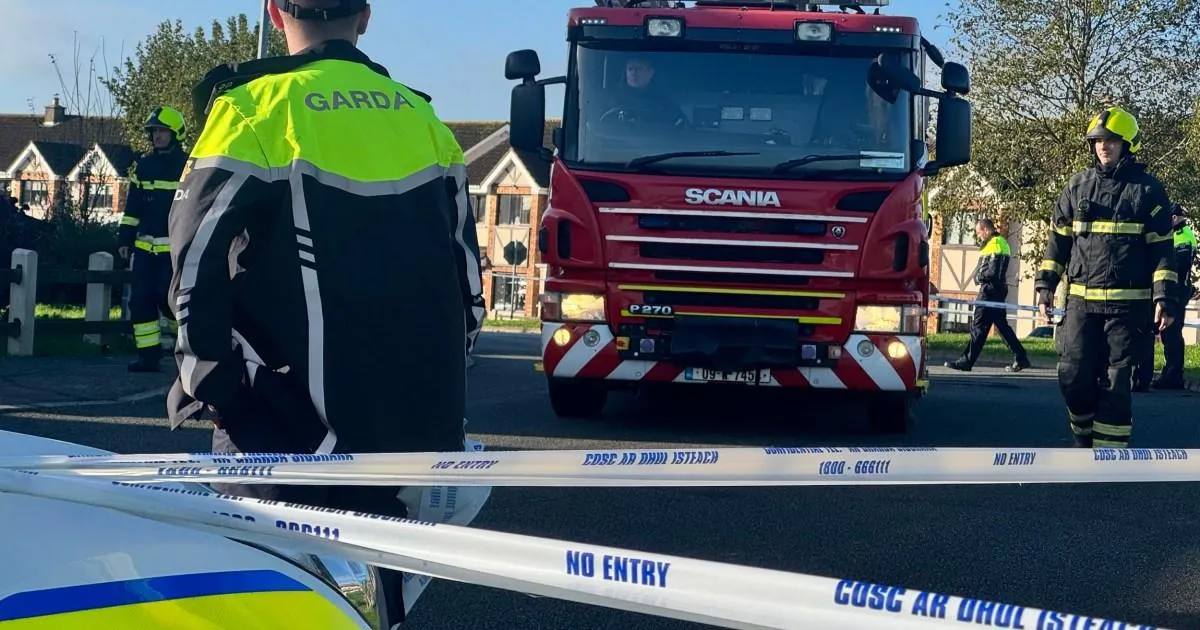
Around 5am on Tuesday, a fire tore through a family home in Birchwood Estate, Waterford, a residential area that had been sleeping in the quiet darkness of early morning. Within hours, the community was waking up to news that would leave it in a state of shock and grief. By the time the flames were brought under control, four people had lost their lives. The victims were later identified as Philip English and Kim English, a couple who lived at the property, along with two of their children. Two other children from the same household were seriously injured and are now recovering in hospital, carrying with them a burden that no child should ever have to bear. Gardaí, Ireland’s national police, have launched a murder investigation, and the fire is no longer being treated as a tragic accident. Reports strongly suggest that a petrol bomb may have been used, which means this was not simply a house fire but a deliberate and violent attack on a sleeping family. The image is almost impossible to process: a normal home, a familiar street, the safety of the night shattered within minutes. The first responders arrived at a scene that must have been terrifying, and their brave efforts were later praised by political leaders and local representatives. But even the quickest response could not undo the destruction that had already begun. As morning broke, neighbors emerged from their own houses to find emergency vehicles, Garda tape and a community in the process of being broken. It was the kind of tragedy that people usually read about in other places, never imagining it could happen so close to home. Yet here it was, in Birchwood Estate, in Waterford, and it had taken the lives of parents and children in one terrible moment.
Philip and Kim English were not just names in a news report. They were partners in life, parents to a young family, and familiar faces in an area described as well established and close-knit. They belonged to the rhythm of the community: school runs, trips to the shop, conversations over the hedge, birthdays and ordinary evenings at home. Their children went to local primary schools, where they had friends and teachers who will now be devastated by their loss. Father Gerard Chestnutt, parish priest of the Sacred Heart Church at The Folly in Waterford, said he knew the family very well, and his words revealed how deeply these deaths have cut through the heart of the community. He described people as absolutely heartbroken, with many standing out on the streets unable to process what had happened. The two surviving children are now faced with an unimaginable reality. They have lost both parents and two siblings in a single attack. They are physically injured, but their emotional wounds may take a lifetime to heal. They will need the love of extended family, the care of professional counselors, the patience of their future teachers and the support of a community that has already shown it is willing to stand with them. In the days to come, there will be hospital visits, funeral arrangements, quiet rooms and hard conversations. There will be moments when the weight of the loss feels too heavy for anyone to carry. But the community’s response suggests that these children will not have to carry it alone. That matters more than can be expressed in a single word. The family was part of the fabric of Birchwood Estate, and because the community is tight-knit, the grief is shared. It is a grief that goes beyond one house. It reaches into classrooms, into churches, into the streets and into the hearts of everyone who knew or ever encountered the family.
In the immediate aftermath, Ireland’s leaders responded with horror and determination. Taoiseach Micheal Martin called the situation deeply disturbing, and those words were not idle. He offered thoughts and prayers to anyone who had lost their lives and to all who had been affected, an acknowledgment that the reach of this tragedy stretches far beyond the immediate household. He also thanked the first responders and asked everyone to give them space to carry out their difficult work. That request highlights a truth often overlooked in such moments: the emergency services are not just extinguishing flames and treating injuries. They are also protecting evidence, preserving dignity and trying to make sense of a crime scene that includes the bodies of children. The Gardaí have officially opened a murder investigation, confirming that the fire was started in an arson attack. The suspected use of a petrol bomb makes the incident even more sinister. It suggests planning and intent, or at the very least a reckless disregard for human life that is almost impossible for most people to understand. How could anyone carry out such an act against a home where a family was sleeping? That question will hang over Waterford for a long time. The investigation will now seek to identify those responsible, understand the motive and bring some measure of justice to the victims. No legal outcome can undo the loss, but the state’s response makes clear that this will not be treated lightly. It is a national scandal, an act of violence that has shaken the very idea of safety in the home. The Taoiseach’s words, though necessarily formal, reflect a sincere and profound sense of grief on behalf of the entire country.
Minister of State John Cummins captured the mood of Waterford when he said the city had been plunged into utter devastation and sadness. He extended his deepest sympathies, not only to the loved ones of those who died, but also to their friends, neighbors and the wider community. He used the word horrific to describe the scene attended by emergency services, and that word is deserved. Few things are more harrowing for a firefighter or paramedic than arriving at a home to discover children among the dead. They carry those moments with them forever. Cummins’ tribute to the emergency services is important because it acknowledges the toll this event takes on the people who must run toward danger while everyone else runs away. Their presence on the scene in the early hours of Tuesday morning was a blur of courage and professionalism, and the community owes them a debt that cannot be fully repaid. The human cost of this tragedy is not limited to those who died or to the children who were injured. It includes the survivors, the witnesses, the first responders, the school staff, the classmates, the neighbors and everyone who will now live with the memory of this day. Father Gerard Chestnutt described it as a day of immense sadness, and his remarks painted a vivid picture of a community in mourning. He spoke of the primary schools, saying staff and students were absolutely heartbroken. Children who went to school on Tuesday morning expecting lessons and laughter found instead that the world had become a more frightening and incomprehensible place. They will need adults to help them make sense of something that often makes no sense even to adults. The priest himself said there were no words to grasp what had happened. That honesty is powerful. It admits that grief has a limit beyond which language cannot go. But it is also true that silence, shared in the presence of others, can be a form of comfort. The people of Birchwood Estate are not looking for answers yet. They are looking for each other.
For a community, the aftermath of such violence is a long and difficult road. The Birchwood Estate is described as a well-established, tight-knit neighborhood, and those qualities are now being tested in the most painful way possible. The family at the center of this tragedy was well known, and their loss has created an emptiness that will be felt for years. There is comfort in knowing that no one has to grieve alone. Neighbors will bring food, offer shelter, sit in silence and share tears. There will be gatherings at the church, moments of prayer, and the quiet touch of a hand on a shoulder. But there is also pain in the reminders. Every time someone walks past the house, every time a child asks about a friend who is no longer there, every time an ordinary routine is interrupted by the memory of what happened, the wound will reopen. The suspected use of a petrol bomb adds another layer of fear to this tragedy. A home is supposed to be a sanctuary. The idea that someone would deliberately set fire to a house in the middle of the night is terrifying. It makes people question their own safety and wonder whether the violence could have been prevented. It also makes the investigation more urgent. The community needs to know that those responsible will be found and held accountable. But even before that happens, the people of Birchwood Estate are doing what communities have always done in moments of crisis. They are gathering. They are sharing their heartbreak. They are refusing to let grief isolate them. Father Chestnutt noted that many people were out on the street, heartbroken, and that image speaks to the true character of the area. Instead of hiding behind closed doors, people came out to face the tragedy together. They stood in the daylight, looking at the remains of a home, trying to understand how something so senseless could have happened. There are no easy answers. There may never be. But the act of standing together is itself a statement. It says that love and compassion will not be extinguished by violence.
As the investigation continues, the questions will only grow. Who started the fire? Why was the family targeted? Was this an act of personal revenge, a mistake, or a random act of cruelty? The Gardaí will work to answer those questions, but no answer will bring back four lives. The names of Philip and Kim English will be remembered, as will their children. The two surviving children face a future that is radically different from the one they knew just days ago. They must recover from their injuries and one day come to terms with the fact that their parents and siblings are gone. They will need extraordinary patience, love and support. The community around them will have to rise to that challenge, and there is reason to believe it will. In the midst of the darkness, people have already shown kindness. They have spoken up, offered help and shared their grief. The first responders, the teachers, the priests and the neighbors have all demonstrated that even in the face of terrible evil, there is still goodness. A house can be destroyed by fire, but a community cannot be destroyed by fear. It can be wounded, deeply and permanently, but it can also heal. The road ahead will be long. There will be funerals, memorials, anniversaries and quiet moments of remembrance. The English family will never be forgotten. And in the years to come, the hope is that the surviving children will find a way to live with the loss, surrounded by people who care about them. Grief is not a problem to be solved. It is a burden to be carried. The people of Waterford have shown that they are willing to help carry it. In that way, the memory of this tragedy will not only be one of pain, but also of the way a community refused to surrender to despair. Justice, when it comes, will be important. But love, compassion and remembrance may be the truest response to an act that was meant to destroy. The English family’s lives mattered, and their story will remain in the hearts of everyone who was touched by it.