

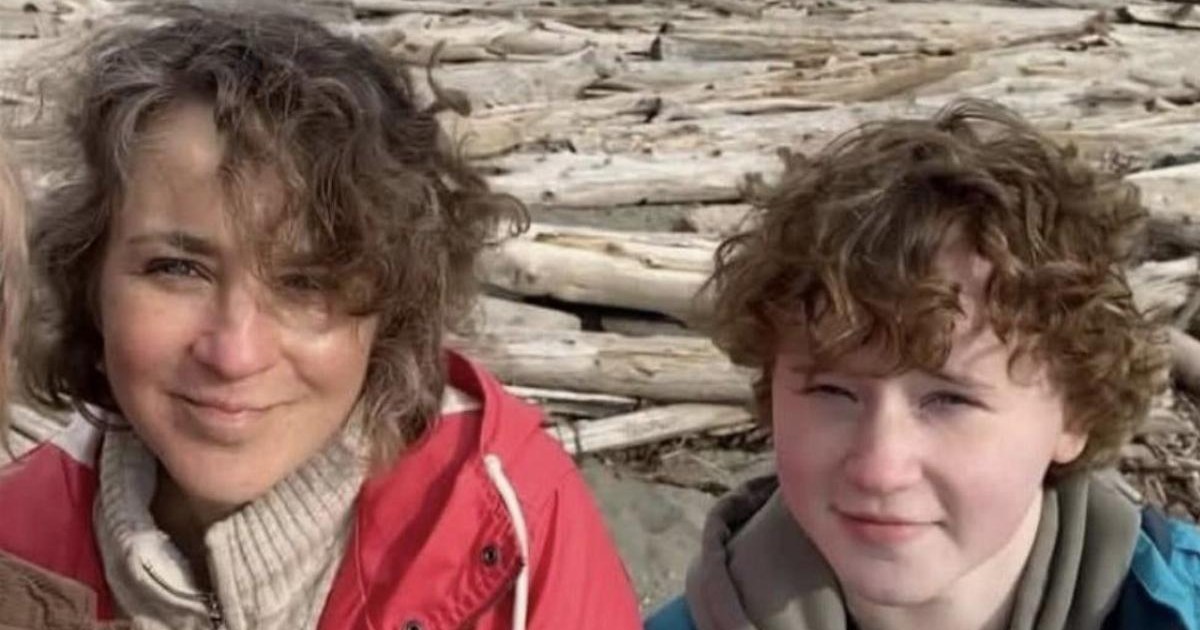
A Walk That Ended in Tragedy: Remembering Jennifer and Selah
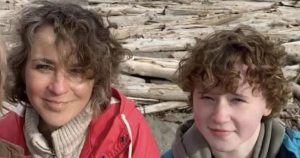
In the quiet, misty valleys of British Columbia’s remote Bella Coola region, a community and a family are grappling with an unfathomable loss that has shattered their world. Jennifer Balcarras, just 48 years old, and her youngest daughter Selah Reed, a bright and gentle 20-year-old, were found dead along the Snooka West walking trail after what authorities believe was a grizzly bear attack. The discovery came in two agonizing stages: Jennifer’s body was found on Monday, evidence at the scene suggesting an animal was responsible, while Selah was located the following afternoon after an exhaustive search involving Royal Canadian Mounted Police and conservation officers. The mother and daughter had been reported missing by family members on Sunday when they failed to appear for an online gathering planned for Saturday night, a small detail that triggers the kind of quiet alarm that begins with concern and slowly curdles into dread. When Jennifer’s car was found parked at a nearby trailhead, the search began in earnest, but the outcome was the one every family fears most. That trail, so familiar to them, was meant to be just a casual walk, not a final journey.
Jennifer Balcarras was a woman in the middle of rewriting her own story, having moved to Bella Coola earlier that year to chase a new chapter in her professional life. An art therapist by training, she was a mother of four and a grandmother, a woman whose identity was woven deeply into the fabric of her family. Her move to the remote coastal community, an area informally known as the Great Bear Rainforest for its stunning but untamed wilderness, represented a leap of faith, a decision to build a future on her own terms. Yet, as her family would later reflect, she had not yet had time to establish savings or prepare for unexpected expenses, a cruel reminder that life’s plans are often interrupted by circumstances no one could have anticipated. Those who loved her described a woman who was devoted, creative and present, someone who had poured her life into raising her children and finding her own path later in life. Her brother Josh would remember her simply as “Jenny,” a sister whose presence made the world feel a little softer, and whose sudden absence leaves a space that cannot possibly be filled.
Selah Reed, at just 20 years old, was a soul still unfolding, described by her family as “a gentle, sweet, quiet soul.” She had been working as an educational assistant, a role that speaks to her patience and care for others, while also pursuing an online education programme at Athabasca University. Her bond with her mother was something special, the kind of relationship that exists between a mother and a child who are not just family but genuine friends. As Josh Balcarras described it, “They were two peas in a pod. When Jenny hiked, Selah was right there.” They lived just five minutes from the trail where they would ultimately lose their lives, a trail they knew intimately, one they likely walked often without a second thought. Selah shared her mother’s interests, loved the same things, and found in Jennifer not just a parent but a kindred spirit. The image that emerges is of a young woman at the threshold of adulthood, still closely tied to her mother, exploring the world side by side, neither of them knowing that their final walk together would end in the worst possible way.
The grief that has enveloped the Balcarras family is raw and still finding its shape. Josh Balcarras described the surreal quality of the loss, telling CBC that “It’s surreal. It doesn’t seem real. It feels like a dream.” He walked through the agonizing progression of those first hours and days: a few hours of silence turning into a day, then a night, then a second night, when the vague worry hardens into a terrifying certainty. “It becomes a real thing,” he said, his words capturing the slow-creeping horror that any family would feel in such circumstances. The family’s anguish is compounded by the sheer randomness of the tragedy, the fact that two women doing something as ordinary as going for a walk could be taken so violently. A GoFundMe campaign was established to help with funeral expenses, and its language speaks to the sudden financial burden that accompanies sudden loss: Jennifer was “working toward building a future” and had not yet had the opportunity to establish savings. “Tragically, no one could have anticipated that her family would be faced with such an unimaginable loss.” These are the words of people trying to make sense of senselessness, reaching out to community and strangers alike for support in a moment when the weight of everything feels unbearable.
Meanwhile, in Bella Coola, the investigation continues. British Columbia Conservation Officer Services spokesperson Inspector Jeff Tyre expressed condolences but also delivered a sobering message: the bear responsible has not yet been captured. Trapping efforts are underway, with conservation officers working to determine whether any bears caught are the ones responsible for the fatal attack. If they are, the animal will be dispatched to ensure public safety, following the provincial human-wildlife conflict response guidelines. In the meantime, locals have been urged to avoid the area while the investigation proceeds. This part of British Columbia is wild country, the kind of place where grizzly bears are not merely a possibility but a known presence, their populations sustained by the remote landscape and abundant food resources. Yet attacks on humans remain comparatively rare here, which makes the tragedy all the more shocking. Last year, however, the region saw a harrowing incident when a grizzly attacked a school party on a walking trail, injuring 11 people, some of them children as young as nine. That event was a stark reminder of the unpredictable nature of these powerful animals, a warning that even familiar places can turn dangerous in an instant.
The deaths of Jennifer and Selah fit into a broader, troubling pattern of recent bear encounters across the world, a phenomenon that wildlife officials attribute to environmental pressures pushing animals into closer contact with humans. In Russia, a 15-year-old boy survived a bear attack when his smartphone exploded in the creature’s face during an attack at his family’s beehives in the Altai region. In September, a woman in her sixties was mauled to death by a brown bear outside her home in Russia’s Krasnoyarsk region, found just 50 feet from her house. Earlier, in Colorado, an 80-year-old woman was attacked by a bear that broke into her home through an open window while she slept, and in California, a couple’s beloved bulldog Cassie died after bravely defending them from a bear. Officials in Colorado have pointed to drought conditions that have depleted natural food sources, forcing bears into hyperphagia, that intense late-summer and autumn feeding frenzy when they can spend up to 20 hours a day searching for calories to survive winter hibernation. With berries, nuts and plants scarce due to wildfires and low snowpack, bears take greater risks. But statistics offer little comfort to a family left to bury two beloved women, victims of a wild world that respects no boundaries and offers no apologies. The trail in Bella Coola, once a place of quiet walks and mother-daughter conversations, now bears a memory that no one who knew them will ever forget.