

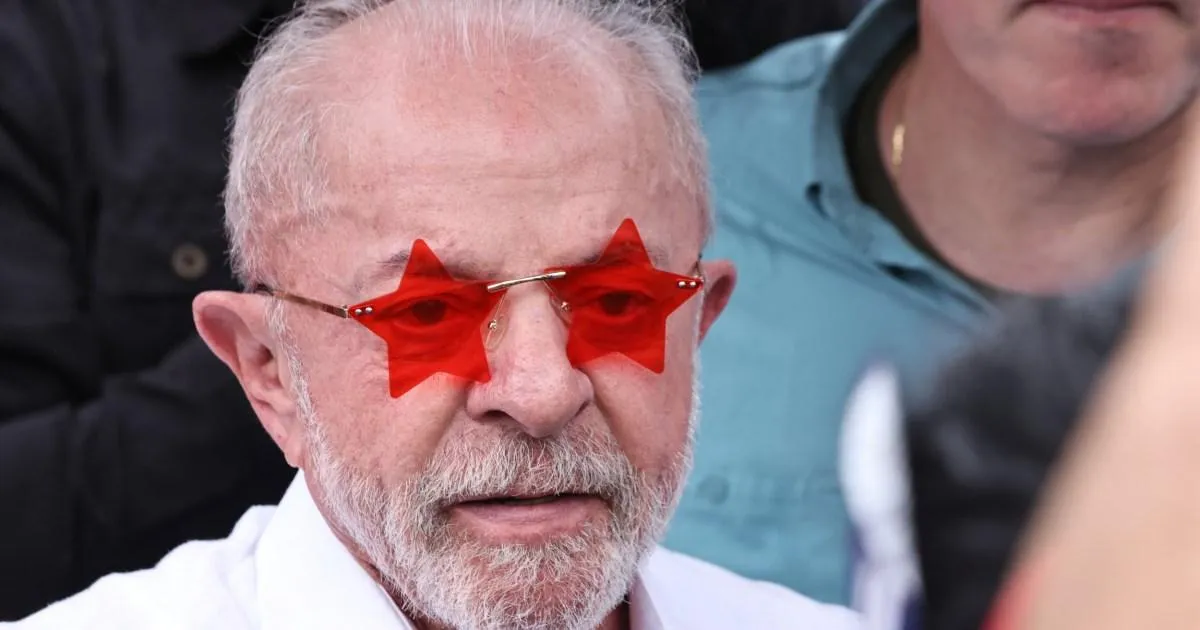
I have to be honest with you: I never expected an election in South America to mean much to someone like me, living in a small flat in West London. I have my own battles: the rent, the tube delays, the endless noise of a city that never really sleeps. Brazil was a distant world of carnival, football, rainforests and headlines that always felt like someone else’s problem. But when the news broke that Luiz Inácio Lula da Silva had won a historic fourth term as Brazilian president, I felt something shift in my chest. He had defeated the far-right Bolsonaro, the whole machinery of cruelty and denial that had turned the Amazon into a sacrificial offering and turned human suffering into a joke. The vote wasn’t easy. On October 4, in the first round, Bolsonaro edged ahead, and I felt the familiar weight of disappointment pressing down on my shoulders. It seemed like yet another chapter in the same old story: the bullies always win. But Lula’s supporters didn’t accept that story. They came out in enormous numbers, staging two massive protests in solidarity, filling the streets with red flags and songs and the stubborn belief that something better was possible. The runoff happened yesterday, and the tables turned. Lula secured his victory. I know I’m not Brazilian. I don’t have a personal stake in the politics of Brasília. But I found myself grinning, then laughing, then wiping my eyes like a fool, because in a world that so often feels like an endless cycle of bad news, this was a moment of pure, unvarnished hope. It restored the faith I desperately needed in humanity. It reminded me that ordinary people, when they come together, can still win. When I went to bed that night, I kept thinking about all the people who had chosen hope over fear. I thought about the teachers, the nurses, the students, the grandmothers who had taken to the streets. I thought about what it means to believe in a future even when the present is unbearable. I haven’t been able to shake that feeling since.
And then, within the same news cycle, there was Serbia. Aleksandar Vučić, the long-serving authoritarian leader, had seemed untouchable. He had bent the state to his will, crushed dissent, and made a career out of pretending that his iron grip was actually popular. But something extraordinary happened: a student-led opposition movement rose up and refused to accept his rule. These were not professional politicians or established parties. They were young people, students, kids with backpacks and notebooks, who decided that their future was too precious to be handed to a man who treated power as a birthright. They organised, they marched, they filled the squares with whistles and banners and chants, and they did not stop until Vučić was defeated. I remember being young and idealistic, believing that the world could be radically improved. Life has a way of sanding down those edges, turning hope into cynicism. But watching those students, I felt a part of myself return. This victory, combined with Lula’s, felt like more than a coincidence. It felt like a turning point. For years, the far-right has tried to convince us that they are the natural order of things, that globalisation and migration and changing values are unstoppable forces that can only be answered with walls and cruelty. But here are two countries, on two different continents, telling a different story. The world is rejecting the strongman archetype. It is rejecting the politics of hatred. And it is doing so with the most powerful tool that ordinary people have: the refusal to be silenced. I don’t want to overstate it—nothing is permanent in politics. But for one glorious moment, the future felt open again. If you had told me a year ago that Lula would be back and Vučić would be gone, I would have said you were dreaming. But dreams can be contagious. That’s exactly what authoritarians are afraid of.
Now let’s bring it home, because as much as I celebrate what happened in Brazil and Serbia, I can’t stop thinking about what it means for the United Kingdom. I want to see us follow suit. I want to see this country fight back against the far-right and realise that not only can elections be won from the left, they should be. I need Andy Burnham to pay attention to what is happening around the world. When Keir Starmer was out and Burnham took over as leader of the Labour Party, I felt a glimmer of hope return to my dejected soul. Here was a man with genuine working-class roots, a man who had proudly declared himself a socialist, a man who seemed to understand that the Labour Party had become too cautious, too managerial, too afraid of its own principles. I thought maybe we would finally get a leader who could inspire people the way Lula inspires Brazilians. But hope needs to be fed. It needs action, courage and a vision that reaches beyond the next news cycle. Burnham hasn’t yet done enough to reckon with the hard right in Britain. Nigel Farage should be watching his back, because his global bedfellows have taken a hell of a beating, but I don’t think he’s panicking yet. Reform and Restore may be polling badly, but the far-right doesn’t need to win elections to shape the culture. Tommy Robinson is still a force to be reckoned with. Protests against small boats are still filling our streets and docks with anger. We are being told that the only answer to desperation is cruelty. Burnham needs to offer a different answer. He needs to be the reason people start believing in politics again. He needs to create the hope that those young people in Serbia and Brazil are feeling. And he needs to do it soon, because the despair we are all carrying is a fuel that the far-right knows exactly how to burn.
At the moment, the United Kingdom has become an increasingly difficult place for most people to live in. I’m not saying this because I want to sound dramatic. I’m saying it because the evidence is all around us. Around 21 percent of the UK population—roughly 14.2 million people—live in relative poverty. That’s not an abstract number. Those are our neighbours, our classmates, our children. They are going without meals, without heating, without the chance to live with dignity. At the same time, anti-migrant hatred has increased across the country, and desperate human beings are being turned into political weapons. Environmental issues are being swept under the rug because the people in power are more concerned about their donors than about the planet they are going to leave behind. And what are we told? We are told to blame each other. We are told to fear the people in small boats, to resent the refugees, to point fingers at Muslims, at foreigners, at anyone who looks different. But the real issue in the UK is not small boats, Muslims or refugees. It’s the hoarding of wealth by a tiny class of billionaires and corporations who have captured our politics and our media. It’s the inequity in our institutions that lets the rich get richer while the rest of us struggle to survive. It’s the old Thatcherite strategy of divide and rule, which was designed to get us to fight each other instead of turning our anger on the handful of people who are actually making life difficult for everyone. We need leaders who care about us more than they care about the money they can raise by promising to slash rescue workers’ boats in the Channel. We need leaders who understand that a society is judged by how it treats its most vulnerable. We have had enough of performative toughness. We need genuine compassion, organised and enacted through policy. That is not weakness. It is the only thing that will save us.
Even the United States, which has felt like ground zero of the far-right resurgence, is beginning to turn. After two terms of Donald Trump, his approval ratings have finally fallen, and Americans appear ready to give him a serious bloody nose at the upcoming midterms. You can see the shift in the growing popularity of democratic socialists like Zohran Mamdani, who speaks about housing, healthcare and dignity with the clarity of someone who actually believes in them. You can see it in Abdul El-Sayed, whose very presence on the national stage is a living, breathing repudiation of Trump’s anti-Muslim bigotry. For too long, the United States has been a magnet for hatred and xenophobia, a place where belief systems that have no place in civilised society were given a megaphone and a presidential seal. But the tide is turning. Brazil’s left-wing victory is a blow to the United States’ ambition to dominate South America, and it may well stop a domino effect of authoritarian governments taking more global control. The world is finally rejecting what people like Trump and Farage have to offer. They should be scared. They should be looking over their shoulders, because the political energy that carried them to power can just as easily carry them out of it. In Brazil, in Serbia, in the streets of American cities, people are remembering that they have a voice. That memory is dangerous to authoritarians. It is also the most beautiful thing in the world. I want that memory to reach the United Kingdom. I want us to be part of this global awakening. We don’t have to wait for permission to demand better. We just have to decide that we deserve better.
Of course, I am not naive enough to think that every left-wing candidate is flawless. Even the far-left has its issues, and we have watched those issues play out endlessly in the media, with every flawed socialist presented as proof that progressive politics is doomed. But I would rather have a socialist who has worked to save the Amazon rainforest than an orange man who responds to the loyalty of his biggest showbiz fan, Nicki Minaj, by calling her a “great ass.” I would rather have a politician who makes mistakes because they are actually trying to improve the world than a politician who never makes mistakes because they are too busy protecting their own wealth and status. We have spent too many years electing people who know the price of everything and the value of nothing. We have watched them cut taxes for billionaires while telling the rest of us to tighten our belts. We have watched them turn migration into a moral panic while the financial system that hoards their money creates more suffering than any border could ever contain. I want to see more people in power who care about saving the world than about how much they can enrich themselves. And I believe that is possible, because with more student protests happening around the world, we are finally seeing a generation that refuses to inherit a burning planet and a broken society. Maybe Serbia and Brazil are just the beginning. Maybe the United Kingdom will open its eyes, and Andy Burnham will do the right thing. But if change doesn’t come from within the corridors of power, then it will be brought about by those of us on the streets. That is not a threat. It is a promise born of love and desperation. We have watched too many people suffer while nothing changes. We have waited too long for permission to imagine a better country. So we will imagine it ourselves, and then we will build it ourselves. Because if this week has taught me anything, it’s that hope can be resurrected. It can be mobilised. It can win.