


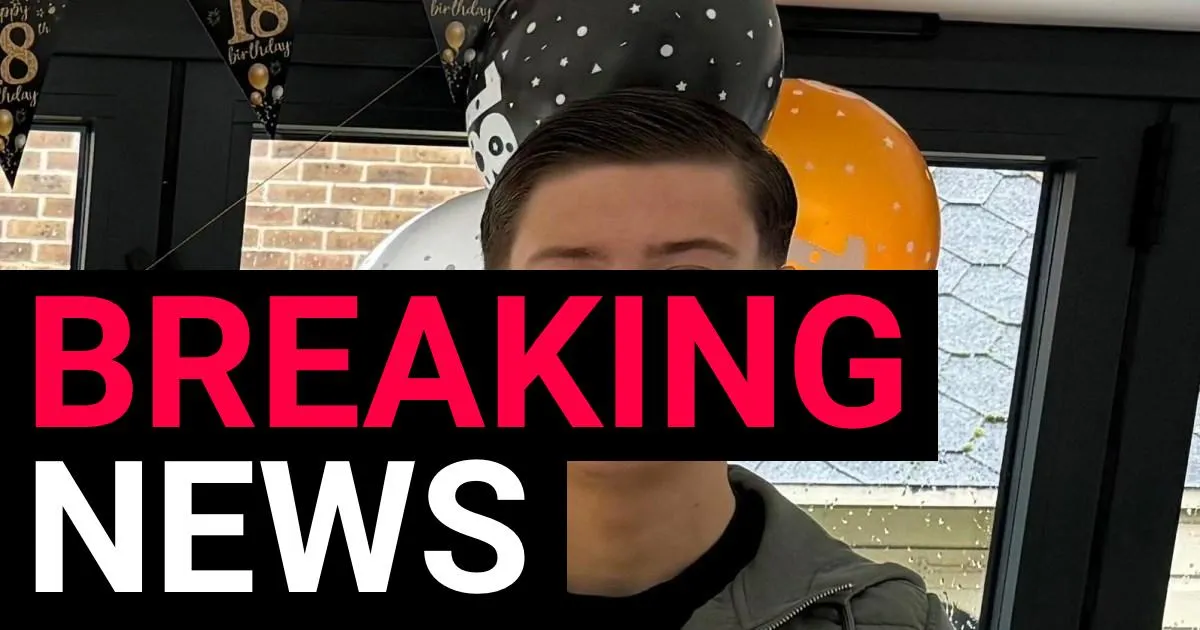
Henry Nowak was just eighteen years old, a young man with his whole life ahead of him, when he was brutally murdered on the streets of Southampton in December 2025. He was a student, somebody’s son, somebody’s friend—not a statistic, not a headline, but a human being whose final moments were marked by cruelty, confusion, and an unforgivable failure of care. Vickrum Digwa, then twenty-three, stabbed Henry five times with a 21-centimetre blade, a weapon he later claimed he carried for Sikh religious reasons. One of those wounds, an 8-centimetre stab to the chest, was fatal. As Henry lay bleeding out in a pool of his own blood, he told the police officers who arrived that he had been stabbed. Instead of immediately helping him, one officer reportedly dismissed him with the devastating words: “I don’t think you have, mate.” Even worse, Henry was arrested and handcuffed in his dying minutes. The reason for this grotesque misjudgement was Digwa’s “wicked lie”: he falsely claimed that Henry had racially abused him, called him a vile slur, and knocked off his turban. That fabrication transformed a victim into a suspect and left Henry to die alone, humiliated, and restrained, in the most degrading circumstances imaginable.
The murder conviction in May brought a narrow measure of justice for the attack itself. Digwa was sentenced to life in prison, and the court was explicit in rejecting his racial defence. Prosecutor Nicholas Lobbenberg told the jury that Henry had been killed because of Digwa’s “wicked lie,” and Judge William Mousley was even more direct: “I am sure that Henry said nothing racist. You are the only person to make that claim and it is completely at odds with his previous character.” Yet for Henry’s family, the pain did not end with the verdict. They had to sit through a trial in which their son’s character was attacked, and then watch as other institutions failed them. Digwa’s mother, Kiran Kaur, was later convicted of assisting an offender after removing the knife her son used, and she was sentenced to three years in prison. Outside court, Henry’s father, Mark Nowak, expressed the family’s grief and fury, but he also did something important: he refused to let the police off the hook. He said that although his family held Digwa wholly responsible for the murder, Henry should never have died on the streets of Southampton in police custody. The case sparked national outrage, and after more than a dozen people were arrested following an anti-police protest that erupted into violence, it became clear that this was not just a family tragedy but a moment of national reckoning.
Now, at last, there is an official acknowledgment that something went profoundly wrong. Home Secretary Shabana Mahmood has announced an independent review into Henry’s death, telling MPs in the House of Commons that the full truth must be uncovered. The review will be led by Alex Chalk, the former Conservative justice secretary who lost his seat in the 2024 general election. Crucially, the review will investigate what was known about Vickrum Digwa before the murder, including any missed opportunities to intervene, and it will also examine how the Nowak family were treated by the criminal justice system in the aftermath of their son’s death. The review may also look into the actions of police once the ongoing investigation by the Independent Office for Police Conduct comes to an end. Mahmood said an initial report would be submitted to her within five months. Her words carried a solemn weight: “We must get to the truth of what happened before, during and after that awful night, and we must do everything in our power to ensure no family suffers the same fate. We owe that to Henry and to all who loved him. They deserve answers, and this review will provide them.” For the first time, there is a clear promise that the state will not simply move on.
The importance of this review cannot be overstated, because the questions it must answer go far beyond one terrible night. How could a dying teenager be handcuffed by police who were supposed to protect him? Why did officers dismiss his plea for help? How did Digwa’s false accusation of a racist attack carry so much weight that it overrode basic common sense and humanity? What did the authorities know about Digwa before he killed, and could his violent act have been prevented? These are not abstract policy questions; they are gateways to accountability. Conservative leader Kemi Badenoch welcomed the review, saying, “When a child dies, a family is changed forever. They should not then have to spend their lives fighting to establish what went wrong and who was responsible. That is why I called for this review. There must be proper accountability for those who failed Henry and his family.” Her words reflect a rare cross-party recognition that this is a fundamental issue of justice. The review must not be a box-ticking exercise. It must examine whether police training, emergency response protocols, or institutional prejudices contributed to Henry’s death. It must also consider how the criminal justice system treats the families of victims—whether they are treated with dignity or treated as adversaries.
For Henry’s family, no review will ever bring him back, and no report will erase the horror of his final minutes. His father’s words, spoken outside court, are still the most powerful summary of what happened: “Henry did not die with dignity. He did not die with the care he deserved. We hold Vickrum Digwa solely and 100% responsible for the brutal murder of our son. But Henry should not have died on the streets of Southampton in police custody. The way he was treated was inhumane and degrading.” Imagine the helplessness of a parent who learns that when their child said “I’ve been stabbed,” the people who could have helped him decided not to believe him. Imagine the added trauma of knowing that your son’s last moments were spent confused, restrained, and surrounded by people who saw him as a perpetrator rather than a victim. That is the reality Henry’s family has to live with. They have shown enormous courage in speaking publicly, not just to demand justice for Henry, but to try to ensure that no other family suffers the same fate. Their grief is raw, and their trust in institutions has been severely damaged. The review is a chance to begin healing that wound, but only if it is genuine, transparent, and honest.
The road ahead will not be easy, and the review’s credibility will depend on its willingness to expose uncomfortable truths. It must investigate not only the actions of individual officers but also the systems that allowed those actions to happen. It must ask whether a false allegation of a hate crime can be allowed to justify neglecting a dying victim, and whether racial sensitivity, however good-intentioned, can be weaponized to distort the truth. It must give Henry’s family a central place, ensuring they are kept informed and treated with the respect they were denied on that December night. It must publish its findings in full, and the government must be prepared to implement meaningful changes, from police training to emergency medical response to victim support. Shabana Mahmood said that we must do everything in our power to ensure no family suffers the same fate, and those words must be more than rhetoric. Henry Nowak was an innocent young man whose life was taken in an act of horrifying violence, and then his dignity was taken too. The least society can do now is honor his memory by getting to the truth, holding every person and institution responsible to account, and making sure that the phrase “I don’t think you have, mate” is never again spoken to a dying person. Henry may be gone, but his story has the power to change things. The review must ensure that it does.