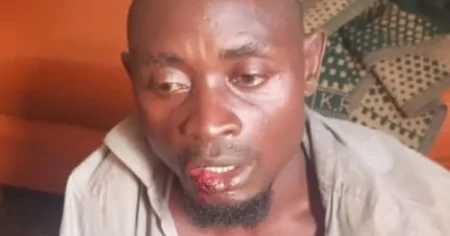



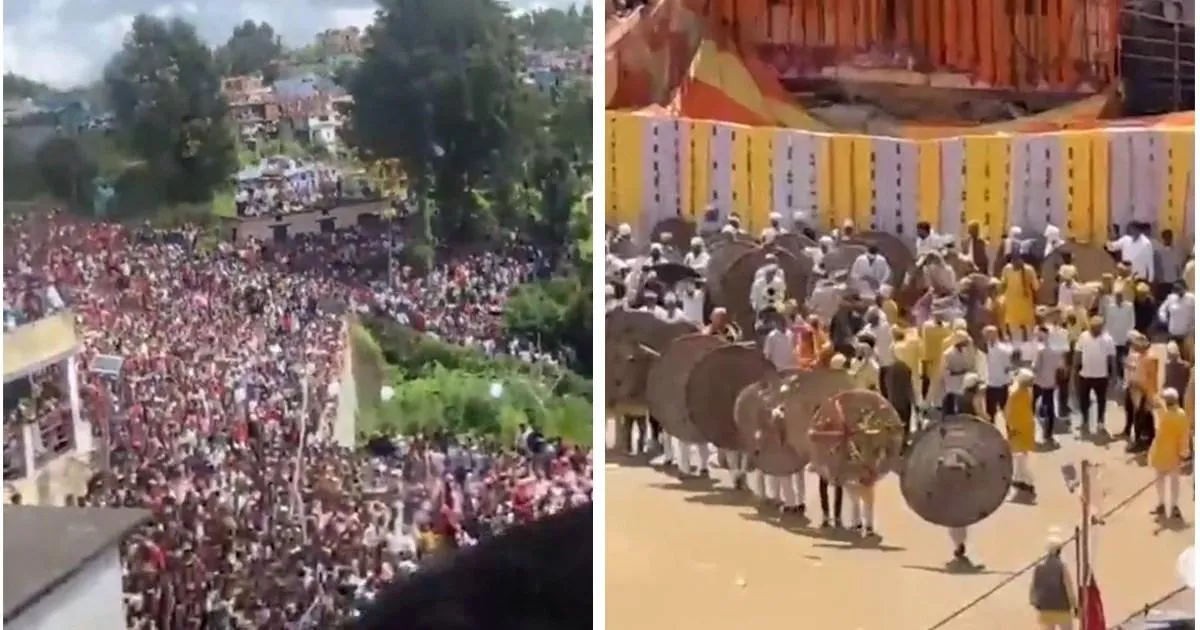
On the afternoon of August 28, the hills around the Maa Barahi Devi Temple in Uttarakhand, northern India, were filled with a sound that most people would instinctively run from: the sharp crack of stones colliding with wood, metal and flesh. The temple sits in a region often called Devbhumi, the Land of Gods, where faith is woven into the rhythm of daily life, and on this day thousands of worshippers had gathered for the Bagwal Mela, an annual festival whose name translates as “fight with stones.” They came not as spectators but as participants, carrying rocks, sticks and shields, and dividing themselves into four teams, each made up of local men who had grown up watching their fathers and grandfathers take part in the same ritual. When a conch shell was blown at 1:48 pm, the air turned into a storm of projectiles. People hurled stones at members of opposing groups while holding up shields to protect themselves, and the chaos continued until their leaders called a halt at 1:55 pm. The ritual lasted exactly eight minutes, but in that short span, hundreds of people were injured, and more than 140 were taken to hospital with wounds to their faces, heads and legs. Some of the injured were carried out on stretchers, while others staggered away with their hands pressed to their wounds. For an outsider, the scene may look like a riot, but for the devotees packed into the temple grounds, it was something far older and more sacred: a living tradition, passed down through generations, in which faith and pain are intertwined. It is not a spectacle for tourists, though tourists come; it is a vow, a test, and a prayer made visible. The head priest, Kirti Ballabh Joshi, later described the timing matter-of-factly, as if the event were as ordinary as a morning prayer. “The ritual lasted eight minutes. It began at 1:48 pm after a conch shell was blown and ended at 1:55 pm.”
To understand what happened in those eight minutes, you have to picture the scene not as a battle but as a kind of collective trance. The temple courtyard, normally a place of quiet prayer, became a swirling mass of bodies, dust and shouts. Each of the four teams had its own area, its own leaders, and its own reasons for being there. Some participants were young men trying to prove their courage; others were older devotees who had taken part for decades and saw the festival as a way of honouring the goddess Barahi. The stones flew thick and fast, and although shields and sticks offered some protection, many people were struck directly. Faces were bloodied, heads were split, legs were bruised. There were no referees, no rules beyond the timing, and no way to know where the next stone would land. The air was thick with dust, and the sound of impact was constant. The injured were helped away from the crowd as best as possible, and local hospitals braced for the influx. More than 140 people needed medical treatment, though the total number hurt was almost certainly higher, since many walked away with cuts and bruises that did not require a hospital bed. In the aftermath, the temple grounds were littered with stones and abandoned shields, and the air carried the metallic smell of blood mixed with incense. Yet no one seemed surprised. For the worshippers, the wounds were not accidents or failures of safety; they were part of the offering itself. To shed blood at the feet of the goddess, even if the blood was your own, was to participate in a sacrifice that had been made in the same way for centuries. The pain was not something to be avoided; it was proof of sincerity, a physical sign that the person offering it truly believed.
The religious meaning of the Bagwal Mela is rooted in the worship of Maa Barahi, a form of the Hindu goddess Shakti and one of the Sapta Matrikas, the seven divine mothers. Barahi is often depicted with the head of a boar, a fierce and protective form of the divine feminine, and her temple in Uttarakhand is an ancient pilgrimage site. The festival is held in her honour each year, and the word Bagwal comes from the local language and literally means “fight with stones.” But to the devotees, it is not a fight in the ordinary sense. It is a ritual combat, a symbolic re-enactment of the goddess’s own battles against evil, and a way of demonstrating devotion through physical endurance. The belief is that the traditional bloodshed fulfils an ancient religious offering. In other words, the pain and injury are not by-products of the festival; they are the point. By offering their own bodies to the goddess, participants believe they are asking for her blessings, protection and favour. The blood that falls on the ground is understood as a gift, absorbed by the earth and carrying the prayers of the people with it. This is why the leaders of the teams do not stop the ritual because people are getting hurt. They stop it when the conch shell is blown, at the appointed time, after the goddess has received her due. For the head priest, the precise timing is a matter of spiritual discipline, not crowd control. The eight minutes between the start and the end are considered sacred, and the festival is understood as a contract between the human community and the divine: the people give their courage and their blood, and the goddess gives her grace in return.
The Bagwal Mela is not an isolated event. Across India, there are many festivals that involve ritual violence or self-discipline, from fire-walking ceremonies to hook-swinging rituals, and they all share a common logic: faith is not supposed to be comfortable. In the hills of Uttarakhand, where communities have historically faced harsh winters, difficult terrain and the constant threat of natural disasters, the idea of offering pain to a goddess makes a certain cultural sense. The festival also has a social function. It brings together people from surrounding villages, reinforces group identity, and gives young men a chance to earn respect within their communities. The four teams are not random mobs; they are organised groups, often based on clan or village, and their leaders are respected elders who know the ritual rules. The use of shields and sticks suggests a kind of martial tradition, a memory of a time when communities had to be ready to defend themselves. The older men watch carefully, ready to intervene if things go too far, and the stones are not meant to kill; they are meant to test. Over the centuries, the festival has changed in many ways, but the core remains the same. For the people who take part, the Bagwal Mela is a way of remembering who they are, where they come from, and what they are willing to endure for the sake of something greater than themselves. It is not a relic of the past; it is a living practice that continues to shape lives and relationships in the present. It is also a rare occasion for the community to come together, to share stories, to renew old bonds, and to stand side by side in a moment of shared risk and shared faith.
At the same time, it is impossible to ignore the cost. More than 140 people in hospital is not a small number, and for many modern observers, the festival raises difficult questions. Is it acceptable to allow people to be seriously injured in the name of religion? Should the state intervene to ban or restrict the ritual? These questions are not new. Every year, the Bagwal Mela attracts criticism from those who see it as dangerous and outdated, and every year, the devotees respond with the same argument: this is our tradition, our goddess, our choice. They point out that participation is voluntary, that the ritual is carefully timed, and that the injuries, while real, are not intended to be fatal. They also note that the festival is a source of pride for the region, drawing visitors and pilgrims and keeping ancient customs alive. Some people argue that religion should not require physical suffering, but for many devotees, suffering is exactly what makes the offering meaningful. The body is a gift, and giving it to the goddess, even for a moment, is a way of saying that nothing is more important than her. The medical response has improved over the years, and the fact that so many of the injured were treated for wounds that were not life-threatening suggests that the ritual is not as random as it appears. But the tension remains. A society that values both religious freedom and public safety must constantly negotiate where one ends and the other begins. In a world that is increasingly sanitised and risk-averse, the Bagwal Mela stands out as a stubborn, uncomfortable reminder that not everything can be made safe. For the people of Uttarakhand, the Bagwal Mela is not a problem to be solved. It is a mystery to be honoured. And for an outsider, the best response may be not to judge, but to try to understand the faith that makes otherwise ordinary people willing to stand in the path of a stone.
In the end, the Bagwal Mela is a reminder that human beings are complicated. We are capable of great gentleness and great violence, often in the same breath. We build hospitals to heal the wounded, and then we gather once a year to wound each other in the name of the divine. This is hard for a modern, rational mind to accept, but it is also part of what makes us human. The festival is not simply about pain; it is about belonging, meaning, and the desire to connect with something beyond the ordinary. We are strange creatures, capable of both cruelty and compassion, and festivals like this one force us to look at that strangeness without flinching. It is easy to dismiss the stone-throwers as violent, but they would say they are doing the opposite: they are giving, not taking. Their wounds are not signs of anger but of love. The worshippers who threw stones on August 28 did not see themselves as victims of an ancient superstition. They saw themselves as participants in a sacred drama, one that has been performed for centuries and will likely be performed for centuries more. The conch shell will blow again next year. The stones will fly again. The hospitals will treat the wounded again. And the goddess Barahi will, in the hearts of her devotees, receive her offering once more. To an outsider, this may seem strange, even shocking. But to the people of Uttarakhand, it is simply who they are. And perhaps that is the most human thing of all: the willingness to give something of ourselves, even our blood, to the beliefs that make our lives meaningful.