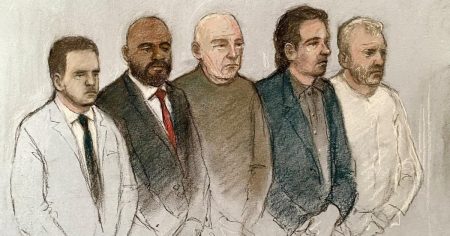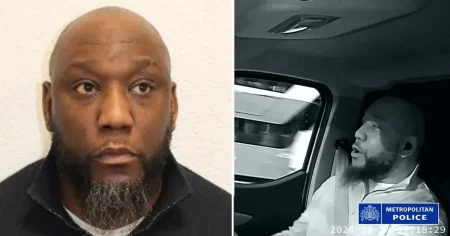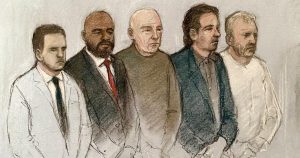

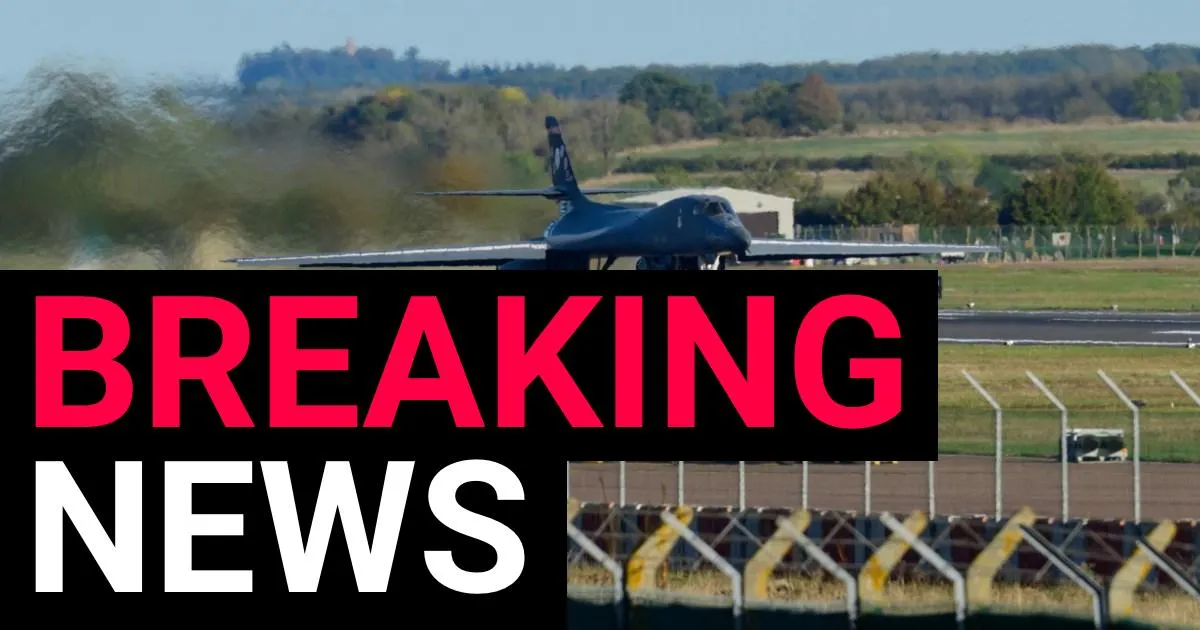
On a quiet autumn morning, when the Cotswold countryside usually offers nothing more dramatic than mist over the fields and the distant sound of a tractor, the villages around RAF Fairford were pulled into a story that felt impossible to believe. Armed police lined the perimeter of the base. Vehicles were stopped. A major counter-terrorism investigation had burst into the open, and suddenly a rural corner of Gloucestershire was at the centre of a suspected international plot. Today, two men from London are due to appear at Westminster Magistrates’ Court, both charged with serious offences under the National Security Act 2023. Mohmed Abdulkarim, 24, a British national from Westminster, is accused of assisting a foreign intelligence service believed to be linked to Iran. Nouman Essghir, 24, also a British national living in Westminster, is charged with entering a prohibited place for a purpose prejudicial to the UK. The Crown Prosecution Service confirmed the charges after an investigation by Counter Terrorism Policing. For the people of Whelford and Kempsford, the villages closest to the base, the last few weeks have been a strange and unsettling blur of police tape, armoured vehicles and whispered speculation. The base has always been there, a familiar presence, but now it has become the backdrop to a case involving espionage, foreign intelligence and the kind of threats that governments usually discuss behind closed doors. The two defendants are young men, not much older than students or early-career professionals, and their journey from ordinary life in London to the dock of a magistrates’ court is a reminder that national security cases often begin in the most unremarkable places. For their families and friends, the news must be almost impossible to process; for the wider community, it raises difficult questions about how such a plot could unfold so close to home. The charges do not mean guilt, of course, and the men are entitled to a fair trial, but the allegations are stark and the courtroom will be watching closely.
The legal proceedings are being handled by the Crown Prosecution Service’s Special Crime and Counter Terrorism Division, a unit that deals with some of the most sensitive cases in the country. Frank Ferguson, the Chief Crown Prosecutor for that division, said the decision to prosecute followed a Counter Terrorism Policing investigation into a high-profile incident involving RAF Fairford. He added that prosecutors would continue to work closely with partners as the complex investigation continues. The charges themselves are drawn from the National Security Act 2023, a modern piece of legislation designed to replace older espionage laws and address threats from hostile states. Abdulkarim has been charged under Section 3 of the Act, which makes it an offence to assist a foreign intelligence service. In this case, police believe that country to be Iran. Essghir has been charged under Section 4, which relates to entering a prohibited place for a purpose prejudicial to the UK. A prohibited place is a legal term covering sensitive sites such as military bases, and the charge suggests that his presence at or near RAF Fairford was not accidental but connected to a wider hostile purpose. Both men are British nationals from the borough of Westminster, and both are 24 years old. They are due to appear before Westminster Magistrates’ Court, where prosecutors will outline the case against them. For now, the full details of the alleged plot remain under wraps, and much of the evidence may never be made public because of national security sensitivities. But the fact that charges have been brought at all signals that investigators believe they have enough to justify a prosecution. The court appearance is only the first step in what could be a long legal process, and the men will have the opportunity to challenge the allegations and defend themselves. The seriousness of the charges cannot be overstated, and the courtroom atmosphere is likely to be tense as the magistrates hear the opening submissions and decide on the next stage of proceedings.
Assistant Commissioner Laurence Taylor, the head of National Counter Terrorism Policing, provided more detail on the investigation as the charges were announced. According to Taylor, Essghir was charged under Section 4 of the National Security Act 2023 for suspected activity on Saturday 22 August. He was first arrested at the scene in Gloucestershire on Sunday 27 September, and then re-arrested on 20 October. A second man, a 25-year-old dual UK/Iranian national, was re-arrested on the same date but has been released without charge. However, he remains on police bail following his first arrest on Thursday 1 October. Detectives also interviewed a further man under caution as part of the same investigation. Taylor said that, as a result of those re-arrests and interviews, Mohammed Abdulkarim had been charged under Section 3 of the Act, which makes it an offence to assist a foreign intelligence service. “In this case,” he said, “we believe that country to be Iran.” The investigation is clearly still active, and the fact that one person has been released without charge while another remains on bail suggests that the picture is not yet complete. Police are likely to continue examining digital evidence, communications and movements connected to the alleged plot. For a rural community, the involvement of counter-terrorism officers and the mention of a foreign intelligence service are deeply unsettling. The timeline also reveals how long such operations can take: the suspected activity dates back to August, the arrests happened in September and October, and the charges have only now been brought. This is painstaking work, carried out quietly and methodically, often away from public attention. But the result is a courtroom drama that will now unfold in full view, and every new detail will be scrutinised by a public eager to understand what really happened at the edge of those green fields.
The incident at RAF Fairford brought a little-known military base into the global spotlight. RAF Fairford is one of the RAF’s largest airfields and has long been used by the United States Air Force. At the time of the incident, it was housing US fighter jets involved in operations against Iran. Three white vans were intercepted outside the military base, an event that triggered a major security response and sent shockwaves through the local area. The base’s presence in Gloucestershire has always been a source of local pride and concern in equal measure. The villages of Whelford and Kempsford found themselves at the centre of media attention, with reporters and camera crews descending on quiet lanes and turning ordinary life into a spectacle. For residents, the sight of armed police guarding the safety perimeter was a stark reminder that the base is not just a piece of local infrastructure but a strategic asset with international significance. The alleged plot also had diplomatic consequences. According to reports, Donald Trump’s administration decided to pull US warplanes from the base following the incident, a move that underlined how seriously the United States took the threat. That decision would have been felt locally, both in terms of the visible military presence and the broader message it sent about security. The base had been a hub for operations against Iran, and the idea that it could be targeted by individuals linked to Iranian intelligence was a profound shock. It turned a place known for its runway and its aircraft into a symbol of geopolitical tension, and it reminded everyone that even the most peaceful-looking countryside can sit on the front line of a conflict that is fought with spies, surveillance and secrecy rather than soldiers and tanks.
The political fallout was immediate and intense. Andy Burnham accused Iran’s Islamic Revolutionary Guard Corps of being behind the incident, saying the regime’s force was “almost certainly” responsible. This was a strong claim, and it raised the stakes at a time of already heightened tensions between the UK, the US and Iran. Iran’s foreign minister, Abbas Araghchi, rejected the accusation, saying Burnham was “barking up the wrong tree.” The exchange reflected the fragile and confrontational nature of international relations in the region. It also highlighted how a local incident at a rural RAF base can become a flashpoint in global diplomacy. For the public, the accusations and denials were confusing. Who was right? What evidence existed? And what did the alleged plot mean for the safety of ordinary people? These questions are unlikely to be answered in full, at least not in public. National security cases are often shrouded in secrecy, and the full intelligence picture may never be revealed. But the political reaction showed that the incident was not being treated as a minor matter. It was seen as a potential act of hostility by a foreign state, and the response reflected that gravity. The mention of the Islamic Revolutionary Guard Corps, a powerful and controversial branch of Iran’s armed forces, added another layer of concern. Whether or not the Iranian government was directly involved, the case has become part of a larger narrative about espionage, influence and the lengths to which states will go to protect their interests. For now, the courts will have to determine the facts, while diplomats and politicians continue to argue about the broader context, and ordinary people are left to make sense of a story that seems to belong to a different era.
Beyond the legal and political dimensions, this case is ultimately about people. It is about two young men whose lives have been turned upside down, and whose families now face the unimaginable strain of watching a child appear in court on national security charges. It is about the residents of Whelford and Kempsford, who have had to answer questions from their children, explain why armed officers are on the roads, and try to carry on with normal life while the world watches. The idea of a terror plot in the Cotswolds is difficult to reconcile with the peaceful images of stone cottages and green fields. But national security threats do not respect geography. They can emerge in quiet villages as easily as in busy cities. The men charged are from London, which may feel far removed from Gloucestershire, but their alleged actions brought them to a place where the consequences of international conflict are felt in very practical ways. The community around RAF Fairford will continue to live with the base, its planes and its security perimeter. Life goes on, but it is unlikely to feel quite as innocent as before. The investigation, the court case and the political fallout will all take time to resolve. In the meantime, the defendants are presumed innocent until proven guilty, and the legal system will do its best to ensure a fair process. For the rest of us, the case is a reminder that the world is more complicated than it often seems. It is a story of suspicion and secrets, of young lives caught up in events far larger than themselves, and of a community learning to live with the shadow of a threat that was once unthinkable. As the court proceedings begin, there are no easy answers, only difficult questions and the hope that justice, however slow, will provide some measure of clarity and reassurance.