
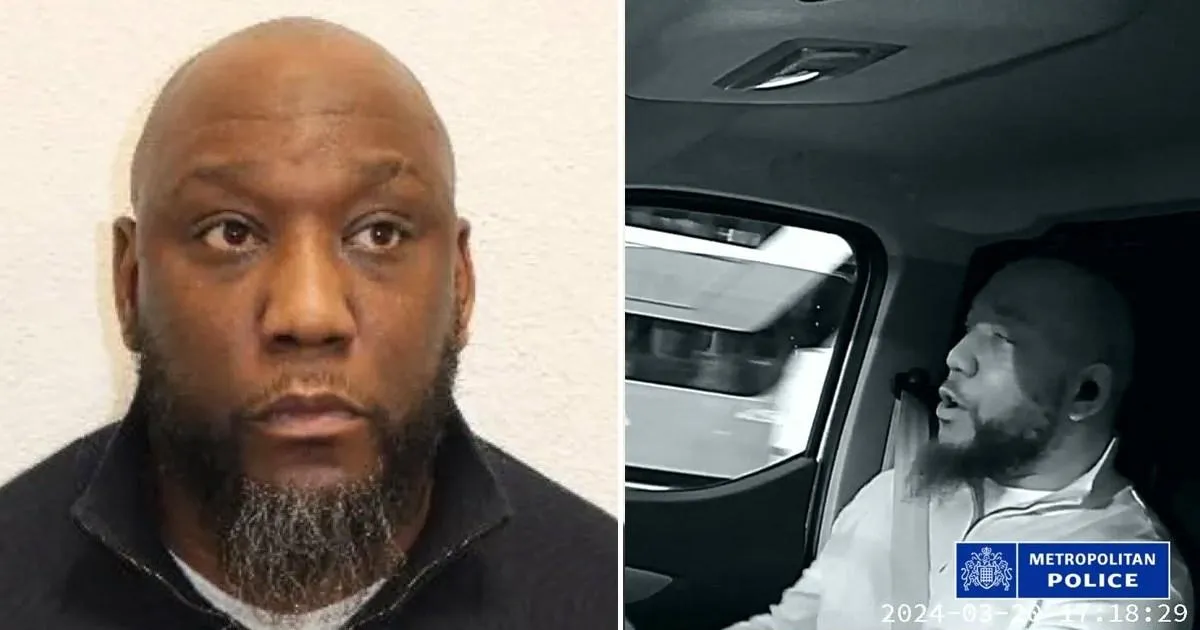
It started as an ordinary evening commute, the kind of scene that plays out across London thousands of times a day. Mark Okotie, a 44-year-old van driver, was making his way through New Cross Road in Lewisham, carrying a precious cargo: blood products destined for a south London hospital. It was a task that, on any other day, would have been invisible to the world—just another driver doing a job, transporting supplies that could save a life. The streets were busy with rush-hour traffic, and the air was thick with the usual frustrations of commuters trying to get home. Among them was a cyclist, a person pedaling through the city, perhaps heading home from work or running an errand. Then, in a flash, everything changed. Okotie moved his van into the left lane, apparently without looking, and came dangerously close to the cyclist. It was the kind of near miss that happens constantly on London’s roads—a sudden swerve, a jolt of adrenaline, a moment of anger. But this particular near miss would not end with a shaken fist or an exchanged glare. It would end in a hospital, a courtroom, and a prison cell. What began as a simple act of service—delivering blood to help the sick—would become a story of road rage, violence, and the devastating consequences of a single, terrible decision. It is a tale that raises uncomfortable questions about anger, character, and humanity.
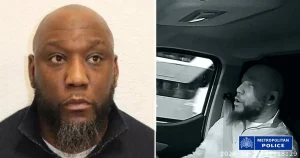
At the next set of traffic lights, the situation escalated. The cyclist, apparently still furious about the near miss, spat in Okotie’s direction. According to the court, the spit went through the open driver’s window—a genuinely disgusting and humiliating gesture, the kind of thing that can make anyone’s blood boil. But what happened next went far beyond any reasonable response to being spat at. Dashcam footage from inside the van showed Okotie turning the steering wheel sharply, deliberately, aiming his vehicle at the cyclist. He did not just frighten the man or force him off the road. He ran him over. The cyclist was knocked off his bike and went under two wheels of the van. In that split second, Okotie transformed a delivery vehicle carrying life-saving blood into a weapon. The victim suffered multiple fractures to his pelvis and femur, injuries so severe that he needed numerous screws and plates to hold his body together. The footage must have been chilling for the jury to watch, as it revealed a man losing complete control and making a conscious choice to cause harm. This was not an accident, not a momentary lapse in concentration, but an act of violence. The court convicted Okotie of causing grievous bodily harm with intent, a serious charge that reflects the deliberate nature of his action. The man who had set out to deliver blood to patients in need had instead placed another person’s life at risk. The irony was stark, and it was not lost on the police officers and prosecutors who handled the case.
The aftermath for the victim has been long and painful. In a statement released through the police, he described himself as an active person who loved to jog and stay physically fit. That life was ripped away from him in the blink of an eye. His injuries required multiple surgeries, and his recovery was punishing, both physically and mentally. Even after the bones began to heal, the trauma remained. He spoke of a new, haunting reality: when he hears a van or a large vehicle coming up behind him while he cycling, he panics. The simple act of riding a bike—once a source of joy and freedom—has become a source of fear. This is the hidden toll of road violence, the invisible scars that do not show up on an X-ray. The victim’s identity was not made public, but his words carry a universal weight. They remind us that every cyclist on the road is a real person, with loved ones, hobbies, and plans for the future. They also remind us of the vulnerability of anyone who travels on two wheels in the path of a multiton vehicle. The physical pain may eventually fade, but the psychological damage can linger indefinitely. Every engine sound behind him is now a potential threat. Every close pass is a flashback. The sentence imposed on Okotie cannot undo any of that. It cannot restore the victim’s confidence, erase his nightmares, or give him back the carefree days before he went under that van. It can only offer a measure of justice, as Detective Inspector Steven Andrews put it, and perhaps send a message that such violence will not be tolerated.
The most troubling aspect of this case, however, may be the man at the center of it. Mark Okotie was not a hardened criminal. He was, by all accounts, a respected member of his community, a father of eight children and a one-year-old grandchild. The court heard that he had been exposed to violence as a young man and had dedicated much of his adult life to mentoring young people, steering them away from the world of gangs and crime that he had once known. He was a man who stood at the center of his family and his community, someone who used his own difficult past to show others a different path. His defense barrister, Mandisa Knights, described his actions on that evening as a “momentary relapse in retaliation,” a drastic departure from the man he truly was. That is not necessarily an excuse; it is a reminder that human beings are complex, capable of both great goodness and terrible harm. The image of Okotie sitting in the dock, knowing that he will one day have to face the young people he mentored and admit what he has done, is deeply tragic. He will have to look them in the eye and say, “I have done this.” He will have to live with the knowledge that he, who once taught others to reject violence, became a cautionary tale of everything he warned them against. His reputation, built over years of quiet service, is now overshadowed by a single moment of rage. The fall from grace is steep, and it serves as a sobering reminder that no one is immune to the destructive power of anger, even those who seem most grounded.
Sentencing Okotie, Recorder Neil Haythorne acknowledged the contradiction. He described the incident as “extreme road rage” and said that Okotie had used the van as “a highly dangerous weapon.” But the judge also noted that the behavior appeared entirely out of character, and he declined to disqualify Okotie from driving, pointing out that he had been driving for two and a half years since the incident without further problems. Still, the sentence was substantial: three years and six months in prison. The message from the court was clear: using a vehicle to deliberately injure someone is a serious violent offense, regardless of the offender’s background or good intentions. Detective Inspector Steven Andrews of the Met Police captured the bitter irony of the whole affair, noting that Okotie was driving a vehicle carrying blood destined for hospital patients in need. Instead of completing a journey intended to support potentially life-saving treatment, he chose to place someone else’s life at risk. That image is almost impossible to process. In the back of the van were literal blood products, symbolizing care and compassion, while in the driver’s seat was a man consumed by fury. It shows how completely anger can narrow the mind, blocking out all awareness of consequence, responsibility, and humanity. In that moment, Okotie was not thinking about the patients waiting for his delivery, or about his own children, or about the cyclist’s family. He was thinking only of the insult he had just received. The dashcam footage made the case undeniable, and the police investigation was robust. As Detective Andrews said, the sentence provides “a measure of justice for the victim” and demonstrates that deliberate acts of violence on London roads will be robustly investigated and prosecuted. That is a reassurance to every cyclist, pedestrian, and driver who shares the capital’s streets.
Ultimately, this case is a tragedy of errors, a chain of small provocations that escalated into catastrophic violence. A cyclist spat; a driver reacted; a life was shattered. It would be easy to paint Okotie as a monster and the victim as a saint, but the truth is far more complicated. The spit was disgusting and unacceptable, but it did not justify an attempt to cause serious harm. The near miss was careless and frightening, but it did not justify violence. Both men had choices to make, and both made the wrong ones. In the end, the burden of that evening falls heaviest on the victim, who must live with the physical and emotional scars, and on Okotie, who must live with the consequences of his actions. Their families, friends, and communities have all been touched by the ripple effects. The young people that Okotie mentored have lost, at least for now, a role model; the victim’s loved ones have had to watch him struggle to reclaim his confidence and his health. Perhaps the broader lesson is about the culture of road rage, where drivers and cyclists so often see each other as obstacles rather than human beings. A moment of eye contact, a rude gesture, a single word—all of these can ignite a chain reaction that ends in disaster. We all have a responsibility to break that cycle, to take a breath, to let go of our pride, to imagine the other person’s perspective. There is no easy moral here, no comforting villain or hero. There are only two flawed individuals whose lives collided on a London street, and a sentence that can never truly make things right. As Okotie prepares to serve his time, and as the victim continues to heal, the rest of us might pause to remember that every road is shared by fragile, fallible, human beings. And that our own character is not defined only by our best moments, but by how we choose to respond in the worst ones.