
On an unremarkable February morning in 2019, three lives ended in brutal and sudden violence, leaving behind a grief that has never fully healed. Anthony Payne, an 80-year-old man who lived quietly and was devoted to his cats, had spent his last hours doing ordinary things: feeding his pets, taking out the bins, moving through the small rituals of a life that had settled into a gentle rhythm. Not far away, twin brothers Dick and Roger Carter, both 84, were in the house they shared, living independently as they had done for years, unaware that a stranger was about to climb over their rear wall. The man who came for them was Alexander Lewis-Ranwell, then 27, a paranoid schizophrenic in the grip of severe delusions. He believed the men he killed were paedophiles holding people prisoner, and in his shattered mind, he was not committing murder but some kind of twisted rescue mission. The court later accepted that he bore no criminal responsibility for what he did, finding him not guilty by reason of insanity, but that legal conclusion never lessened the devastation for the families, nor did it answer the terrible question of why the warning signs were missed. Nearly eight years later, an inquest into the deaths delivered its verdict: a series of catastrophic failures had contributed to the killings. The failures were not abstract or distant. They were moments in which a deeply unwell young man came into contact with police officers, doctors, and mental health professionals, and was nonetheless allowed to walk away.
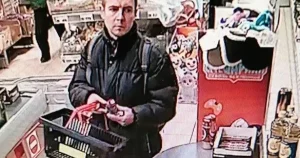
The horror of that day unfolded with a chilling randomness that makes it almost unbearable to contemplate. Lewis-Ranwell had travelled from Barnstaple to Exeter by taxi and bus, and along the way, witnesses later described encounters that should have set off alarms. One taxi driver was so unnerved that he feared Lewis-Ranwell might strangle him with rosary beads. There were other disturbing moments, too, as if the young man’s unraveling was visible to everyone except, fatally, the system meant to contain it. After walking from St David’s Station along Bonhay Road, he entered Anthony Payne’s home. CCTV showed him opening the front door. Inside, Mr Payne, a quiet pensioner who wanted nothing more than a peaceful life, was attacked with a hammer and died from blunt force head injuries. It is difficult to imagine the terror of those final moments, the incomprehension of a man facing inexplicable violence in his own home. But Lewis-Ranwell was not finished. He walked on through Exeter city centre, a place full of ordinary people going about their business, and along the way he chased one man from St David’s Church, posed as a policeman at Exeter University, and reduced a teenage girl to tears with his menacing manner. Each of these was a sign, a flashing red light, a plea for intervention. None came. Eventually he reached the Carter brothers’ home on Cowick Lane. One of the twins may have seen him trying to enter through the front gate and shooed him away, but Lewis-Ranwell simply went around the property, climbed over a wall, and armed himself with a spade from the garden. He attacked Dick and Roger Carter with such ferocity that they died of head and facial injuries. Dick was found deceased in the kitchen, Roger on the stairs. He later described the spree as a “whirlwind of destruction,” a phrase that captures both the chaos of his mind and the senseless wreckage left behind.
To understand how this could happen, the inquest reached back into Lewis-Ranwell’s past, and the picture that emerged was one of a bright life gradually overtaken by illness. He had been a privately educated, grade-A student from Kent, a young man with every advantage and a future that seemed full of possibility. But somewhere along the way, things began to fracture. He started experimenting with drugs as a teenager, particularly cannabis, and after his family moved to North Devon, he attended the fee-paying West Buckland School. The achievements and promise of his early years gave way to a wandering, unsettled adulthood. He travelled to different countries, worked as a railway fencer and at polo yards, but the instability inside him grew. By 2013, he was living on a campsite, using drugs, and displaying signs of paranoia so profound that he believed he was being monitored by electrical devices. His mother, watching her son disappear into a world of delusion, said he was clearly mentally ill. He was sectioned under the Mental Health Act for the first time in 2016, and again in 2017, after violent incidents. The system knew about him. He was known to police and to mental health services. He had a documented history of drug-induced psychosis and violent behavior. Yet on the weekend before the murders, when he was held in police custody at Barnstaple Police Station, the opportunities to keep him detained came and went. The inquest heard evidence from officers who described him as both disturbing and aggressive, and his own mother called the police to express grave concerns, saying she feared for his safety and for the safety of others if he was released. She knew, even then, that her son was in the midst of a psychotic episode and would likely need to be sectioned. Her warnings were not enough.
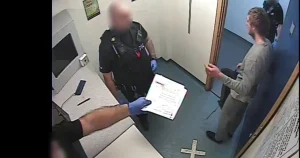
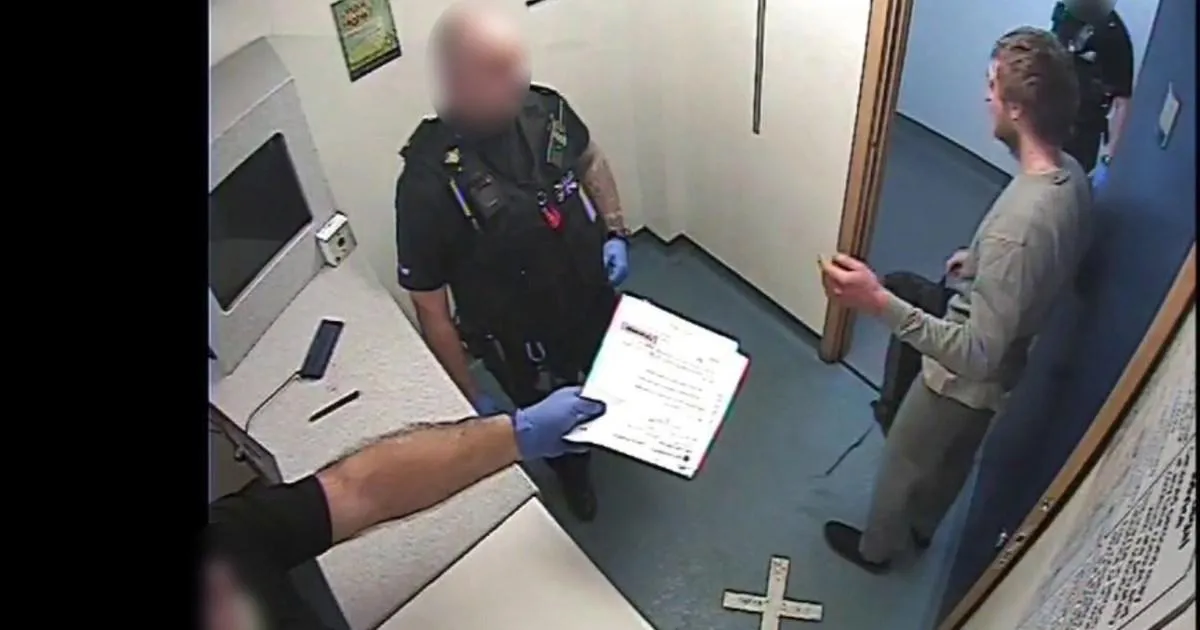
The two periods Lewis-Ranwell spent in custody on February 8 and 9, 2019, became the central focus of the inquest, because they were the last real chance to stop what was about to happen. On the first night, just after midnight, police were called to the Castle Inn pub in Combe Martin after reports of a man with a drill. The landlord described a “crazy guy” in the pub being aggressive, but officers spoke to Lewis-Ranwell outside and then let him go. Eight hours later, a farmer called 999 after discovering a strange man tending to her horse. She was terrified and reduced to tears, and Lewis-Ranwell was arrested for the first time. But he was bailed in the early hours of the next morning. The following day, Saturday February 9, he attacked an elderly man with a four-foot saw at his home in Goodleigh. Farmer John Ellis, who witnessed or experienced the ferocity of the attack, called 999 in desperation. “He’s going to kill somebody,” he said. “He’s just attacked me again. My God, this man’s really dangerous, I tell you.” Armed police chased Lewis-Ranwell over a neighbouring field and arrested him on suspicion of causing grievous bodily harm with intent. Bodycam footage from the arrest showed him resisting and needing to be restrained, and in the hours that followed, his mother again phoned police, voicing grave concerns about her son. She said she believed he was having a psychotic episode and knew immediately that he needed to be sectioned. Then came the moment that the jury would later examine with painful scrutiny. On the evening of Saturday 9, Lewis-Ranwell was assessed by a doctor named Dr Pichiu. The doctor spoke to him for just fifteen minutes and concluded that he was not suffering from an acute medical condition, that he was not delusional, and that he did not warrant an out-of-hours Mental Health Act assessment. He left a written instruction for a Liaison and Diversion nurse to see Lewis-Ranwell the next morning. But before that assessment could ever take place, Lewis-Ranwell was released on bail for the second time. The jury concluded that it was “impossible to understand” what Dr Pichiu meant by his written instructions, and the implication hung over the entire inquest: a fifteen-minute conversation was allowed to override a lifetime of warning signs.
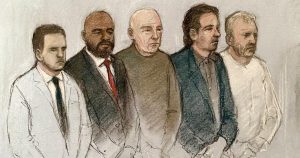
What followed was the fulfillment of every fear those warnings had tried to voice. Released from custody, Lewis-Ranwell made his way to Exeter and, within hours, carried out the killings that would leave three families shattered. Afterward, he was arrested two days later, not for murder, but for an affray at the Rougemont Hotel in the centre of Exeter. CCTV showed him chasing members of staff around a car park and smashing a lampshade against a car, until police tasered him as he walked down the hotel lobby stairs. At that moment, the authorities still did not know the extent of what he had done. It was only after the bodies of Anthony Payne and the Carter twins were discovered on February 12, 2019, that he was charged with murder. A trial took place in Exeter in November and December of that year, and the verdict was swift in its legal clarity but agonizing in its human implications. Lewis-Ranwell was found not guilty by reason of insanity and detained under a hospital order. He bore no criminal responsibility for the killings, because his mind was so profoundly disconnected from reality that he did not know what he was doing, or that what he was doing was wrong. Yet the families of his victims were left to live with the consequences, to attend every hearing, to listen to every detail, to hear the words “whirlwind of destruction” and know that their loved ones had been caught in it. Lewis-Ranwell, as an interested party, was asked if he wanted to take part in the inquest but declined. He will remain detained in a hospital, but the lives he destroyed cannot be restored, and the questions raised by his case continue to cast a long shadow over the mental health system that failed to hold him.
This inquest, eight years in the making, was ultimately about accountability, but it was also about the inescapable fragility of ordinary life. Anthony Payne was not a headline or a statistic. He was a man who loved his cats, who carried out his daily chores, who had a quiet routine and probably preferred it that way. Dick and Roger Carter were twin brothers who had lived long lives together, sharing a home and a history that no one else could fully know. They were elderly, vulnerable, and entitled to feel safe in the place where they belonged. Instead, they were killed with a hammer and a spade by a young man who should have been under the care of mental health professionals, but who instead slipped through every crack in the system. The inquest heard four weeks of evidence, from police officers who found him disturbing, from his mother who pleaded for help, from a doctor who made a catastrophic misjudgement, from a jury who concluded that the failures were not just unfortunate but catastrophic. There is a temptation to look at this story and see only madness and violence, but that would be a mistake. Lewis-Ranwell was not some random monster; he was a sick young man whose illness was visible, documented, and repeatedly ignored. The real tragedy is that there were so many moments when someone could have intervened, so many voices saying he was dangerous, so many chances to prevent the deaths of three innocent men. The inquest cannot bring back Anthony Payne or the Carter twins, and it cannot erase the guilt of those who let him go. But by naming the failures, by sitting through the evidence, by insisting that the truth be told, something important has been preserved. The names of the victims, and the circumstances of their deaths, will not be forgotten. And perhaps, if the lessons are finally learned, other families will be spared the same unbearable grief.