

On a crisp October morning, London’s most famous shopping street felt different. Oxford Street has always been a study in controlled chaos—the rumble of double-decker buses, the impatient horns of black cabs, the constant shuffle of tourists hauling bags from one end to the other. But on 26 October, a half-mile stretch of that iconic artery was suddenly, almost eerily, quiet. From Orchard Street to Great Portland Street, traffic was officially banned, and the tarmac that had been a battleground between pedestrians and vehicles was handed over, at least in theory, to people on foot. For Mayor Sadiq Khan, this was the culmination of a campaign he had been waging since 2016, a long-held dream to transform Oxford Street into something closer to New York’s Times Square—a place where people linger rather than hurry, where the street itself is the destination, not just a corridor between shops. The plans are ambitious: in time, this pedestrianised section will become a piazza, with outdoor tables spilling from restaurants and cafes, new trees providing shade, and public squares encouraging people to sit and stay. Yet the reality on the first day was far messier than the architectural renderings suggested. Not everyone had got the memo. Not everyone was willing to change. And despite the freshly installed bollards and signs declaring the road closed to all vehicles, a steady stream of bicycles continued to weave through the empty space, their riders either oblivious to the new rules or determined to ignore them. The transformation of Oxford Street had begun—but it was far from complete.
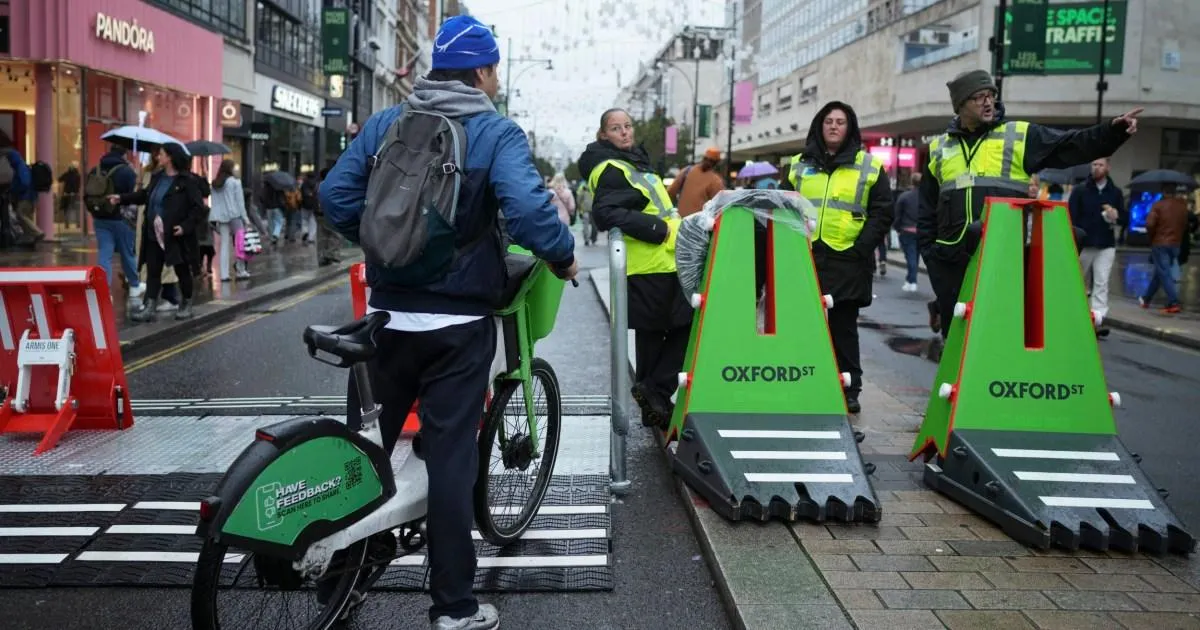
The new rules are absolute: no vehicles, including bicycles, are allowed down this stretch of Oxford Street. The only exception is a nightly window between midnight and 7am, when the ban is lifted to allow delivery lorries to restock the shops that line the street. For anyone caught pedalling through during the day, the consequences are not trivial. Transport for London can issue a Penalty Charge Notice of £160, which drops to £80 if paid within 14 days but rises again if ignored or challenged unsuccessfully within 28 days. The signs are there, big and bold, warning cyclists to dismount. But in a city where bikes are permitted almost everywhere else, the habit is hard to break. Commuters who have spent years treating Oxford Street as a handy shortcut across the West End are suddenly faced with a choice: swallow the extra minutes, find another route, or take a calculated risk and hope no one is watching. For some, the risk is clearly worth it. On the first day, security guards were already patrolling the pedestrianised zone, waving down cyclists and forcing them to dismount. But not everyone cooperated. Some simply sped past. Others waited until the guards’ backs were turned and climbed back on. There is something deeply human about this kind of resistance—not necessarily malicious, just the muscle memory of a city that has always been in motion. You cannot simply switch off a lifetime of habits with a new sign and a painted line. The rule is clear, but the transition is messy, and the cyclists weaving through the bollards are a reminder that changing a street is about changing people too.
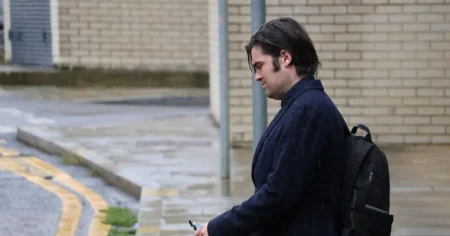
One cyclist who spoke to the Daily Mail captured the confusion of the moment perfectly. He said he had no idea the street had been pedestrianised, and that the unexpected change had made him late for work. “It’s very unexpected. I work on Oxford Street, so I’m now running late for work,” he said. Then, in a moment of striking honesty, he added: “It reduces the danger of fatalities or people colliding with vehicles. So I would say it’s a good thing, but right now, I’m just selfish, but I will come around to it eventually.” That quote says more about the reality of urban change than any press release. It is not that Londoners necessarily oppose the idea of a car-free Oxford Street. In fact, many would cheer it. But for the person who is late, who has a shift starting in ten minutes, who is carrying a work bag and needs to get where they are going, the grand vision of a piazza with trees and cafe tables can feel like an inconvenience rather than an improvement. The cyclist’s honesty—admitting that he believed the change was good, while also admitting that he was too frustrated in the moment to appreciate it—speaks to a wider truth. Big changes are almost never embraced all at once. They are absorbed gradually, through grumbles and adjustments, through missed appointments and new routes, until one day they are simply the way things are. His “selfish” reaction was not a rejection of progress. It was just the inevitable friction between a long-term dream and a short-term commute.
The enforcement on the ground was a story of its own. New bollards had been installed, and security guards were stationed along the route, but their presence could not fully contain the chaos. According to reports, the guards spent much of the first day waving down cyclists and insisting they dismount, while many commuters and delivery riders simply ignored them and carried on. One man allegedly got back onto his bicycle as soon as the security team had turned their backs, a small act of defiance that felt more like stubbornness than rebellion. Delivery drivers, under pressure to make times and meet orders, were among the most determined to push through. For them, Oxford Street is not a tourist attraction; it is a route, a workplace, a means of earning a living. The idea that they would happily surrender that convenience for the sake of an outdoor piazza was never going to be an easy sell. Meanwhile, Lime bikes, one of the most visible symbols of London’s micromobility boom, were quick to adapt. A spokesperson said the company had worked closely with TfL and Westminster City Council to update its app in line with the new rules. The app now treats the pedestrianised zone as a no-riding zone. If a rider enters the area, a warning sounds, the e-assist slows down and eventually switches off, and the rider cannot end their trip inside the zone. In theory, this should make accidental violations far less likely. But of course, not all bicycles on Oxford Street are rented Lime bikes. Private bikes, delivery bikes, and the sheer force of habit are harder to programme out of existence.
This is only the first step in a much larger plan for Oxford Street. The pedestrianised stretch will not simply remain an empty road with bollards. There are plans for trees, updated signage, and two new public squares, along with the restaurant and cafe terraces that are supposed to turn the area into a genuine destination rather than just a thoroughfare. The long-term hope is that Oxford Street will feel less like a congested highway and more like a public space—somewhere you might actually want to spend time, not just pass through. But the transformation is not without its costs, and not everyone is happy about the trade-offs. Bus routes have been changed, causing disruption for commuters who rely on them. Drivers have complained about traffic jams in the surrounding streets, as vehicles that once passed through Oxford Street are forced onto already crowded alternatives. Shopkeepers, who have endured years of uncertainty and declining footfall, are watching closely to see whether the pedestrianisation will bring back the crowds or simply push them away. There is a reason Sadiq Khan’s campaign took so long to come to fruition: turning a major road into a pedestrian zone is not just an engineering project, it is a political one. Every changed bus route, every diverted taxi, every angry cyclist is part of the process. The vision is clear, but the path is paved with inconvenience.
And so Oxford Street sits, for now, in a strange limbo between what it was and what it is becoming. The headline says pedestrianised, but the reality is a hybrid—security guards blowing whistles, cyclists ignoring them, delivery lorries slipping through under cover of darkness, tourists stepping into the middle of a road they would never have dared to walk on before. It is a moment of transition, and transitions are almost never graceful. There will be fines issued, arguments on the pavement, and no doubt more than a few people muttering that the Mayor has made a mess of things. But there will also be moments of genuine discovery: a group of schoolchildren crossing without looking both ways, a couple sitting on a temporary bench in the middle of the street, a worker eating lunch in the sun where buses used to belch fumes. The real test of this project will not be the first day or even the first year. It will be whether, a decade from now, Londoners can imagine Oxford Street any other way. Sadiq Khan’s dream of a street on a par with Times Square is no longer a promise in a manifesto; it is a physical reality, incomplete and imperfect, but present. The cyclists weaving through the bollards and the security guards shouting themselves hoarse are not saboteurs of that dream. They are part of the human story of change—messy, reluctant, sometimes selfish, but ultimately adaptable. The street is closed to traffic. The transformation has begun. And eventually, perhaps sooner than anyone expects, Oxford Street will find its new rhythm, and everyone will wonder what took so long.