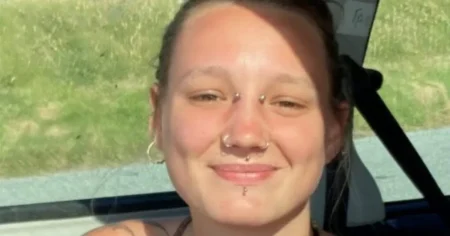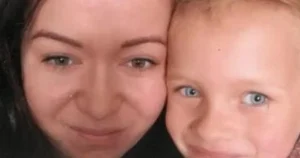

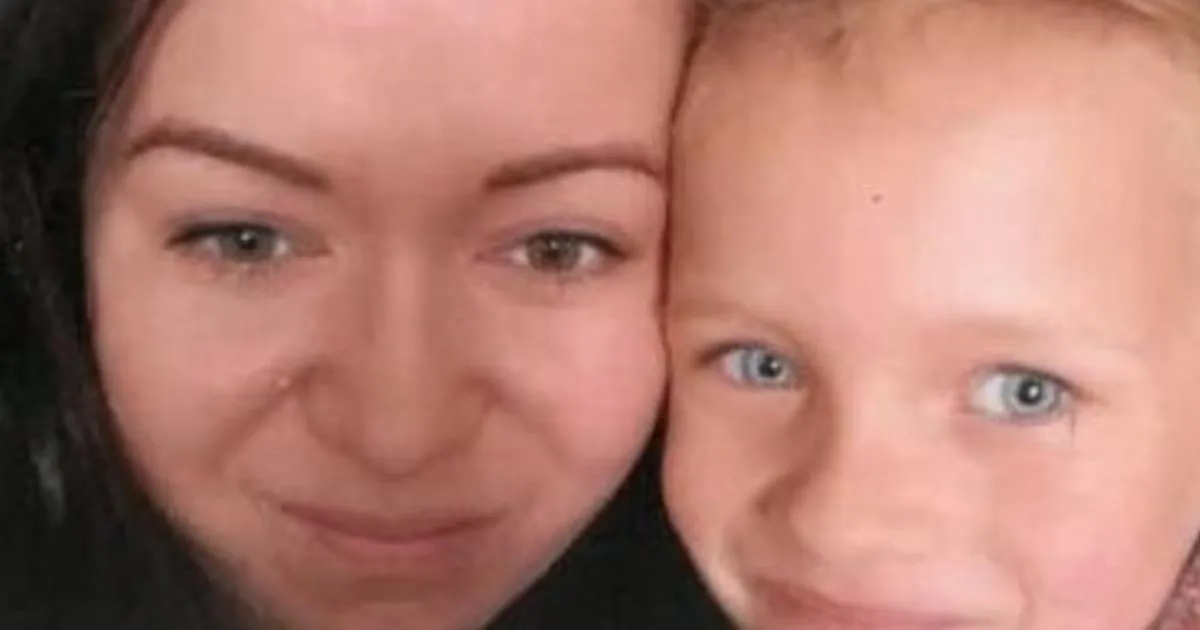
Justyna Hulboj was twenty-seven years old, a mother, a partner, a woman with a future. Her four-year-old daughter Lena was small, full of the bright curiosity that marks early childhood, and on the morning of January 16, 2023, she was doing what millions of children do every day: holding her mother’s hand and walking to school. They were in Leeds, on Scott Hall Road, a busy street that should have been nothing more than a familiar part of their daily routine. The sun had just risen, the morning rush was underway, and Justyna paused for a tender, almost invisible act of care—she stopped to adjust her daughter’s coat. It was a moment of maternal love, so ordinary and so priceless. Neither of them had any reason to look over their shoulders. In that same instant, two men in high-powered cars were turning the road into a private racetrack. Seconds later, the Audi driven by Hardeep Bhachu lost control, left the carriageway at almost ninety miles per hour, mounted the pavement, and struck them. They died instantly. Their lives, their futures, all the small plans of a mother and daughter beginning their day, were extinguished in a brutal moment. Today, a court has tried to deliver justice: Jasskamal Riyat, thirty-seven, was jailed for sixteen years, and Bhachu, twenty-nine, for twelve years. But no sentence can bring back the woman who stopped to fix her child’s coat, or the little girl who should have walked into school that day and learned something new. The tragedy is not just in the statistics of a fatal crash; it is in the ordinary beauty of a morning that became a nightmare.
Riyat was behind the wheel of a BMW M135i, a three-litre, 315 horsepower machine. Bhachu was in a 2.5-litre Audi TT RS. The two men did not know each other before that morning. They found themselves side by side at traffic lights, not long after a roundabout, and instead of simply driving on, they began to talk through open windows—about their cars, their power, their speed. It is hard to imagine the strange vanity of that conversation: two men, on a public road, weighing horsepower like badges of status. As the lights changed, the engines roared. Dashcam footage showed Riyat revving heavily as he pulled away; Bhachu accelerated after him. Witnesses could see the race plainly. Riyat, incredibly, filmed the Audi on his mobile phone while driving, capturing the moments of madness that would cost two lives. The pair drove alongside each other at speed, traffic parting around them, until the Audi reached almost 90mph on a road with a 40mph limit. At that speed, control is an illusion. Bhachu clipped a kerb, the car launched onto the pavement near a Jaguar dealership, and Justyna and Lena were in its path. The phrase “ploughed into” cannot contain the horror. Riyat did not stop. He drove past the wreckage, still filming, and then continued to work, never once calling emergency services. It is a detail that sickens: while a woman and child lay dying, he treated the scene as a spectacle. Later, he insisted he had not been racing and had not caused the deaths. But a jury saw the footage, heard the witnesses, and understood that a race has two participants. Even if his BMW never touched the victims, his reckless decision to engage in a deadly contest made him as responsible as the man whose car struck them. His denials were rejected. The prosecution argued that he was equally responsible, and the court agreed.
In Leeds Crown Court, the full weight of the case was laid bare. Bhachu had already admitted two counts of causing death by dangerous driving. Riyat pleaded not guilty, forcing a trial, but was unanimously convicted in August. The judge, Ray Singh, addressed the grief and the guilt in words that will linger. He spoke of Justyna and Lena as “mother and daughter doing something entirely ordinary and entirely innocent, making their way to school.” They could not have anticipated what was about to happen. “They should have continued with their lives,” he said. “Instead, their lives ended on a pavement.” The sentence was severe: Riyat received sixteen years; Bhachu received twelve years. With the requirement to serve two-thirds in custody, this means they will spend many years inside, but for the families, the arithmetic of justice is forever inadequate. The judge also handed driving bans—twelve years for Bhachu, fourteen for Riyat—effectively keeping them off the road for a long time after their release. The court heard how two families, the victims and the offenders, are all scarred. But the law’s function is to reflect society’s outrage and to protect others from such catastrophic choices. The judge made clear that powerful cars are not toys. “A powerful car is not an invitation to test its limits on a public road,” he warned. “The consequences can be irreversible.” Those words are a lesson, but they are also an epitaph for a mother and a daughter who were simply walking to school. The legal process has ended, but the consequences will never end.
No one in that courtroom felt the weight of the judge’s words more than Dominik Czepczor. He was Justyna’s fiancé and Lena’s father—a man who lost both of the people who made his world meaningful in a single heartbeat. His victim impact statement was read to the court, and it was devastating. He said that when he was informed about their deaths, “my whole world collapsed in one second.” There is no exaggeration in that; for him, it is the literal truth. He described a life now defined by absence: every day, he feels a huge void after their departure. Every day, he imagines what it would be like if they were still alive. He and Justyna had so many plans and dreams. They were building a future, watching Lena grow, imagining school runs, birthdays, holidays, all the ordinary magic of family life. In one moment, it all ended. He has had to move home because the painful memories of the place they once shared became unbearable. He is taking antidepressants just to cope with each day. He spoke of suicidal thoughts, of a fragile grip on hope. He has been unable to return to work, because the structure of ordinary life is gone. Perhaps the most heartbreaking sentence was his acknowledgment that “no one can bring back the lives of my fiancé and my daughter,” and that this nightmare will last for the rest of his life. The court heard these words in silence. No sentence can repair his heart. The two men in the dock may one day leave prison, but Dominik will never leave the prison of grief. He remains, in the truest sense, a survivor of a crash he never witnessed—a man permanently displaced from the life he loved.
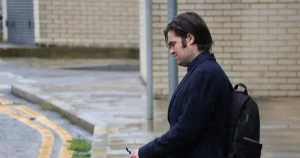
The two men now facing years behind bars are, on the surface, very different from the reckless figures in the dashcam footage. Bhachu, an insurance broker, suffered terrible injuries in the crash that he caused. He broke his eye socket and nose, collapsed a lung, and damaged his knee and ankle. He was unconscious for three days and still requires surgery. His lawyers said he was remorseful and could not comprehend the suffering he had caused. That may be true; the collision was also a catastrophe for him, physically and psychologically. Yet he had chosen to drive at nearly 90mph on a residential artery, racing a stranger, and the law holds him responsible for the choices that led to death. Riyat, meanwhile, has a different kind of shadow over him. His defence said he wanted to extend “his apologies and sorrow for what happened on that fateful morning.” Since the crash, he has become a father. His baby boy has been described as a “constant reminder” of the tragedy—a painful irony. He looks at his own child and cannot escape the knowledge that another father lost his child because of the decisions Riyat made that morning. The fact that he did not stop, did not call for help, and continued to film while driving past the wreckage, says something disturbing about his state of mind. It suggests a man so caught up in the thrill of the moment, so detached from the reality around him, that even death could not interrupt his drive to work. Yet he too now lives with the consequences. He was convicted by a jury of his peers. He will spend sixteen years away from his baby. The tragedy cuts in many directions, but it is not symmetrical: Justyna and Lena are gone forever, while the two men will eventually be released. Still, the human capacity for remorse, for change, is part of this story, and the court heard that both men express some form of regret. Whether it is enough, only they know.
This case is more than a news story; it is a parable about speed, arrogance, and the fragility of life. Scott Hall Road is just any road in any city. Justyna and Lena are just any names, ordinary people whose lives mattered enormously to those who loved them. The verdicts and prison terms send a message that dangerous driving is not an accident, and that racing on public roads is not a harmless thrill. It is a public violence. It is a choice to treat other people’s lives as collateral damage in a childish display of power. The judge’s words—“A powerful car is not an invitation to test its limits on a public road”—should be engraved on every dashboard, every driving licence, every mind. We cannot bring Justyna back to adjust her daughter’s coat; we cannot bring Lena back to skip into school. But we can remember them. We can remember that every pedestrian on every pavement is someone’s partner, someone’s parent, someone’s child. We can remember that a momentary decision to rev an engine can end decades of shared plans, reduce a family to ashes, and leave a man like Dominik standing alone with a void no word can fill. The two men have been jailed for a total of 28 years. They will serve their time. But the true cost is unpayable. If there is any hope in this tragedy, it lies in the possibility that other drivers will read this story and slow down, that they will see the red light and wait, that they will resist the urge to impress a stranger with horsepower. The best tribute we can offer Justyna and Lena is to protect the ordinary mornings of other mothers and daughters, other families, other children with their whole lives ahead of them. They should have continued with their lives; they should have had the chance. Remember them.