


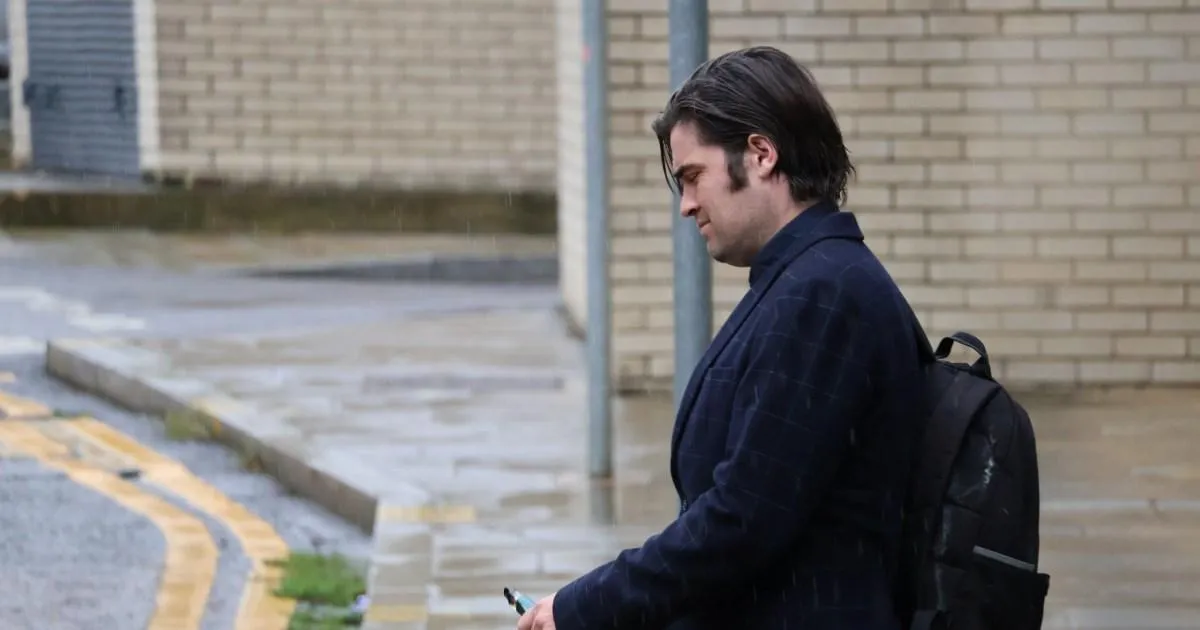
On the final afternoon of the year, as a plane descended toward Stansted Airport, the cabin should have been filled with the usual mix of weary relief and quiet anticipation—people checking their phones, gathering belongings, thinking about the new year ahead. Instead, that ordinary travel moment became a scene of fear, drunken chaos, and violation. Orlando Morris, a 33-year-old passenger, began behaving in a way that would transform a routine flight into something deeply distressing for everyone around him. He was heavily intoxicated, and what started as slurred, aggressive words quickly spiraled into something far more sinister. According to prosecutors, Morris told a woman seated next to him that he hated black people, a sudden and shocking expression of racism that left those within earshot stunned. When flight staff challenged him, he did not calm down. Instead, he escalated. He reached out and placed his hand on a male passenger’s bottom, and then attempted to sexually touch another person. The cabin, once filled with the mundane noise of travelers, became a space where people felt trapped, vulnerable, and violated—unable to escape a man whose judgment had evaporated in alcohol and whose behavior had turned predatory. By the time the plane touched the ground, police were already waiting. It was New Year’s Eve, but for the victims and witnesses on that flight, there was no celebration in sight.
The details of the assault, as later described in court, paint a chilling picture of how quickly a person can unravel in a confined public space. Morris was not a stranger to the people around him; he was simply another passenger, someone who might have sat in silence moments earlier. But his actions—rooted in racist hatred and casual entitlement—turned him into a source of terror. Telling a woman that he hates black people was not a random comment; it was a deliberate act of dehumanization, meant to intimidate and diminish. When crew members stepped in, Morris did not relent. Instead, he turned his attention elsewhere, committing sexual offenses against people who had done nothing but share a flight with him. The victims later said the behavior was wholly inappropriate and not something they should ever have been subjected to. That understated testimony speaks volumes: no one boards a plane expecting to be groped, shamed, or made to feel less than human. The victims were forced to endure what magistrates would later describe as “degrading and humiliating” conduct, all while trapped thousands of feet in the air. There is a particular cruelty to this kind of violation in an airplane cabin—there is nowhere to go, no way to escape, no safe corner to retreat to. The flight crew, doing their best to protect passengers, were left to manage a situation that should never have happened.
When the plane finally landed, the nightmare did not end. Police officers boarded and attempted to detain Morris, but even then, his aggression continued. In a shocking final act, he spat into the face of an officer, a gesture that is not just disgusting but deeply disrespectful—an assault on someone whose job is to protect the public. Officers were forced to take him to the floor to subdue him. Spitting at a police officer is an act that carries its own weight of contempt and disregard, and it added another layer to an already disturbing case. In court, prosecutor George Dixon outlined the sequence of events with grim clarity: the offenses took place as the plane was landing and moments afterward, and there was an overwhelming suggestion that Morris was heavily intoxicated. What began, he said, was a period of unacceptable behavior toward members of the public. That phrasing feels almost too gentle for what unfolded. The victims were not simply inconvenienced; they were racially abused, sexually assaulted, and left in a state of extreme distress. The officer who was spat upon was attacked while simply doing their duty. The entire incident, from the sky to the airport floor, was a cascade of harm caused by one man’s drunkenness, prejudice, and disregard for basic human dignity.
At Chelmsford Magistrates’ Court, the full weight of what had happened began to take shape. Morris had no previous convictions, a fact that makes the incident no less serious but adds a layer of complexity to how it should be understood. The court heard that in the year leading up to the offense, his use of substances had gotten worse—a detail that hints at a personal deterioration that may have contributed to his behavior. By the time he was interviewed by police, Morris expressed remorse, though he said he had no memory of what had happened. Memory loss can be convenient, but it can also be genuine, particularly when someone has blacked out from alcohol or drugs. What matters, magistrates noted, is what came after: Morris had already booked himself onto a program to address his substance use, and his defense lawyer, Caroline Woodley, argued that he had used the time since the offense wisely to address his behavior and the reasons behind it, making significant changes. This is not about excusing what he did. It is about recognizing that human beings are complicated, and that accountability can coexist with rehabilitation. Morris did not try to claim he was a victim, did not minimize the offenses, and did not waste the court’s time. He admitted to sexual assault, attempted sexual assault, racial harassment, and assaulting a police officer. That admission, while overdue, at least spared his victims the ordeal of a trial.
The sentence handed down by magistrates was not a prison term, but it was far from a slap on the wrist. Morris was given a high-level community order, requiring him to complete 200 hours of unpaid work and pay £300 in compensation to the victims. Magistrate Anne Everitt made it clear that his behavior was “quite outrageous,” adding that “unacceptable” was the mildest term for it. She also noted that, fortunately, other than extreme distress, no physical harm had been caused, and that the incident was not prolonged or planned—it was, she said, bad behavior under the influence of alcohol. That final observation is important, because it acknowledges the context without excusing the consequence. Alcohol may lower inhibitions, but it does not manufacture racism or the impulse to sexually violate someone. Those instincts, even if dormant, come from somewhere deeper. The community order reflects a belief that Morris can change, that his genuine remorse and commitment to his rehabilitation program mean something. But it also sends a message that this kind of behavior—on a plane, in public, against strangers—will not be tolerated. The 200 hours of unpaid work will force him to give something back to a society he harmed, and the compensation, though small, is a recognition that his victims deserve more than an apology. Whether that is enough is another question. For the people he touched and terrorized, no sentence will erase the memory of that flight.
This story is more than a court report; it is a reminder of how fragile public safety can be, and how easily a single person can shatter the sense of security we take for granted. Every day, millions of people board planes, buses, and trains, trusting that they will be treated with basic respect. When that trust is broken—especially by racist abuse and sexual assault—the damage ripples far beyond the immediate victims. Witnesses who saw and heard what happened are also affected; flight crew members who intervened carry that memory with them; even the police officer who was spat on must process the indignity of being treated as a target. And yet, there is something in this story that offers a thread of hope: not in the crime itself, but in the response. The victims spoke up. The crew acted. Police took the matter seriously, and the court handled it with clarity and composure. Morris, for his part, faced the consequences and began to take steps to change. That does not undo the harm, but it suggests that accountability still matters, and that even someone who behaves atrociously can choose a different path. As the new year begins, the people on that flight may still feel the aftershock of what happened. But perhaps they can also find some comfort in knowing that their experience was not dismissed, that their pain was acknowledged, and that an attempt was made—through the slow and imperfect machinery of justice—to make things right. The plane landed, the passengers walked away, and one man was left to face the consequences of his choices. What remains is a simple, sobering lesson: alcohol is never an excuse, racism and sexual violence are never acceptable, and every passenger deserves to travel in safety and dignity—no matter where they sit, who they are, or how much they have had to drink.