

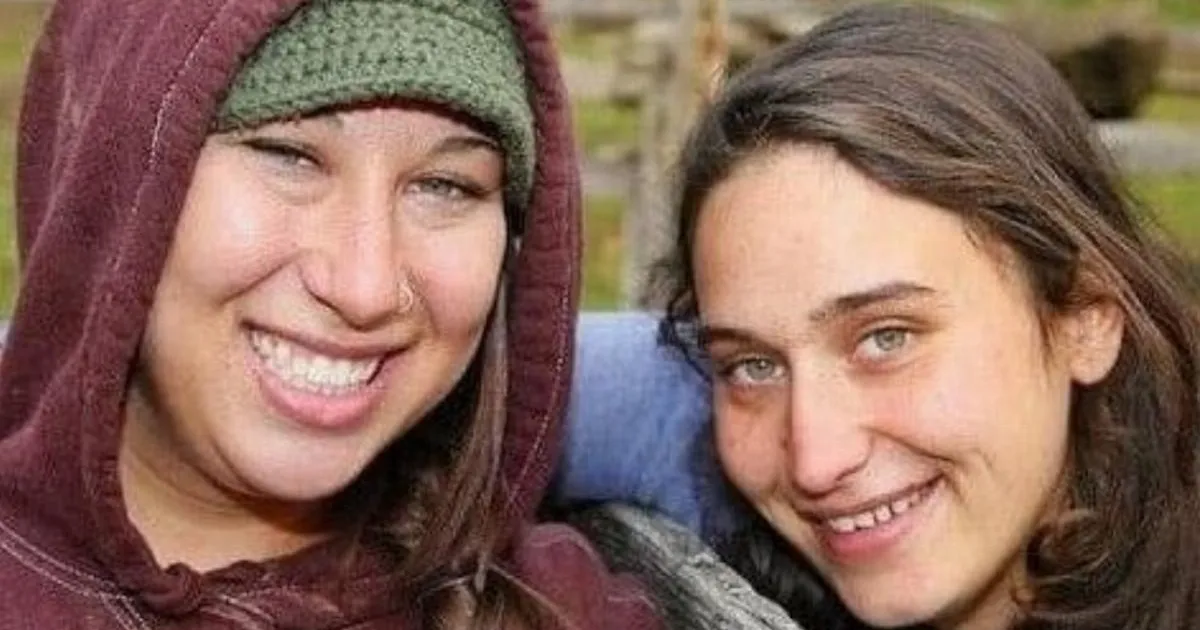
For more than two years, the Feinman family has lived suspended between hope and despair, waiting for an answer that never seems to come. Shayna Feinman was just 38 years old when she vanished in March 2024 in the wide-open, rugged terrain near Seligman, Arizona. She was a daughter, a sister, a person with a life and a future, and her sudden disappearance left a hole that no amount of searching, praying, or pleading could fill. Then, in a dramatic twist that felt almost too good to be true, Mexican officials announced they had found her alive, safe, and ready to reunite with her family. For a brief moment, it seemed the nightmare might finally be over. But the Feinman family, especially Shayna’s sister Kara, knew better than to celebrate too soon. Something about the identification felt wrong. Kara looked at the photograph released by authorities and felt a cold knot of doubt in her stomach. There were so many women who looked like Shayna, she thought, so many people with the same dark hair and small frame. Her caution was heartbreakingly wise. Days later, American investigators confirmed what Kara had feared: the woman found in Tijuana was not Shayna. The hope that had flickered so brightly was extinguished, leaving the family to start over from the beginning once more.
The story of Shayna’s disappearance is one of those mysteries that defies easy explanation. She was last seen in the area between Peach Springs and Hyde Park, a remote, windswept stretch of Arizona where the desert seems to stretch forever and people know their neighbors by name. Investigators believe she was walking to a friend’s house that day, a simple journey that she never completed. A neighbor who had been caring for her dog grew worried when Shayna never came back to pick up her pet. That small, ordinary act of kindness—looking after a dog—led to the discovery that something terrible had happened. The neighbor found Shayna’s car parked near the property where she had been staying with her boyfriend. Inside the vehicle were her wallet and identification, personal items that she would never have left behind on purpose. Detectives later recovered her mobile phone on a nearby property, adding another layer of mystery to an already baffling case. There was no sign of a struggle, no body, no clear explanation. It was as if Shayna had simply walked off the face of the earth, leaving behind only questions and the broken hearts of everyone who loved her.
Then, on October 23, came the report that shook everything loose. Tijuana’s security and protection service, known as SSPCM, announced that officers had found a woman in the Encino neighborhood who matched Shayna’s description. They said her physical characteristics were a match, that they had confirmed her identity, and that she had been taken to a safe location where she could be contacted by family and U.S. consular authorities. It sounded like a miracle, the kind of ending that makes people believe in the power of persistence and prayer. But Kara Feinman was not convinced. She spoke to local media with a calm that belied her inner turmoil, telling FOX 10, “There are a ton of people that are short like she was and have dark hair, everywhere.” She said she could only hope and pray for good news, but that the family had to be “realistic, rational and calm.” It was a devastating balancing act: wanting to believe something wonderful had happened while preparing for the possibility that it hadn’t. Meanwhile, investigators in Arizona had not verified the identification at all. Yavapai County Sheriff’s Office spokesman Paul Wick issued a measured statement, saying, “We are aware of reports indicating that Shayna Feinman may have been located in Mexico. At this time, the information remains unconfirmed, and there is insufficient evidence to verify her identity.” The family was left in agonizing limbo, caught between a thrilling possibility and a chilling fear.
The skepticism proved justified. Yesterday, the Yavapai County Sheriff’s Office issued a correction that hit like a punch to the gut. U.S. authorities, using physical evidence, had confirmed that the woman found in Mexico was not Shayna Feinman. The statement read: “Today, U.S. authorities confirmed to YCSO detectives, utilizing physical evidence, that the individual located is not Shayna Feinman.” It was a short sentence, but it carried the weight of another shattered hope. The photograph released by Tijuana officials had been shown to the family, and local news outlet Arizona’s Family reported that the woman’s identity had not been made public after U.S. authorities ruled out the match. For the Feinmans, this was not just a bureaucratic correction; it was a fresh wave of grief. Every time the world seemed to offer an answer, it turned out to be an illusion. The false positive also raised troubling questions about how Mexican officials could have been so certain, and why their announcement had been so confident when the evidence clearly had not been verified. It was a painful reminder that in missing person cases, hope can be a cruel companion, offering just enough light to make the darkness feel even deeper when it closes back in.
While the search for Shayna continues, the investigation into what happened to her has taken its own dark and confusing path. In 2024, Shayna’s boyfriend, Cavett Richards, and another man, William DalCerro, were charged with second-degree murder in connection with her disappearance. The charges also included conspiracy and concealment of a dead body. It seemed that law enforcement had finally pieced together a theory of the case, one that suggested Shayna had been the victim of violence and that someone had tried to hide the truth. But then, in January 2025, court records showed that the murder charges against both men had been dismissed. The investigation had proceeded without a body, which is always a monumental challenge in any homicide case. Without remains, without a crime scene, without a confession, the evidence simply was not enough to hold the charges. The dismissal left Shayna’s family in an even more painful position: they believed someone was responsible for her disappearance, but the justice system had not been able to provide them with accountability. Around the same time, Shayna’s father, Eliot, and sister Kara traveled to the area where she was last seen, trying to find answers on their own. They were given some of her belongings and reunited with her dog, a bittersweet moment that must have felt like holding pieces of a person who was still missing. They also heard about other reported sightings of Shayna, but each one led nowhere, and each dead end chipped away at their hearts.
Today, Shayna Feinman’s case remains open, a quiet, stubborn testament to the power of hope in the face of overwhelming uncertainty. Detectives with the Yavapai County Sheriff’s Office continue to work with the family, and a $20,000 reward remains available for anyone who can provide information about Shayna’s whereabouts. It is a promise that the world has not forgotten her, even after so many months have passed. For her father and sister, every day is a new test of endurance, a balance between holding onto the possibility that she might still be found and accepting the terrible reality that they may never know what happened. They have learned, through painful experience, to be cautious about every piece of news, every reported sighting, every flicker of hope. But they have not given up. They cannot give up. Shayna Feinman is more than a missing person’s report; she is a beloved family member whose absence has left an unfillable space in their lives. The false alarm in Mexico was just another chapter in a story that has already been rewritten too many times. But as long as there is breath in their bodies, the Feinmans will keep searching, keep waiting, keep wishing for the day when the phone rings with real news, the kind that brings peace instead of pain. Until then, they hold onto each other, and they hold onto the memory of Shayna, hoping that someday, somehow, they will finally find their way back to her.