


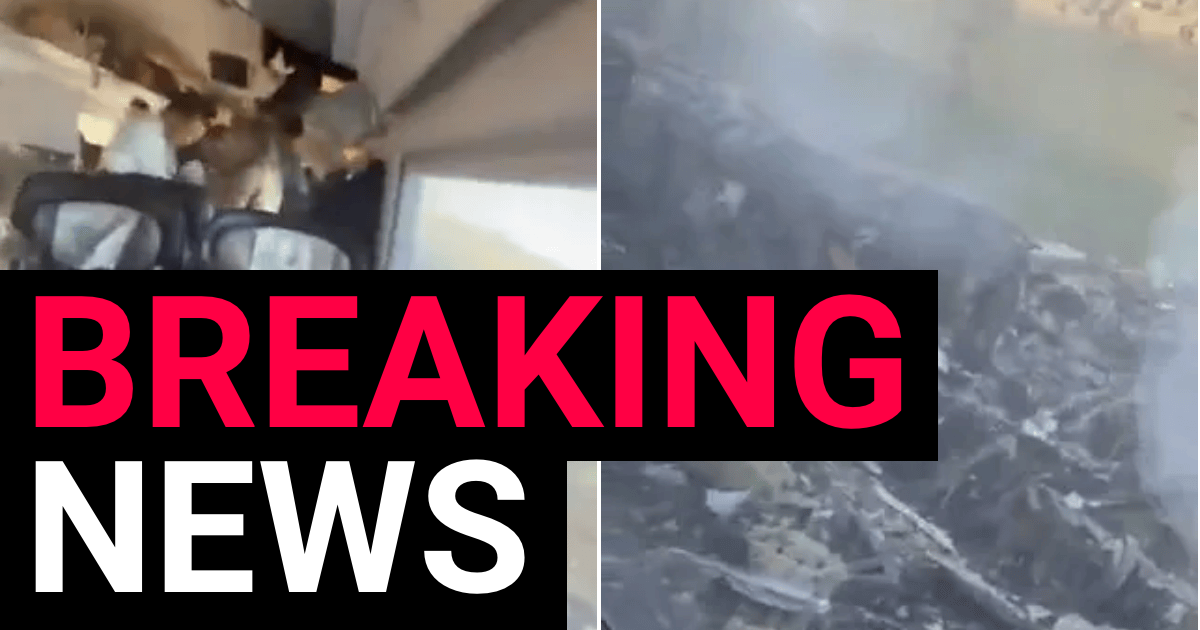
It began like any other morning on one of Spain’s most important railway lines. Passengers boarded the high-speed trains with their coffees, their briefcases, their plans for the day ahead. Some were heading to Seville for work; others were returning home, visiting family, beginning holidays. No one could have imagined that just a short while later, those same carriages would be twisted wreckage scattered along a steep embankment in the Spanish countryside. What unfolded between the towns of Los Yébenes and Urda, in the province of Toledo, was a scene of shocking violence and devastation. Two high-speed trains collided head-on, and in an instant, dozens of lives were lost and many more changed forever. Emergency services rushed to the remote stretch of track, where the silence of the fields was broken by sirens, cries, and the desperate work of rescue teams. At least thirty-nine people were confirmed dead, and scores more were injured, though officials warned that the final toll could still rise as the search through the mangled carriages continued. The entire country, and indeed many around the world, watched in horror as the scale of the tragedy began to unfold.
The details that emerged painted a confusing and heartbreaking picture. One of the trains, a Renfe Ave service, had left Madrid at eight in the morning, bound for Seville. It was travelling at high speed along the Madrid-Andalusia line when it collided with an Iryo train moving in the opposite direction. Both were high-speed trains, both were carrying passengers on a route that is normally celebrated for its safety, efficiency, and speed. The impact was catastrophic. Carriages were thrown off the rails, with some toppling down the steep embankment and lying in grotesque positions amid dirt, bushes, and scattered debris. Other parts of the trains remained on the track but were visibly mangled, windows shattered, metal panels torn open like paper. According to early reports, two cars had fully derailed, while the other train appeared to have come off the tracks but stayed upright on the edge of the embankment. The force of the collision left a trail of destruction along the railway line, with personal belongings, luggage, and fragments of the trains scattered across the scene. It was impossible to look at the footage without feeling the weight of what had happened. These were not just machines; they were carriages that moments earlier had been filled with human beings, with stories, with loved ones waiting for them at their destinations.
As the first responders arrived, they faced a nightmare scenario. Survivors were seen scrambling up the embankment, dazed and bloodied, trying to make sense of what had just happened. Some were helping others, pulling fellow passengers from the wreckage while still in shock. Firefighters worked tirelessly to reach those trapped inside the twisted metal, while paramedics treated the wounded on the grass and beside the tracks. The cries of the injured and the shouts of rescue workers filled the air, creating a harrowing atmosphere that witnesses later described as surreal and terrifying. People who had been travelling in the same carriage seconds before the impact found themselves suddenly thrown from their seats, surrounded by broken glass and the smell of fuel. For those who were able to walk, the instinct to escape and find help was overwhelming. Others were not so fortunate. Emergency teams had to cut through the wreckage carefully, aware that every minute counted and that more victims might still be found. The local authorities worked alongside national emergency services, setting up triage areas and coordinating the evacuation of the injured to nearby hospitals. As news of the crash spread, families began desperately trying to reach their loved ones, hoping for a phone call, a text, any sign that they were safe.
Spain’s railway infrastructure operator, Adif, issued a sombre statement confirming that train traffic on the Madrid-Andalusia high-speed line had been interrupted due to a collision between two trains. The incident, they said, occurred at kilometre point 118, between Mora, Orgaz, and Urda, involving a Renfe train and an Iryo train, both covering the Madrid-Seville route. All other trains on the line were stopped at stations along the route, and passengers were advised to contact their rail companies for information. The statement was clinical and technical, but behind those words lay the reality of a national tragedy. High-speed rail has long been a source of pride for Spain, a symbol of modern engineering and progress. To see two such trains collide on the same line was almost unthinkable. It also brought back painful memories. Nine months earlier, another serious rail collision in Adamuz, in Córdoba province, had killed dozens of people and left nearly three hundred injured. Among the survivors of that earlier crash was a six-year-old girl, who had been the only survivor of her family, having been on her way home with her parents and siblings after watching a performance of The Lion King. The echoes of that tragedy now haunted a new scene, reminding everyone that behind every statistic is a human story, and that the grief of one disaster can still be fresh when another strikes.
Beyond the immediate chaos and the official announcements, there is the human cost that will linger long after the wreckage is cleared. Every name that emerges from the list of the missing is someone’s parent, child, partner, or friend. The passengers on these trains were ordinary people with ordinary lives, and in a matter of seconds, those lives were torn apart. There will be families waiting at stations, not knowing if their loved one is alive or dead. There will be coworkers staring at empty desks, unable to focus on anything but the news on their screens. There will be children who will grow up without a parent, and parents who will have to bury a child. The trauma goes beyond those who were physically injured. Survivors will carry the memory of the crash with them for years, replaying the sounds and images, struggling to sleep, feeling the earth shift beneath them whenever they board a train again. The rescue workers, too, will be changed by what they saw. They ran toward the danger while others fled, picking through the debris in search of life, and they will bear witness to the fragility of human existence in ways that are impossible to fully express. In moments like these, the world is reminded that our reliance on technology and speed can never fully insulate us from tragedy, and that when things go wrong, the consequences are measured not in delays or statistics, but in sorrow.
In the aftermath, questions will inevitably be asked. How could this happen on a high-speed line designed with so many safety systems? Was there a signalling failure, human error, or something else entirely? Investigators will spend weeks, perhaps months, searching for answers. But for the survivors and the families of the victims, no explanation will ever be enough to bring back those who were lost. What remains, in the days and weeks ahead, is a profound collective grief and a determination to support those affected. Communities in Toledo and across Spain will come together to mourn, to comfort, to stand in silence in memory of the dead. The flowers that will be laid beside the track, the candles lit in village churches, the tears shed in homes far away—these are the true measure of what was lost. And yet, even in the darkest moments, there is often a flicker of humanity that shines through. The strangers who helped one another escape the wreckage. The doctors and nurses working around the clock. The ordinary people who offered their homes, their food, their shoulders to cry on. This is the other side of tragedy, the side that reminds us that while life can be brutally fragile, human compassion can also be astonishingly strong. As Spain mourns this terrible day on the Madrid-Andalusia line, it will not forget the ones who were taken, and it will hold close the survivors, helping them find a way forward through the grief, one step at a time.