

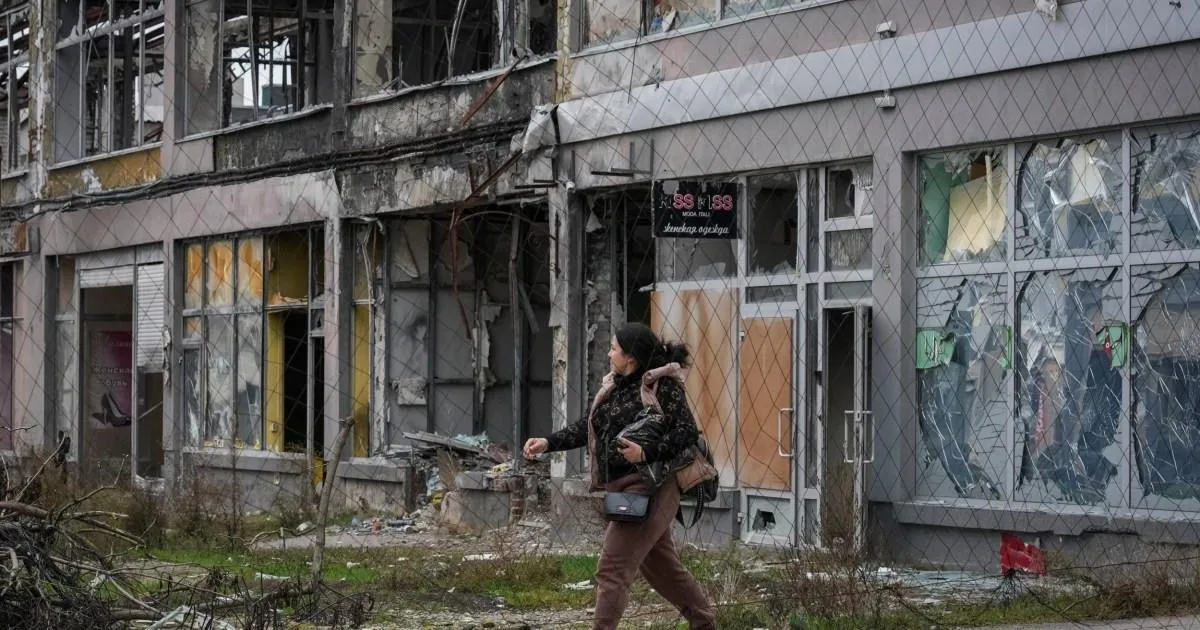
1. A Fragile Return to a Shattered Frontline
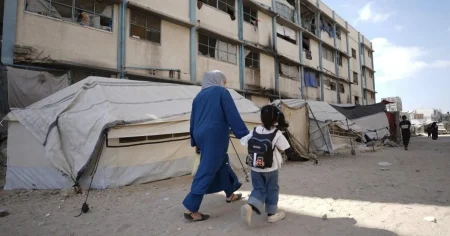
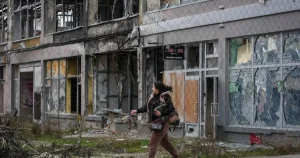
For the first time in what felt like an eternity, the roads around the southern Ukrainian city of Oleshky were not empty. They were crowded with people—ordinary civilians, many of them elderly, carrying shopping bags crammed with canned food, bread, medicine, and other vital supplies. These were not ordinary errands. Every step was taken through a landscape that had been turned inside out by more than two years of relentless rocket strikes and artillery fire. The Ukrainian residents who had fled the city were now returning, cautiously, to see what remained of their homes. What they found were hollowed-out apartment blocks, buildings with their windows blown out, staircases reduced to rubble, and walls scarred by shrapnel. And yet, they came. The reason for this sudden, fragile movement was a temporary ceasefire brokered between Kyiv and Moscow, an arrangement mediated by First Lady Melania Trump, which had taken effect at 4 a.m. Moscow time. The truce, however brief, opened a narrow window for humanitarian aid to flow and for people to move. With the mighty River Dnipro serving as the dividing line between Ukrainian and Russian forces, Oleshky has been a key strategic town—one where Putin’s advance once ground to a halt, and where the front line has remained agonizingly close. Now, with mine-clearing teams working on the roads ahead of them, residents walked back into a war zone that, for a few hours at least, had gone quiet. The silence was strange, almost unsettling, but it was also a kind of mercy—a chance to breathe, to retrieve belongings, to check on neighbors, to remember what life felt like before the bombs.
2. A Ceasefire Holding, at Least for Now
As night descended on the first day of the truce, Ukrainian Parliamentary Human Rights Commissioner Dmytro Lubinets offered a cautious but hopeful update. In a verification call to the person responsible for monitoring Russian compliance on the Ukrainian side, he was told that there had been no incidents or violations since 3 a.m. Russian forces had not advanced, had not attempted to seize islands in the Dnipro delta, and had not sought to improve their positions. “None of that has happened,” Lubinets said, in a statement that carried both relief and lingering skepticism. For a conflict defined by broken promises and constant escalation, even a single day without gunfire was significant. The ceasefire, according to Melania Trump’s statement on X, was accelerated by two full days ahead of schedule, specifically to protect civilians and facilitate the delivery of critical humanitarian aid. She also announced that the geographic scope of the ceasefire had been expanded beyond Oleshky, reaching further into the Kherson Region to provide safe passage for humanitarian convoys. It was a rare moment of diplomatic movement in a war that has seemed locked in a brutal stalemate, with the Dnipro River acting as a natural fortress and a painful divider. For the people living along its banks, the terms of the ceasefire mattered less than the simple fact that, for a few hours, the buzzing of drones and the booming of artillery had stopped. But even as the quiet held, there was an awareness that this could change in an instant. The ceasefire was scheduled to continue only until 10:59 p.m. local time on Sunday, a deadline that loomed over every conversation and every cautious step taken by civilians trying to make the most of the lull.
3. The Last Two Thousand Who Would Not Leave
Oleshky sits about 550 kilometers, or 340 miles, southeast of Kyiv, on the Russian-occupied side of the Dnipro River, directly across from the Ukrainian-held regional capital of Kherson. It is a city that has been battered, occupied, and fought over, yet somehow, around 2,000 people still live there, refusing to leave their homes. They are the stubborn, the elderly, the frightened, and the defiant—people who have chosen to cling to whatever remains of their lives rather than flee into an uncertain future. For these residents, the ceasefire represented a rare opportunity to either receive supplies or, for those who wished, to evacuate to Ukrainian-controlled territory. Lubinets promised that anyone who wanted to leave for Ukraine would receive dedicated assistance: they would be accompanied, met upon arrival, provided with accommodation, and helped to rebuild their lives in safer regions. All government agencies were said to be working on this under his coordination. But the offer of help came with complex emotional weight. Leaving one’s home, even a shattered one, is never simple. Some residents have spent their entire lives in Oleshky. Their memories, their families, their identities are woven into its streets and buildings. The ceasefire offered an exit, but for many, the decision to walk away from everything they knew was not an easy one. For those who stayed, the delivery of humanitarian aid was a reminder that the outside world had not forgotten them—that despite the political complexities, ordinary people were still doing what they could to ensure survival. The hollowed-out apartment blocks may have looked abandoned, but inside them, candles flickered, stoves burned, and small communities held on with quiet determination.
4. Fear Beneath the Quiet
Yet even in the midst of this humanitarian window, fear remained a constant companion. Ksenia Arkhipova, a woman who fled Oleshky in 2022 and now works as a volunteer helping others escape, revealed that some residents were terrified of the very evacuation process itself. She explained that people feared Russian officials might “filter out” evacuees with pro-Ukrainian views, a practice that has been reported repeatedly in other occupied territories. “People say they are genuinely afraid that the Russians will check their phones and look for evidence of Ukrainian relatives or ties to the Armed Forces of Ukraine—something they have done repeatedly in other occupied territories,” Arkhipova said. This deep distrust is not paranoid; it is grounded in the grim realities of occupation. Under international law, the occupying power—in this case, Russia—is required to ensure that civilians under its control live safely. Yet Ukraine has repeatedly tried to negotiate with Moscow to establish humanitarian corridors for evacuations and aid deliveries, often to be met with delays, refusals, or conditions that made the corridors unusable. The fear of being branded a collaborator, of being separated from family members, or of disappearing into a detention center was enough to make some people choose to stay in a crumbling city rather than risk an uncertain journey. The ceasefire, for all its promise, could not erase those memories of past betrayals. It could not guarantee that a person’s phone would not be searched. It could not ensure that a man with a Ukrainian flag tattoo would not be pulled from a convoy. And so, even as supplies came in and people moved out, a shadow of anxiety hung over the operation, reminding everyone that in this war, even mercy is complicated.
5. An Unfamiliar Quiet on the Streets of Kherson
Across the river, in the city of Kherson, the ceasefire brought a different kind of strangeness. The streets were busier than usual, with long lines forming at bus stops as residents used the temporary peace to run errands that had become impossible during the constant bombardments. Oleksandra Kostenko, a woman who runs a small coffee kiosk, described the atmosphere with a mixture of relief and unease. “It’s unusual when it’s this quiet,” she said. “We’re used to it being loud—the buzzing, the booming.” For someone who has lived through the relentless noise of warfare, silence can feel almost unbearable. The absence of explosions is a gift, but it is also a reminder of how war has warped normalcy. Kostenko, however, could not allow herself to fully relax. She feared that Russia would use the lull to stockpile drones, to reposition forces, to prepare for the next wave of terror. “It will end, and they will terrorise us,” she said, her words carrying the weariness of someone who has seen too much to trust a pause in the violence. Kherson itself bears the deep, visible scars of the war. Windows are boarded up with plywood, anti-drone nets stretch above the streets like strange canopies, and shattered glass litters the sidewalks. The city is alive, but it is a wounded life—one where every building tells a story of survival, and every resident carries the weight of loss. The long lines at bus stops were a small sign of normalcy, but the boarded windows served as a reminder that normalcy was still a long way off. The ceasefire allowed people to move, to breathe, to buy a cup of coffee, but it did not heal the wounds or erase the fear that the quiet would not last.
6. A Clock Ticking Toward the Unknown
As the hours of the ceasefire ticked away, there was a sense that both hope and dread were being held in fragile balance. The truce, which was due to end at 10:59 p.m. local time on Sunday, had already achieved something remarkable: it had allowed civilians to return, supplies to be delivered, and families to make choices about their futures. It had also proven that dialogue, even through unexpected intermediaries, could produce a pause in the fighting. But a pause is not a peace. The underlying hatreds, territorial ambitions, and geopolitical calculations that fuel this war remain unresolved. For the 2,000 people still in Oleshky, the ceasefire was a brief respite, not a solution. For the residents of Kherson, it was a chance to run errands in silence, not a promise of safety. And for the volunteers, officials, and ordinary citizens working to help others, it was a reminder that the machinery of war is always eager to resume. The world may look at the ceasefire as a diplomatic achievement, but for those who live on the front lines, it is just another chapter in a long, exhausting story of survival. As the deadline approached, people were already bracing themselves for the return of the sound they had come to know too well—the buzzing, the booming, the terror. And yet, in that brief window of quiet, they had also reclaimed something that war cannot easily take away: the sight of neighbors returning, the feeling of walking down a street without fear, the small act of carrying a shopping bag into a home that, against all odds, still stands. Whether the ceasefire will lead to something more permanent remains to be seen. But for a few hours, on a battered riverbank, people were allowed to be human again. And that, perhaps, is the most important thing any ceasefire can offer.