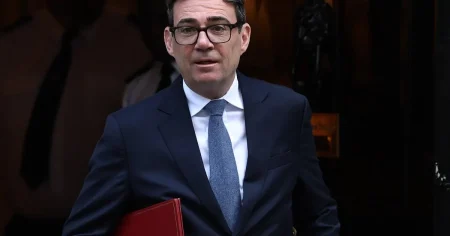


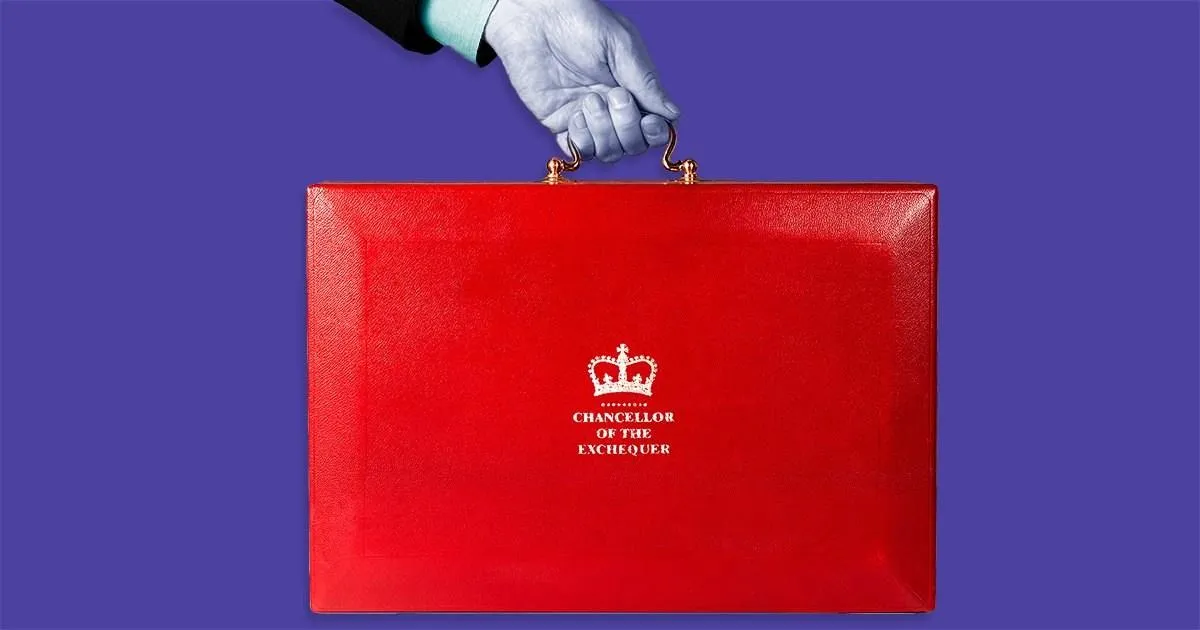
There is a moment on Budget day that feels oddly theatrical, even for the grand, perpetually self-important stage of British politics. The cameras jostle for position outside the black door of No. 11 Downing Street, a hush falls, the door swings open, and out steps the Chancellor of the Exchequer, gripping the famous red box. For a few brief seconds, the scene has a kind of pageantry that seems to belong to another century: the flash of polished leather, the tight, rehearsed smile, the faint metallic click of the lock as the Chancellor raises the box for the photographers. And yet everyone watching knows exactly what that box means. It means numbers are about to be scrutinized, promises are about to be tested, and — if the whispers are to be believed — it very often means taxes are going up. The red box is the starting pistol for a day of political drama, a curtain-raiser for hours of speech, debate, and furious commentary. But it is more than mere theater. For millions of households, the arrival of that box at the House of Commons marks the moment their own financial year takes a decisive turn: the cost of a pint of milk, the price of petrol, the amount of money left in a payslip at the end of the month. As the nation braces for the latest Budget — with talk of “deep reforms” to the energy system and a promise of ten “everyday fixes” designed to ease the cost-of-living squeeze — it is worth pausing to remember how this battered little container came to sit at the center of British fiscal life for more than 160 years. It has been carried by reformers and gamblers, by giants and footnotes, by men and women whose choices have reshaped the country. In a strange way, the box is a character in its own right. And like any long-running character, it has secrets, scars, and more than its fair share of embarrassing stories tucked inside its silk-lined interior.
The story begins in 1860 with William Gladstone, a man who served as Chancellor under three different prime ministers before eventually becoming a prime minister himself — a fact that strongly suggests he knew his way around a set of accounts, and perhaps around a cabinet as well. Gladstone commissioned the first purpose-built Chancellor’s box, a wooden case covered in red leather and lined with black silk, designed for one very specific task: carrying the Budget statement from No. 11 Downing Street across to the House of Commons. In those days, there was no livestream, no Twitter meltdown, no twenty-four-hour news cycle waiting to pounce on every phrase. The delivery itself was the message. When Gladstone walked those few hundred yards, he carried not just paper but the entire economic direction of the nation, and the red box gave that small journey a sense of weight and solemnity that no PDF or tablet could replicate. The tradition of red boxes, however, predates even him in the broader world of government. For centuries, ministers have used them to move official documents securely through the corridors of power, and monarchs have always had their own private red boxes filled with state papers to be reviewed each morning — so Her Majesty, and now King Charles, would know their red box as intimately as any chancellor ever did. There is something endearingly old-fashioned about this insistence on a physical object: in an age of encrypted emails and instant global communication, the red box remains stubbornly material, a tactile anchor to the rituals of state. It is also, let’s be perfectly honest, a gorgeous piece of craftsmanship — the sort of thing that would command a fortune in a museum gift shop, if it weren’t too busy still being the real thing.
But despite all the reverence, the red box has not always been treated with solemn, unbroken devotion. In 1965, James Callaghan — a chancellor with a reputation for pragmatism and a bit of a tin ear for tradition — decided he was not going to be constrained by the old ways. He turned up on Budget day carrying what the press immediately and gleefully dubbed a “vulgar brown valise,” an entirely ordinary suitcase that scandalized the traditionalists and delighted the cartoonists. It was a tiny moment of rebellion, and it proved an important point: the box is a choice, not a law of nature. In 1997, Gordon Brown commissioned a new, sturdier red box to replace the original, which had grown decidedly tatty after more than a century of faithful service. The old box was given one final moment in the limelight in 2010, when George Osborne was granted special dispensation from the National Archives to carry it for his first Budget — a bit like letting an old racehorse out of retirement for one last lap. Today, that venerable box rests in the Cabinet War Rooms, where it has been lovingly repaired with balsa wood, according to the Treasury. The fact that it needed balsa wood repairs is almost too perfect: even the boxes that hold the nation’s plans are fragile, human things. They get scuffed, dented, and battered. They fall apart under the weight of their own symbolism. And yet, year after year, the ritual continues, generation after generation, chancellor after chancellor. We live in the age of the tablet and the cloud, where the entire Budget can be read on a phone seconds after the Chancellor sits down. And still the red box endures — a stubborn, slightly absurd survivor of a bygone era. Perhaps that is precisely the point. It whispers to us: this is serious, this is tradition, and even if you can read every figure online, we are still going to do this properly.
The red box, for all its stately appearance, has also seen more than its share of human comedy, and there is something deeply reassuring about that. In 1869, a chancellor named George Ward Hunt arrived at the House of Commons, opened his red box with the practiced gravity of a man about to deliver his life’s work — and discovered that he had left the speech back at home. We do not know for certain whether the resulting humiliation was the direct cause, but Hunt lasted just six months in the job. It is a story that ought to be told to every nervous public speaker who has ever worried about forgetting their notes: even in the nineteenth century, with far fewer distractions, a chancellor could blow it in spectacular, mortifying fashion. Then there is the more recent, and far more consequential, case of Kwasi Kwarteng. In 2022, he delivered perhaps the most dramatic fiscal statement of the modern era — a sweeping package of tax cuts that sent the pound tumbling, spooked the bond market, and came perilously close to bringing down the UK insurance sector. And yet, famously, he never actually gave a full Budget, so there was no red box for him at all. His momentous announcement was carried from Downing Street to the Commons in a plain blue folder. That detail has since become a kind of silent editorial on the whole affair: the blue folder symbolized a break from settled expectations, a departure from the discipline that the red box seems to promise. The consequences were swift and brutal. Kwarteng became the second-shortest-serving chancellor in British history, and Liz Truss, who appointed him, became the shortest-serving prime minister this country has ever had. It is a cautionary tale with a simple lesson: the box does not confer wisdom. It merely delivers it — or fails to. The ceremonial object cannot protect you from arithmetic, from markets, or from your own mistakes. If anything, these moments of human frailty make the office more relatable. Chancellors are people who forget things, take wild risks, and sometimes learn harsh lessons in full view of the entire nation. The red box is only a carrying case for decisions that real human beings must own and defend, and when those decisions unravel, the box becomes no more than a prop in the tragedy.
And if you have ever looked at that red box on the news and thought, “I would quite like one of those,” you are not alone. The company behind the iconic case is Foster and Son, a London bootmaker founded in 1840, and it will happily sell you a version of your own. The price, should you wish to start a collection, is a not-so-modest £4,050. For that sum, you receive a case made from goatskin, complete with brass fittings, a lock, a wooden frame, and a hand-stitched leather handle. It is a beautiful object, and I suspect most of us would struggle to justify the purchase unless we had a truly extraordinary collection of official documents to carry around — or a very understanding bank manager. But the appeal has never really been about practicality. It is about the feeling of connection to history, the fantasy of being the person who gets to decide where the money goes, the thrill of holding in your hands the same kind of object that Gladstone and Churchill and every chancellor since have held. There is a reason the red box turns up in political cartoons, in Christmas pantomimes, and in the speeches of every mildly self-aware chancellor: it is a symbol of power, but it is also an object of pure curiosity, almost a toy for adults. You can imagine a child seeing it on the television and asking, with total innocence, “What’s in the red box?” And the answer, for most of history, has been: everything that matters.
So what will be inside it this time? The usual mix of hope and dread, probably. The Chancellor is expected to set out a series of “deep reforms” to the UK’s energy system — a nod to the long-term challenges of climate, cost, and security — while also expanding on the “everyday fixes” that the Treasury has already teased over the past week. That phrase, “everyday fixes,” is itself a small piece of humanizing political language. It is an admission that budgets are not just cold macroeconomic abstractions, not just lines in a spreadsheet or numbers on a graph. They are about whether your heating bill feels manageable this winter, whether your bus route still exists next spring, whether the school trip is still affordable, whether the local pharmacy stays open. In the end, the red box is just a box. The real contents are choices, and those choices have human faces. The tradition endures because it gives those choices a moment of escalation — a moment when the entire nation collectively looks at one person, one bag, one opening sentence, and holds its breath. It is a human drama as much as a financial one, full of nerves, calculation, vanity, occasional bravery, and occasional failure. And when the Chancellor steps out of No. 11 today, lifting the slightly battered symbol of all of that for the cameras, we will inevitably wonder: hero or villain, wise steward or reckless gambler? We will not know the full answer for quite some time, of course. The box only tells you so much. But the ritual is still worth preserving — because in a world of screens and soundbites, a leather case carried by a human being through a doorway remains a quiet reminder that politics, at its core, is still a messy, personal, all-too-human business. And the Budget, for all its infinite columns of figures, is finally about us: our homes, our wallets, our tomorrows.