

A Quiet Change in the Air: Respect Orders Arrive
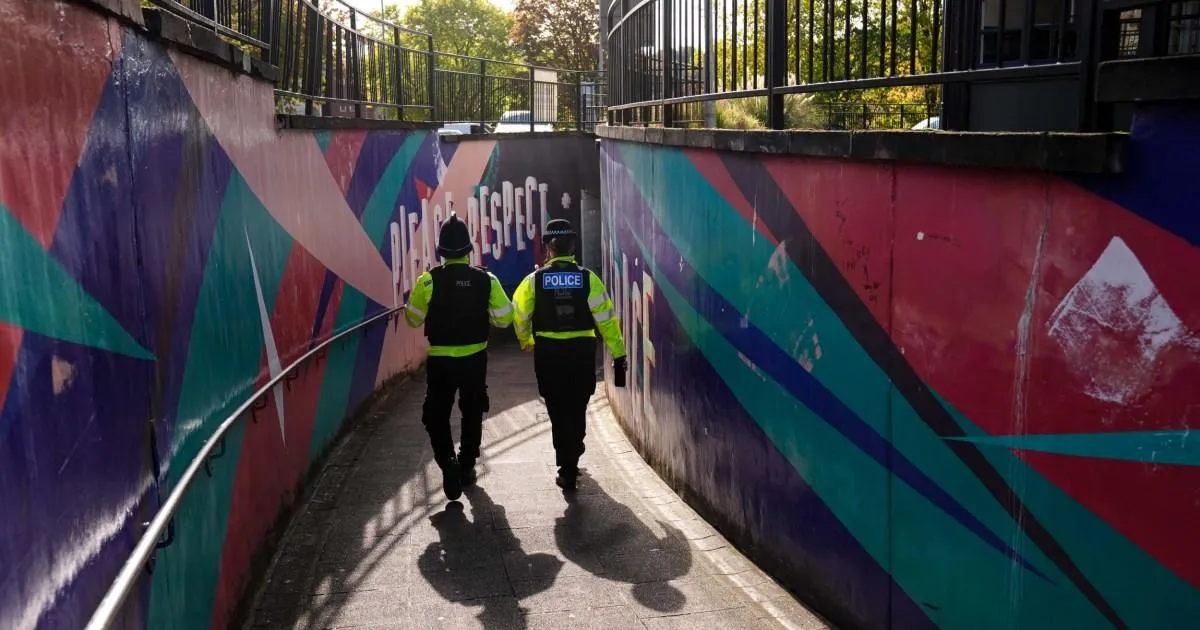
For years, the phrase “anti-social behaviour” has felt like one of those official terms that means everything and nothing at the same time. It conjures up images of noisy neighbours, streets littered with rubbish, groups of people making others feel unsafe, and the slow, grinding frustration of reporting something again and again without seeing any real change. On a grey Monday morning, with very little fanfare, something shifted in England and Wales. A new legal tool called the Respect Order quietly came into effect, and while it didn’t dominate the news cycle, it could change the way communities deal with the everyday misery that so often goes unpunished. This isn’t about dramatic crimes or headline-grabbing violence. It’s about the smaller things that eat away at people’s sense of safety and belonging: the vandal who tags your local shop, the persistent fly-tipper who treats the alley behind your home like a personal dump, the individual whose behaviour makes a bus stop feel like a no-go area. For too long, many people have felt that the system simply didn’t have the tools or the will to deal with these problems effectively. Respect Orders are designed to change that, and they do so by giving police and local authorities a broad and powerful new way to step in before bad behaviour spirals into something worse. The fact that they arrived with so little attention feels almost ironic, because their impact could be felt in towns and cities across the country for years to come. This is a story about law, yes, but it’s also a story about the everyday struggle to live peacefully alongside one another, and about whether the state is finally listening to the people who have been asking for help for so long.
What Exactly Is a Respect Order?
So what does a Respect Order actually do? The name might sound soft, almost like a polite request to behave yourself, but the reality is far more serious. These orders can be handed out not only by the police and local councils, but also by a wider range of authorities, including housing association landlords and transport networks. That means the people who run your local trains, buses, and even the estate where you live now have the ability to seek these orders against individuals who make life difficult for others. Once someone is given a Respect Order, they can be subject to a range of community-based punishments. They might be banned from town centres, prevented from drinking in public parks where they have caused trouble, or told to stay away from certain streets altogether. But unlike some older forms of punishment, the order isn’t just about saying “stay away.” It can also compel someone to do something positive. They might be required to carry out a certain number of hours of volunteering, or to attend alcohol treatment or anger management courses designed to address the root causes of their behaviour. This is a crucial point: the order tries to change people, not just contain them. But there is a sharp edge to all of this. Breaching a Respect Order is a criminal offence, and it can lead to up to two years in prison. That is not a slap on the wrist. The details of anyone given a Respect Order are uploaded to the Police National Computer, so officers on the street can instantly check whether someone is in breach. If a person who is supposed to stay out of a certain area is found there, they can be arrested on the spot. This combination of support and sanction is what makes the Respect Order distinctive. It offers help, but it also demands responsibility. For communities that have felt abandoned by the justice system, that message alone might be powerful. For the individuals who receive these orders, it is a clear warning that their behaviour is no longer going to be tolerated, and that they have a choice: take the help being offered, or face the consequences.
The Politics and the Promise Behind the Orders
The Respect Order didn’t just appear out of thin air. It has a political history, and it was first floated by Keir Starmer when he was Leader of the Opposition, in a speech at Port Vale FC in March 2023. He described the proposed orders as “anti-social behaviour orders with teeth,” a phrase that was deliberately provocative and designed to signal a tougher approach. He also had a direct message for vandals and fly-tippers: “You had better be prepared to clear up your mess.” It was a line that resonated with people who were sick of seeing their neighbourhoods trashed with no consequences. Now that Starmer is Prime Minister and the orders have become law, the promise is being put into practice. Home Secretary Shabana Mahmood has framed the new measure as a manifesto commitment delivered, saying: “This delivers on a commitment we made to the British people in our manifesto. And, most importantly, those who make life a misery for others will now face the consequences of their actions.” That is strong language, and it reflects a government that wants to be seen as tough on the low-level disorder that can blight everyday life. But there is another side to this story. The legal definition of behaviour that could lead to a Respect Order is, according to the Home Office, conduct that “has caused, or is likely to cause harassment, alarm or distress.” That is a very broad definition, and it has raised concerns. Parliament’s Joint Committee on Human Rights warned last year that this kind of language “risks sweeping up less serious matters along with behaviour that demands a legal response.” The committee added that this could “disproportionately affect vulnerable groups and result in measures being taken that interfere with human rights to an unjustified extent.” In other words, there is a real tension at the heart of this new law. It is designed to protect communities, but it also gives authorities a great deal of discretion, and history has shown that such powers can sometimes be used against the very people who need the most help, including those with mental health issues, homelessness, or addiction problems. The success of the Respect Order may ultimately depend on how carefully and fairly it is used.
The Ghost of the ASBO: What’s Different This Time?
It is impossible to talk about Respect Orders without mentioning the elephant in the room: the Anti-Social Behaviour Order, or ASBO, introduced under Tony Blair in the late 1990s. For a generation, the ASBO became a cultural touchstone, a symbol of New Labour’s tough-on-crime approach, but also a source of ridicule and controversy. They were handed out to people as young as ten, and for some, having an ASBO became a kind of twisted badge of honour. There were stories of young people openly bragging about their orders, and the measure eventually became associated more with failure than with success. The Conservative-Liberal Democrat coalition government scrapped ASBOs in England and Wales in 2014, replacing them with a range of other tools that, in the eyes of many, did little to solve the underlying problem. So why should Respect Orders be any different? The Home Office has been keen to stress the differences. First, as mentioned earlier, Respect Orders can compel offenders to take positive action, such as attending courses or doing unpaid work, rather than simply banning them from places. This is an attempt to rehabilitate as well as punish. Second, and perhaps more importantly, Respect Orders only apply to people aged 18 and over. This is a deliberate break from the ASBO era, when children as young as ten could be branded with an order that followed them around for years. The thinking seems to be that adults should be held accountable for their behaviour, while young people, who are still developing and often acting out because of circumstances beyond their control, should be dealt with through other means. This is a significant shift, and it may help the Respect Order avoid the stigma that eventually killed the ASBO. But the comparison will not go away easily. People remember the ASBOs, and they remember how a policy that was supposed to reclaim the streets sometimes ended up making things worse. The Respect Order is being sold as a smarter, more mature version of that old idea, but only time will tell whether it can deliver where its predecessor failed.
Voices From the Ground: Retail Workers and Police Weigh In
The introduction of Respect Orders has not gone unnoticed by those who deal with anti-social behaviour on a daily basis. Joanne Thomas, the general secretary of the retail and distribution union Usdaw, said she hopes the new orders “will be successful in changing the criminal behaviour that is blighting our shops and communities.” She added: “It is our hope that these new measures will help turn the tide on shop theft and give retail staff the safe working environment they deserve.” This is a significant endorsement, because shop workers are among the most affected by persistent anti-social behaviour. They are the ones who have to confront shoplifters, deal with aggressive customers, and clean up the mess left behind by people who have no respect for others. For years, many have felt that the justice system simply did not take their safety seriously. The Respect Order offers a glimmer of hope that things might be different. The police have also welcomed the new powers, though with a note of caution. Temporary Deputy Chief Constable Catherine Akehurst, who leads on anti-social behaviour for the National Police Chiefs’ Council, said that such behaviour can “undermine a sense of safety in communities, erode pride in neighbourhoods, and diminish overall quality of life.” She described the new tool as enabling “swift enforcement against prolific offenders, while prioritising rehabilitation and support to break cycles of criminal and anti-social behaviour.” That phrase “cycles” is important. Anti-social behaviour is often not just a series of random acts; it is a pattern, and patterns can be hard to break without intervention. The hope is that Respect Orders will provide that intervention, forcing people to confront their behaviour while also giving them the support they need to change. But there is also a recognition that no law is a magic wand. The orders will only work if they are enforced consistently, if the support services are actually available, and if communities feel confident enough to report problems in the first place. The reaction from frontline workers and police suggests that there is genuine optimism, but also a sense of watchfulness. They have seen new powers come and go before, and they know that the difference between a successful policy and a failed one often lies in the details.
A New Chapter, or Just Another Promise?
As the dust settles on the introduction of Respect Orders, the big question is what they will actually mean for ordinary people. Will they make streets feel safer? Will they reduce the feeling that nobody is in charge? Or will they become another well-intentioned policy that gets bogged down in bureaucracy, misused by overzealous authorities, or quietly forgotten? There is no easy answer. The law is now on the books, but laws only matter when they are used well. The Home Secretary’s words, “those who make life a misery for others will now face the consequences of their actions,” are powerful, but they are also a promise that must be kept. For communities that have suffered in silence for too long, the Respect Order represents a chance to finally be heard. For the individuals who are given these orders, it represents a final opportunity to change their ways before they lose their freedom. And for the rest of us, it is a reminder that a functioning society depends not just on big institutions and grand gestures, but on the small, everyday agreements we make to look out for one another. The Respect Order is not a cure-all. It will not solve poverty, inequality, or the deep social fractures that often lie beneath anti-social behaviour. But it is a start. It is an acknowledgment that the people who litter our streets, intimidate our neighbours, and turn public spaces into places of fear are not beyond reach. They can be held accountable, and they can be helped. The quiet arrival of this new law may not have made headlines, but its effects could be felt for a long time. Whether that effect is positive or negative will depend on all of us, and on the wisdom of those who wield this new power. For now, there is reason to hope, but also reason to watch closely. The Respect Order has arrived, and the real test has only just begun.