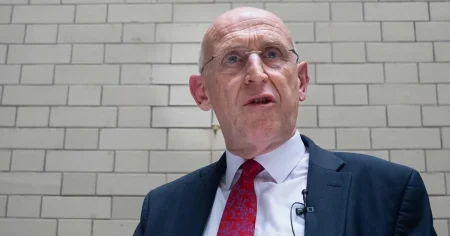


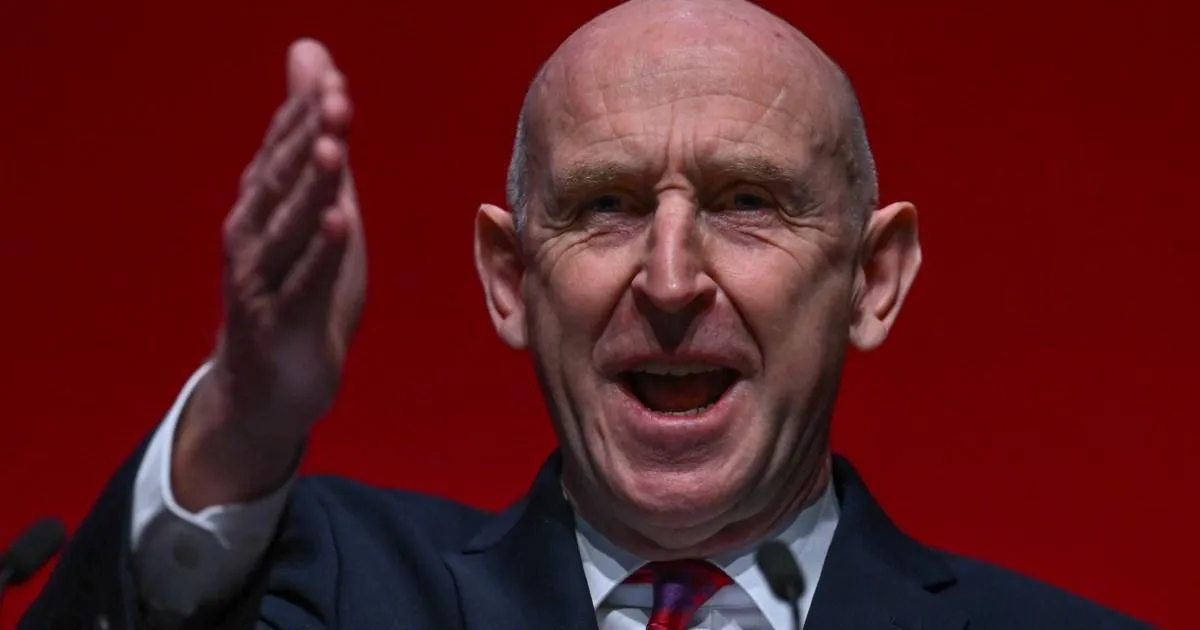
Budget Day has a way of making even the most seasoned political observers feel a little giddy, because it is one of those rare moments in British politics when a single speech can genuinely change the way millions of us live. The Chancellor’s Autumn Budget is always a major event on the political calendar, but this year it carries extra weight. Andy Burnham has been Prime Minister for just over three months, and in that short time his government has promised a great deal. This is not just fiddling around the edges. There are ambitious, costly proposals to end rough sleeping, to transform the care sector, and to build a state that feels more compassionate and more practical. There is also a sweeping programme of devolution, including handing real economic levers to English regional mayors, which is exactly the kind of change that excites some and unsettles others. All of this, of course, requires money. And that is where John Healey comes in. Healey is the man Burnham chose as Chancellor, and today he has to stand at the despatch box and explain how all those promises will be funded. It is the kind of moment that defines a government. Anyone can make a pledge at a party conference or in a slick social media video. Turning those pledges into a Budget requires numbers, choices, and courage. The air is thick with speculation, and the newspapers have been full of leaked ideas and backroom briefings, but the full picture will only emerge when Healey actually speaks. It is a big test, not just for him, but for the entire project Burnham is trying to build.
For those who want to watch the drama unfold, the practical details are simple. Healey will deliver the Budget immediately after Prime Minister’s Questions, which means people should expect him to rise to his feet at around 12:30 in the afternoon. The speech will be broadcast live on BBC Two, ITV, Sky News, and Parliamentlive.tv, so there is no excuse for missing a moment of it if you are the kind of person who enjoys watching democracy do its heavy lifting. If you are not, you will still hear about it, because the fallout will dominate the news cycle for days. The Chancellor has already tried to manage expectations, though. In conversations with reporters, Healey has played down the prospect of any earth-shattering surprises, saying this is not the time for major moves on taxation or spending. That might sound like an attempt to lower the temperature, but it is also a recognition of the reality facing any new government. The economy is fragile, public finances are strained, and every promise has a price tag attached to it. Even with those words of caution, there are plenty of live debates swirling around the Budget. Some of the biggest questions involve pensioners, energy bills, and the future of public services. Healey may not want to produce a firework display, but the public still expects something that feels fair and sensible. A Budget does not need to be dramatic to be meaningful. It just needs to make life a little less stressful for ordinary people, and that is exactly the standard this one will be judged against.
One of the most pressing issues heading into the Budget was the awkward problem of pensioners and income tax. After last year’s increase, the state pension was sitting just below the £12,570 personal allowance threshold. That might sound like a technical detail, but the triple lock, which guarantees the pension rises in line with inflation, wages, or 2.5 percent, whichever is highest, practically guaranteed that the state pension would push above that threshold this year. That would have meant pensioners being dragged into paying income tax for the first time ever. It is not hard to see why that would be a political disaster. Imagine the headlines, and imagine the letters landing on doormats, telling elderly people they suddenly owe the taxman money. It would feel deeply unfair, even if the actual amount was small. According to the Sunday Times, however, Healey is expected to avoid that outcome by increasing the tax-free allowance for pensioners on low incomes to £13,036, which is roughly where the new state pension is expected to sit. The report also suggested that this threshold would continue to rise in line with increases to the state pension over the course of the Parliament. If true, that would be a quietly important move. It would protect pensioners from being caught in a trap where their pension increase is effectively eaten up by tax. It also sends a clear signal that the government understands how sensitive this issue is. There are plenty of economists who would argue about the fairness of different approaches, but for the pensioner who has worked all their life and simply wants to heat their home, this is about basic dignity.
Long before the main event, the Treasury had already tried to build up some goodwill by announcing five “everyday fixes.” These are the kinds of measures that do not always make the front page, but they have a real impact on people’s daily routines. The first was ending the cliff edge on Carer’s Allowance, which had been punishing people who provide enormous amounts of unpaid care by suddenly cutting their support when they crossed a certain threshold. That kind of rigid rule has caused real distress for families who are already stretched thin. The second fix involved extending parental pay to around 150,000 more people, which is a step towards recognising that modern families come in all shapes and sizes. Then there were rolling out hundreds more Post Office drop boxes, making it easier to send parcels without queuing, and making higher tax-free business mileage rates permanent for people who use their own cars for work. Finally, the Treasury said it would scrap import tariffs on a list of foods that includes chocolate, baked beans, and gherkins. That last one might sound almost comical, but it is exactly the kind of small change that can shave a few pennies off the weekly shopping bill. None of these measures will transform the economy on their own. Taken together, though, they show a government trying to make the machinery of state feel a little less bureaucratic and a little more human. It is a reminder that politics is not only about grand visions and sweeping reforms. Sometimes it is about making it easier to send a parcel, or to care for a loved one, or to buy a tin of beans without feeling like you are being overcharged.
Perhaps the most substantive area of the Budget will be energy. The Observer has reported that Healey will kick off a series of deep reforms to the UK’s energy system, with the goal of bringing costs down and reducing household bills. One of the most interesting ideas is to “decouple” gas from electricity prices. Right now, the cost of gas often sets the price of electricity, even when that electricity is generated by wind or solar power. That means when global gas prices spike, everyone’s bills go up, even if the UK is producing plenty of renewable energy. It is a strange quirk of the system, and it has left many people wondering why their bills are so high even as renewables become cheaper. If the government can find a way to break that link, it could be genuinely transformative for household budgets. There is also the question of standing charges, the daily fixed fees that appear on energy bills before you have even switched on a single appliance. Burnham reportedly told Healey and Energy Secretary Miatta Fahnbulleh to look at removing standing charges from gas bills, and the results of that review may emerge in the Budget. For anyone who has ever opened an energy bill and stared in confusion at a charge that seems to appear no matter how little energy they use, this is a big deal. It feels like a hidden tax, and it hits lower-income households particularly hard because the fixed charge takes up a larger share of their overall bill. If the Budget delivers meaningful reforms in this area, it could make a real difference to millions of people who are still struggling with the cost of living.
There is also the question of defence spending. Healey has a complicated history with this issue, having resigned as Keir Starmer’s defence secretary in a row over defence funding. According to the Sunday Times, he is now set to announce billions in extra spending for the sector, which would be a significant statement of intent, especially at a time when global tensions are high. It would also be a deeply personal moment for a Chancellor who once walked away from a role because he believed the armed forces were not getting the money they deserved. That kind of backstory gives the Budget a layer of drama that spreadsheets alone cannot capture. One area where the government is likely to hold back, however, is on young people who are not in education, employment, or training, often called NEETs. That might be surprising, given how much attention the issue has received, but the government is waiting for the recommendations of Alan Milburn’s review into the problem, which is due shortly after the Budget. It is a frustratingly slow process for those who want action now, but it does suggest that ministers are trying to make decisions based on evidence rather than headlines. In the end, this Budget is probably not going to be remembered for a single dramatic announcement. It will be remembered as the moment when the Burnham government had to grow up, face the arithmetic, and show what it is really made of. The promises have been made. The vision has been articulated. Now John Healey has to reconcile hope with reality, and the country will be watching to see whether he can pull it off.