
Here is a humanized summary of the situation, expanded to reflect both the practical disruption and the deeper human story behind the headlines.
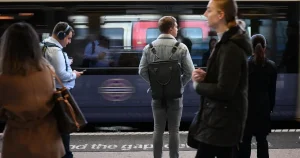
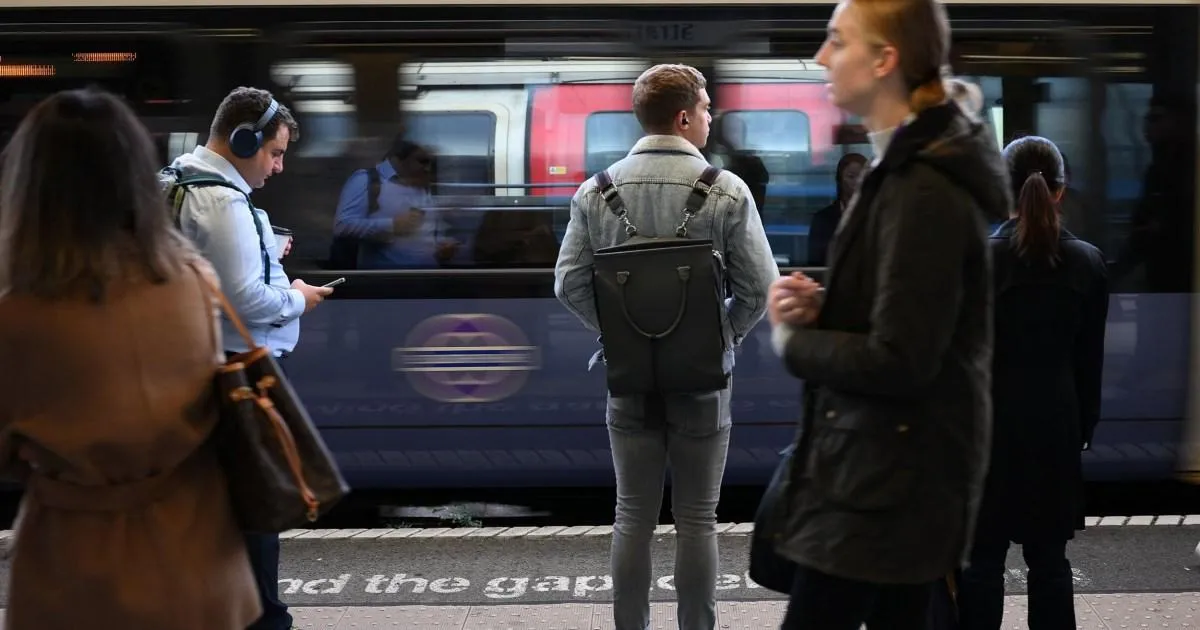
This morning’s commute along one of London’s busiest railway arteries was thrown into chaos, and for thousands of people, the day began not with the familiar rhythm of crowded platforms and half-finished coffee, but with confusion, frustration, and the dull realization that nothing was moving. The emergency incident that shut down all lines between London Paddington and Heathrow Terminals, as well as Reading, sent shockwaves through a network relied upon by airport-bound travelers, business commuters, and everyday Londoners alike. The closure brought the Elizabeth line, Great Western Railway, and the Heathrow Express to a standstill, with cancellations and severe delays rippling outward from the moment the news broke. For anyone standing on a cold platform watching their expected train vanish from the departure board, the feeling was one of helplessness. Perhaps they were heading to a crucial meeting, racing to a flight, or simply trying to get to work on time. In that suspended moment, the city’s immense complexity felt suddenly fragile—one incident, and the careful choreography of thousands of lives was undone. Yet amid the disruption, there was also a quiet, unspoken awareness that the closure was not just an inconvenience. As details slowly emerged, it became clear that something far more serious had occurred, and the anger at a delayed morning began to soften into something closer to solemnity.
National Rail was quick to issue an advisory, explaining that the emergency services were dealing with an incident between London Paddington, Heathrow Terminals, and Reading. To allow them to carry out their work safely, all lines had been closed, and passengers were told to expect cancellations, delays of up to sixty minutes, and revised journeys until at least midday. For many, that official wording—precise, careful, and deliberately vague—only added to the sense of unease. The Transport for London status alerts offered a similarly stark picture: the Elizabeth line was suspended between Paddington and Heathrow Terminals T4 and T5, and also to Reading, while the stretch between Paddington and Abbey Wood was suffering severe delays. Commuters tried to piece together alternative routes, refreshing apps, checking bus options, and passing hurried words of advice to one another. But the scale of the disruption was immense. The Paddington corridor is not just another line; it is a vital link to one of the world’s busiest airports, a gateway for international travelers, freight, local passengers, and thousands of workers who depend on it twice a day. When it stops, the effects are felt far beyond the platforms themselves—in airport terminals, office buildings, schools, and homes across the capital. The promise that major disruption would last until noon offered a timeline, but it could not ease the anxiety of those stranded or the sorrow of those beginning to understand why the trains had stopped.
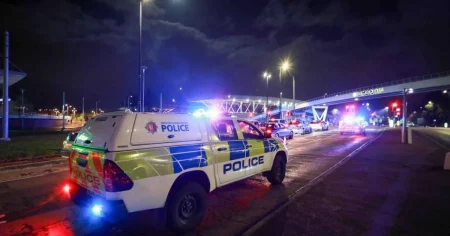
As the morning unfolded, British Transport Police released a somber statement that reframed everything. Officers had been called to Hanwell railway station at around 6.16am following reports of a casualty on the tracks. Paramedics attended alongside them, and a person was sadly pronounced dead at the scene. The incident was not being treated as suspicious, and a file would be prepared for the coroner. The London Ambulance Service described its response in clinical detail: an ambulance crew, a paramedic in a fast-response car, an incident officer, and the hazardous area response team, as well as a trauma team from London’s Air Ambulance. Despite the speed and professionalism of the responders, the person died. In that moment, the morning’s frustrations—the missed meetings, the delayed flights, the disrupted plans—dimmed in significance. What remained was the stark reality that a human life had ended, suddenly and unexpectedly, in a place where thousands of lives pass by every day. The commuters waiting on platforms had been held at a distance from the tragedy, their paths paused while emergency workers did their difficult, respectful work. But the memory of that fact would travel with them throughout the day, a quiet reminder that sometimes a halted train is more than a disruption—it is a moment of collective reverence for a stranger whose story we will never know.
For those still trying to reach their destinations, a complicated patchwork of alternatives was hastily arranged. Travelers were told that Elizabeth line tickets would be accepted on other Underground services, London buses, South Western Railway services between Waterloo and Reading, Chiltern Railways, the Docklands Light Railway, Southeastern services between other London stations and Abbey Wood, and Thameslink between Farringdon and Abbey Wood. Great Western Railway passengers were offered a separate list of diversions: Avanti West Coast trains between Euston and Birmingham New Street, Chiltern Railways between Marylebone and Oxford, CrossCountry between Reading and Oxford, London Northwestern Railway between Euston and Birmingham New Street, and South Western Railway between Waterloo and Reading. It was, in one sense, a remarkable demonstration of the city’s resilience—a sprawling network bending to accommodate the unexpected. But for the individual traveler, it meant navigating unfamiliar platforms, longer journeys, and uncertainty at every turn. Those heading to Heathrow faced a particular challenge, wondering whether to chance a bus or taxi, or simply abandon their plans. Those going to Reading or beyond were left weighing the value of waiting against the cost of missing what they were meant to do. In the chaos, there were small acts of kindness: strangers comparing routes, ticket office staff patiently explaining options, bus drivers taking on crowded loads with extraordinary calm. These are the moments that often go unnoticed in normal times, but on mornings like this, they become the thread that holds the city together.
This incident also invites a deeper reflection on the pressures and vulnerabilities embedded in modern life. Every day, enormous numbers of people place their trust in a transport system that operates with astonishing precision, carrying them through tunnels, over bridges, and into the heart of the city. It is easy to take that reliability for granted, to become frustrated at the slightest delay, to forget that the system is run by human beings and serves human beings. Events such as this one are a sobering reminder that safety must always come first, even when it means inconvenience. The emergency services who responded at Hanwell—the police officers, paramedics, air ambulance doctors, and railway staff—acted with speed and compassion, their priority not the smooth running of the morning timetable, but the preservation of life. That is an ethos that deserves respect and gratitude, even as we sympathize with the stranded traveler staring at a departure board that no longer offers any answers. There is also a broader conversation to be had about the importance of mental health support, railway safety, and the many unseen struggles that people carry with them. A person was lost, and while the investigation will now proceed quietly, the questions it raises about how we care for one another will linger far longer.
As the morning wore on, service was expected to resume gradually, with trains beginning to move again after the emergency services completed their work. But the impact of this incident will not simply dissolve when the next train pulls into the platform. There will be a backlog of passengers, missed connections, and exhausted commuters arriving hours late. There will be apologies, refund claims, and revised schedules. Yet there will also be something else—a shared experience that connects everyone who was caught up in the disruption. For a brief time, the city’s usual relentless momentum was paused, and in that pause, people were forced to slow down, to look up from their phones, to speak to one another, and to remember what truly matters. The tragedy at Hanwell is not something to be forgotten, and the best response to such a loss is to carry that awareness into the rest of our days: to be patient with one another, to treat every person with kindness, and to remember that behind every timetable and every train, there are human lives, precious and fragile. For those affected this morning, the advice is simple: allow extra time, check travel updates, and above all, be gentle with one another. The journey may have been delayed, but it will continue, as the city always does—stretched, somber, and yet somehow still moving forward.