


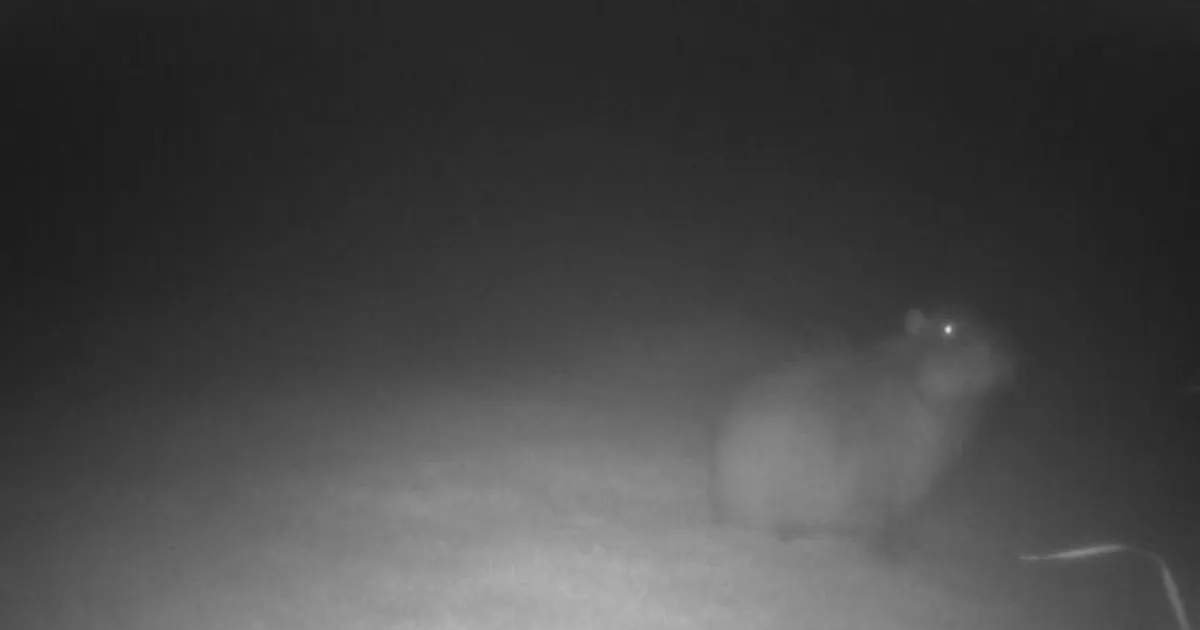
Samba the capybara has become the most famous fugitive in Hampshire, and the newest footage of her suggests she is not merely surviving but quietly thriving. Months after she slipped away from Marwell Zoo, a trap camera caught her doing what capybaras do best: munching contentedly on a pile of treats left by keepers who are trying, with enormous patience, to win back her trust. The image is both endearing and absurd—a six-year-old rodent from the Amazon, now living as a voluntary exile in the English countryside, apparently unfazed by the cold creeping in and the headlines chasing her. Zookeepers say they are working tirelessly to bring her home, but their approach is less about storming after her and more about setting a dinner table and waiting. Samba knows exactly where the meals are. She arrives, eats, and melts back into the undergrowth. In a world that often feels all too predictable, the sight of a giant, caramel-colored rodent ignoring every effort to make her come back indoors has turned into a gentle, comic epic. It is hard not to smile at the thought of her stepping out of the dawn mist, sniffing the air, and heading straight for the vegetables.
The zoo’s spokespeople have been careful to explain that this is not a simple rescue mission. Recovering Samba is, in their words, a gradual and carefully managed process. They know the area where she is living, but they cannot simply walk up and collect her, because frightening or disturbing her could cause her to bolt, making a safe recovery far more difficult. So instead of chasing her with nets, they have been establishing a feeding area, encouraging her to become familiar with the location and return regularly. This is not capture; it is negotiation. Every carrot left behind is a small act of diplomacy, a quiet signal that home, or something like it, is still available. The keepers are learning the same lesson many of us learn when trying to help a stubborn animal: you cannot force trust, only earn it. The location has been kept confidential because Samba is currently on private land, and the team does not want curious onlookers or amateur trackers disturbing the delicate process. It is a beautifully humane way of handling the situation. There are no tranquilizer darts here, no dramatic swoops. Just patient people, a hungry capybara, and a shared conversation conducted through food.
The story began seven months ago, when Samba and her sister Tango arrived at Marwell Zoo from Jimmy’s Farm and Wildlife Park. The two capybaras were placed in a temporary enclosure while they settled in, but at some point Samba made a daring escape, slipping away with her sister before the gap was discovered. Tango was quickly found and returned to safety, but Samba proved far more elusive. Thermal drones crisscrossed the sky, sniffer dogs worked the riverbanks, and search teams scoured every hiding place they could think of. Yet the giant rodent seemed to vanish entirely, as if the English countryside had simply swallowed her. For months, there was nothing but silence and worry. The search became something of a local legend, with residents sharing sightings and hypotheses about where she might be hiding. But Samba, it turns out, is a natural survivor. Capybaras are semiaquatic and extraordinarily agile in the water, and she likely used the rivers and dense vegetation to stay one step ahead of her pursuers. Every day outside the zoo proved her resilience. She found food, shelter, and a way to avoid human contact, even with drones buzzing overhead and handlers calling her name. It is hard not to admire her, even while hoping she will eventually allow herself to be found.
One of the most charming chapters in Samba’s story came from an ordinary dog walker named Claudie Paddick, who spotted her in March, resting in the sunshine on the banks of the River Itchen. Paddick, a mother of two and a family lawyer, was out with her black Labrador, Growler, and her sausage dog, Patsy, when Growler began barking at something by the water. Paddick did not recognize the creature at first, and her confusion is completely understandable. A six-year-old capybara is not exactly a common sight in the British countryside. Samba, startled by the barking, jumped into the river and swam away without looking back. But not before Paddick managed to snap a photo and send it to a neighbor, who recognized the animal and called the zoo. Her words afterward captured the strange delight of the encounter: “A capybara is something I have never seen or even heard of before, but now I’m a bit of an expert. We see lots of animals when we go walking down the river, but never a rodent from the Amazon.” It is a perfect snapshot of how this story has unfolded—ordinary people suddenly pulled into the orbit of an exotic animal, discovering that the wilderness can still surprise us, even in the most familiar places.
Samba’s background only deepens the poignancy of her adventure. Capybaras are the largest rodents in the world, native to the rainforests and wetlands of South America, where they live in social groups near rivers and lakes. They are gentle, herbivorous creatures, often compared to giant guinea pigs, and they are not built for cold English winters. Yet Samba has managed to survive for months in an environment vastly different from her natural home, relying on her instincts and, increasingly, on the secret meals left by her keepers. The zoo has not given up on her, and their dedication is striking in an age when many institutions might quietly move on. Instead, they have chosen to wait and to care, understanding that Samba needs to feel safe before she can be coaxed back. There is something melancholy about the thought of her alone during winter, separated from her sister and the only human caretakers she has known. But there is also something triumphant in her independence. She is a reminder that even the most domesticated of animals carry a wildness inside them, a pull toward freedom that no fence can completely quiet. Her choice to live on the edge of human society, dipping into the feeding area only when it feels safe, is a delicate balance between belonging and escape.
As the nights grow longer and the temperatures fall, the question of Samba’s future remains unresolved. The zoo is hopeful, and the trap camera footage has given everyone a reason to believe she can still be brought home safely. But there is also a part of the public that has come to love her precisely because she refuses to be caught. She has become a symbol of quiet rebellion, a living proof that sometimes the best life is not the one laid out for you but the one you carve out for yourself, even if it means sleeping under hedges and dining al fresco in the English drizzle. Perhaps one day soon the team will succeed, and Samba will be tucked back into a warm enclosure with her sister and a lifetime of snacks. Or perhaps she will continue her improbable adventure, foraging her way through the countryside, becoming a strange and wonderful legend passed down by local dog walkers. Either way, the story of Samba the capybara has already captured something precious: a reminder that grace, patience, and a little bit of humor can go a long way. For now, the feeding station remains stocked, the keepers remain watchful, and Samba remains free—living, for the moment, on her own terms.