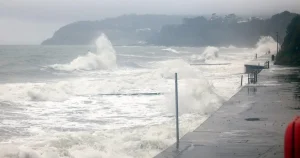



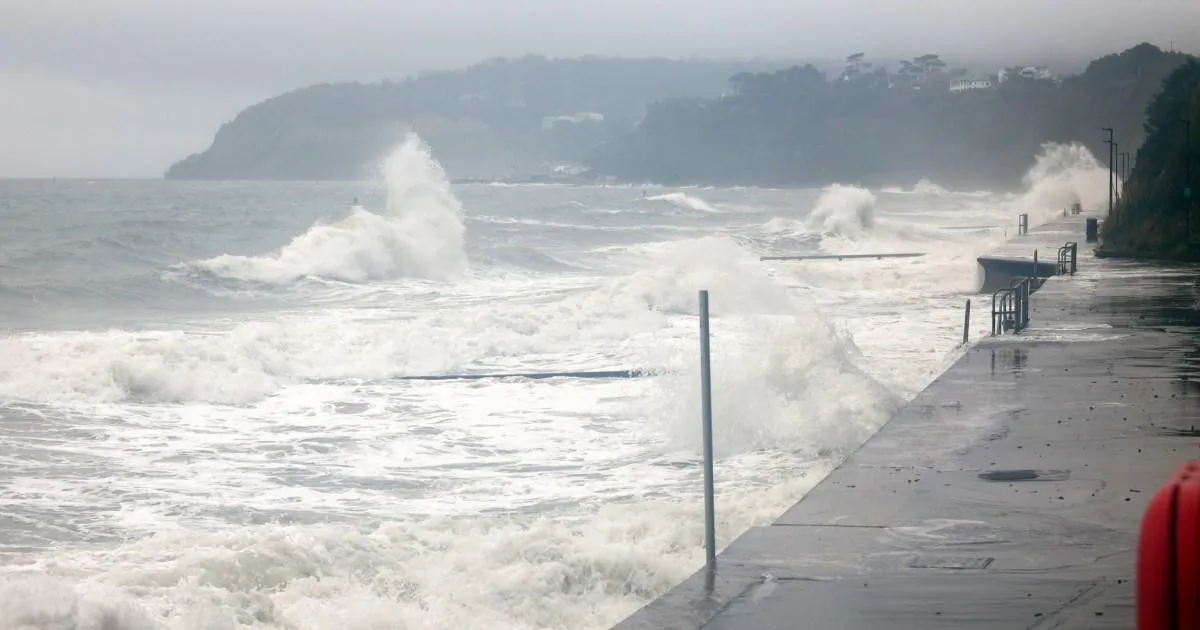
There are moments in life when the ordinary suddenly becomes unthinkable. A woman in her fifties, out for a morning walk with her dog along the Isle of Wight coast, found herself caught in the kind of weather that turns a familiar shoreline into a dangerous, unpredictable place. She was walking on the revetment between Sandown and Shanklin, a stretch of sea defence that sits between the land and the water, when large waves swept her off her feet. Strong winds, the kind that had been battering the south coast for days, had made the sea rough and violent. It is not hard to imagine the scene: the grey sky, the churning water, the sudden surge of a wave arriving without warning. A simple walk, something she had probably done many times before, became a tragedy in a matter of moments. The dog she was walking survived, which offers a small, bittersweet thread of hope in an otherwise heartbreaking story. But for the woman, the sea was too powerful, and despite the swift response of emergency services, she could not be saved.
The alarm was raised just after eleven in the morning. Hampshire & Isle of Wight Constabulary said officers were alerted by the ambulance service at 11:17am and quickly joined HM Coastguard at the scene. What followed was a rescue operation involving some of the most dedicated and highly trained people in the country. A Coastguard helicopter was scrambled, rescue teams raced to the coastline, and an RNLI lifeboat was launched into the churning waters. Their mission was clear: reach the woman as quickly as possible and bring her back to safety. She was pulled from the water, but despite everything that could be done, she was pronounced dead at the scene. It is a devastating outcome for her family, for the witnesses who saw it happen, and for the rescuers who did everything in their power to save her. Her next of kin have been informed, and a file will now be prepared for the coroner, a process that will try to make sense of a senseless accident. The fact that her dog survived is both a relief and a reminder of the ordinary life that was interrupted so brutally. In the aftermath, the beach and the revetment would have been cordoned off, the helicopter disappearing over the horizon, leaving a quiet, heavy sadness in its place.
This tragedy did not happen in isolation. It came at the end of a weekend in which Britain had been battered by back-to-back storms, each one more ferocious than the last. Met Office data showed that Storm Austen brought a maximum gust of 69 knots, around 79 miles per hour, to the Isle of Wight, while Storm Boelo pushed wind speeds in some exposed areas into the low eighties. These are not gentle breezes; these are winds that can knock a person off their feet, tear branches from trees, and turn the sea into a churning monster. The revetment where the woman was walking would have been directly in the path of the worst of the weather. Waves crashing against the stone and concrete would have sent spray high into the air, and the sheer force of the water can be deceptive. A wave does not need to look enormous to be dangerous; the weight and momentum behind it can drag a person into the water in an instant. The fact that she was caught by waves while walking her dog suggests that the weather had perhaps worsened suddenly, or that the power of the sea was underestimated. It is a cruel reminder that even on familiar ground, nature demands respect.
The same weather systems that claimed this woman’s life caused chaos across the whole of the United Kingdom. Winds exceeding 80 miles per hour and torrential rain led to flooding, building damage, and widespread disruption. Perhaps the most dramatic image came from Brighton, where the historic West Pier partially collapsed as Storm Austen slammed into the south coast. The pier, which has stood derelict since 1975, had long been a symbol of faded Victorian grandeur, a skeletal structure reaching out into the sea. Footage showed it falling into the water as large waves pounded it, pieces of history being swallowed by the ocean. For many people, it was a shocking sight, a landmark that had survived decades of storms and neglect finally succumbing to the elements. The chaos was not limited to the coast. Nearly 7,000 homes were left without power as high winds damaged lines and infrastructure. Flights were cancelled, trains were delayed or stopped altogether, and millions of people found themselves under weather warnings by mid-morning on Friday. Schools closed, events were postponed, and people across the country were told to stay indoors unless absolutely necessary. For most, the storms were an inconvenience, a reason to cancel plans and hunker down. For the woman on the Isle of Wight, they were something far more tragic.
And yet, the question on many people’s minds is whether this is just the beginning. With a so-called super El Niño threatening to wreak havoc internationally, experts have warned that there could be more weather chaos to come. El Niño, the natural climate phenomenon that warms parts of the Pacific Ocean, has far-reaching effects on weather patterns around the world. One of the more worrying consequences is its ability to disrupt the Arctic polar vortex, the powerful winds that circle the North Pole. When the polar vortex weakens, colder air can drift southwards into Europe and North America, potentially bringing heavy snow and freezing temperatures. But the impact is not limited to winter weather. The effect also heightens the potential for wet weather, stormy conditions, and flooding. In other words, the storms that have already caused so much destruction and heartbreak may not be the last. Forecasters and climate scientists are watching the situation closely, trying to predict what the coming months might bring. For communities still recovering from the damage of Storm Austen and Storm Boelo, that is a worrying prospect. Every new weather warning brings with it the same tension, the same fear of what might happen next. And for the family of the woman who died, the forecast is no longer just a matter of inconvenience. It is a reminder of the day their world changed forever.
In the end, this story is not just about wind speeds or weather warnings. It is about a woman who went out for a walk and never came home. It is about a dog that survived, perhaps the only witness to the final moments of a life, now waiting for someone who will never return. It is about the people who tried to save her, the police officers, coastguards, and lifeboat crew who rushed into dangerous conditions because that is what they do. It is about a community on the Isle of Wight, a place known for its beauty and tranquillity, suddenly confronted with the raw power of the sea. The revetment between Sandown and Shanklin will still be there, as it has been for years, but for those who know what happened, it will never look quite the same. The sea is beautiful, but it is also unforgiving, and this tragedy is a stark reminder of that truth. As the investigation continues and a coroner’s file is prepared, the most important thing is to remember the woman herself, not just as a victim of a storm, but as someone with a life, a family, and a dog that loved her. In the coming days, as the next storm brews on the horizon, perhaps the best tribute we can offer is to hold our loved ones a little closer, to take the weather warnings seriously, and to never underestimate the power of the world around us. Her dog survived, but her loss will be felt for a long, long time.