

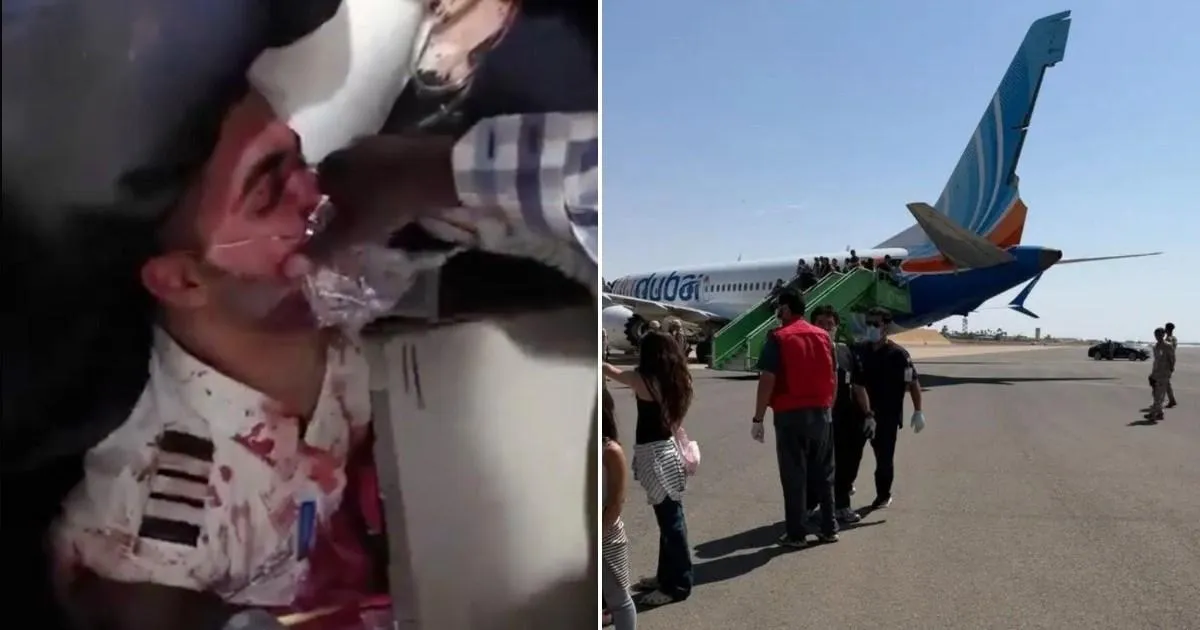
For the passengers aboard Flydubai Flight FZ1073, an ordinary journey from Dubai to Tel Aviv became a waking nightmare in the blink of an eye. The cabin had been filled with the usual hum of conversation and the clatter of trolleys, but that calm was shattered when the aircraft suddenly plunged thousands of feet, throwing people against their seats and sending oxygen masks tumbling from the ceiling. In those terrifying moments, many passengers later said they genuinely believed they were going to die. Screams echoed through the cabin, and a desperate sense of helplessness took over as the plane banked and dropped without warning. What they did not know at the time was that a violent struggle was unfolding in the cockpit—a struggle that would ultimately determine whether all 174 people on board lived or died. The flight had been a routine link between two vibrant cities, one of ten daily services operated by the airline on this route, but it was about to become the scene of an extraordinary act of bravery, a suspected act of terrorism, and a test of human endurance that no one on board had asked for.
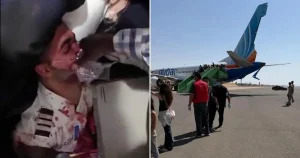
At the center of the drama was Captain Smit Machchhar, an Indian pilot whose quick thinking and raw courage have been credited with saving the lives of everyone on the aircraft. According to reports, Machchhar came under attack in the cockpit, allegedly from the other pilot, and was seriously injured in the assault. Covered in blood and fighting for his life, he somehow managed to open the cockpit door, giving passengers and two off-duty pilots on board a chance to intervene. What followed was a chaotic but heroic group effort to regain control of the plunging plane. Passengers rushed forward, some with no flying experience whatsoever, and helped to wrestle the suspected attacker away from the instrument panel. The off-duty pilots, drawing on their training, worked alongside the injured captain to stabilize the aircraft and guide it toward an emergency landing in Saudi Arabia. Machchhar’s actions have been described as nothing short of heroic, but the cost was severe. He was rushed to hospital, where he remains fighting for his life, his bravery already the stuff of legend among the passengers who owe him their lives. In a world where pilots are often unseen heroes behind locked doors, this was a moment when one man’s sacrifice became the difference between survival and catastrophe.
The suspected attacker, whose identity has not been officially confirmed, is said to be an Omani national, a detail that has raised many questions because Israel and Oman do not have diplomatic relations. More disturbing, however, are the descriptions emerging from those who knew him. A colleague, speaking anonymously, painted a picture of a man whose behavior had long been viewed as strange. According to this account, the suspected pilot was a religious extremist, deeply observant in a way that seemed out of step with his surroundings at the airline. He reportedly prayed frequently and refused to shake hands with women, behavior that colleagues found unsettling even before this flight. While religious devotion alone is not evidence of violence, the pattern of behavior described has prompted investigators to look more closely at how he was cleared to fly a route to Israel in the first place. The fact that a man with such views was allowed to operate a commercial flight to Tel Aviv, at a time of already heightened tensions in the region, raises uncomfortable questions about background checks, oversight, and the invisible threats that can hide behind a uniform. For now, the man is being questioned in Saudi Arabia, and officials will likely decide whether to send him to the Emirates, where the flight originated, as the investigation unfolds. But for the passengers who lived through the ordeal, the why behind the attack may never feel fully answered.
The political response to the incident was swift and, at times, dramatic. Israeli Prime Minister Benjamin Netanyahu, who spoke with many of the passengers after they landed, suggested that the world had come dangerously close to another 9/11. He said it was too early to say definitively who was behind the attack, but he also expressed no doubt about the attacker’s intentions. “He obviously hated Israelis because he was going to kill about 170 of them on this plane, killing himself, too,” Netanyahu told Fox News. His words carried the weight of a nation that has seen more than its share of terrorism, and the sense of relief that this attack failed was palpable. President Donald Trump, who said he had discussed the incident with Netanyahu, offered his own blunt assessment, saying it seemed the co-pilot was “perhaps a terrorist, or perhaps a whack-job, and he stabbed the pilot.” Yet Trump was careful to acknowledge that he had not received independent confirmation of the details, describing the story as what he had been told by “BB,” his nickname for Netanyahu. The uncertainty in these responses reflects the chaos of the moment, but it also underscores how fragile commercial aviation remains in a world where political grievances and personal extremism can turn routine travel into a battlefield. For now, investigators are piecing together the events second by second, and the truth remains as murky as it is terrifying.
Amid the horror, there were moments of breathtaking heroism, and one passenger in particular has emerged as an unlikely protagonist. A man named Yaniv, whose shirt was still covered in blood when he spoke to Netanyahu after the plane landed, described how he and others subdued the attacker. “One was down, one was on the instruments. And another guy came in with me. I grabbed the attacker, put him in a chokehold, and pulled him – first and foremost – outside,” he said. With the help of other passengers, Yaniv managed to pin the man down and keep him secure until the plane could land. What makes his story even more remarkable is that he had no formal pilot training. He claimed he had learned what to do by watching the television show Air Crash Investigation, a detail that feels almost too cinematic to be true, yet perfectly captures the instinctive resourcefulness of ordinary people in extraordinary situations. When asked about pulling the controls of the plane, Yaniv spoke with a matter-of-fact clarity that betrayed none of the fear he must have felt. He was just a passenger, thrown into a nightmare, who refused to stand by while a plane full of strangers hurtled toward the ground. His actions, along with those of the off-duty pilots and the gravely injured captain, form a chain of courage that held when everything seemed lost.
The aftermath of the incident has left many questions hanging in the air, but it has also left a profound sense of gratitude. The plane made an emergency landing in Saudi Arabia, where passengers were tended to before continuing their journey, and the airline has since suspended flights to and from Israel while the investigation continues. Flydubai, which had operated as many as ten daily services between Dubai and Tel Aviv, issued a brief statement confirming the suspension, but no statement can fully capture the emotional toll on those who were aboard. For the passengers, the sound of an aircraft engine, the sight of a cockpit door, or even the routine announcement of a flight’s final descent may never feel quite the same again. They will carry with them the memory of the panic, the bravery, and the blood, but also the knowledge that they survived because of people who chose to act. The suspected attacker, meanwhile, remains in custody, his fate to be determined by investigators and courts in a region where justice is often as complicated as the politics that surround it. What happened on Flight FZ1073 was a near miss with catastrophe, a reminder of how fragile safety can be, and a testament to the fact that heroism is not about titles or training, but about what ordinary people do when they are faced with the impossible. In the days and weeks to come, the world will continue to ask how this was allowed to happen, but for the 174 people who walked away, the only question that really matters is simpler and more profound: how lucky they are to still be alive.