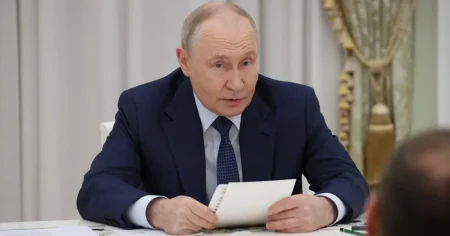



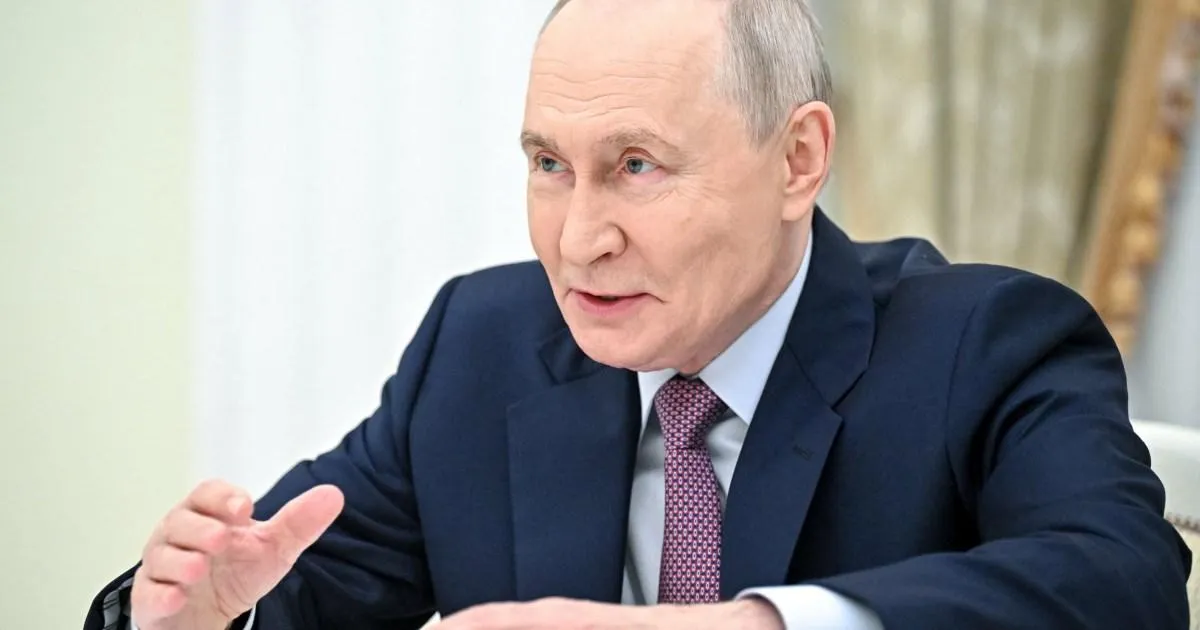
Vladimir Putin, the 73-year-old president of Russia, is reportedly afraid of catching the flu. Not just any flu, but the kind of ordinary, seasonal influenza that sweeps through offices every winter—except that in his case, the office is the Kremlin, and the consequences of infection are not a few days in bed but a geopolitical crisis wrapped in state secrecy. According to a Telegram channel called VChK-OGPU, which has a history of leaking insider Kremlin gossip, two of Putin’s most senior and trusted aides have been ordered to take sick leave after testing positive for Covid and flu. Those two men are Anton Vaino, the head of the presidential administration, and his deputy, Sergei Kiriyenko. They are the people who keep the machinery of the Russian state running, the quiet operatives who manage schedules, control access, and ensure that the president’s will is carried out. If they have fallen ill, then the virus has not just entered the building; it has penetrated the inner sanctum. For a man who has spent decades cultivating an image of physical invincibility, this is a nightmare. Putin has long insisted that anyone meeting him must first produce a negative coronavirus test, and he is said to demand extensive quarantines for officials who have been exposed. Yet here is the uncomfortable truth: the disease has come to his doorstep anyway, carried by the very people he trusts most. It is a reminder that power, no matter how absolute, cannot always protect a man from the microscopic world of viruses. And it humanizes him in a way that no amount of state television could. Behind the military parades and the nuclear threats, behind the long table and the carefully staged meetings, Putin is a 73-year-old man who is afraid of getting sick—just like millions of others. Except that his fear is amplified by the knowledge that, in Russia, even an illness can be used as a weapon against him.
There is something quietly sad about the image of Vaino and Kiriyenko being sent home from the Kremlin. In any normal workplace, sick leave is a sensible precaution, a way to rest and recover without spreading germs. But in the world of Vladimir Putin, illness is not just a medical event; it is a political failure. The Telegram channel’s language is revealing: the two officials “failed” their Covid and flu tests, as if a positive result were a mark of personal weakness rather than an unavoidable biological reality. This is the strange, fear-soaked culture that surrounds the Russian president. His closest aides do not simply have to do their jobs well; they have to stay healthy, because their health is directly linked to his. Every cough in a corridor is a potential threat. Every sneeze in a meeting is a potential scandal. And every official who tests positive is a reminder that the fortress around Putin is not as secure as it appears. The psychological toll of this existence must be enormous. Imagine living with the constant awareness that the people around you are carriers of invisible danger. Imagine watching your most senior allies fall sick, one by one, and knowing that their bodies are fighting the same infection you fear. This is the reality of Putin’s life in 2025. He is surrounded by people, but he is profoundly alone. He has built a system that depends on his survival, and so he must survive at all costs. That means controlling who comes near him, demanding tests, imposing quarantines, and keeping the world at arm’s length. At the height of the pandemic, he was photographed at the end of a strikingly long, twenty-foot table, a visual symbol of his determination to maintain social distance. The image became a global joke, a meme, a symbol of Russian isolation. But for Putin, it was no joke. It was survival. Now, with flu season arriving and a fresh wave of infection sweeping through the government, that long table may no longer be enough to protect him.
This is not the first time Putin’s health has become the subject of obsessive speculation, and it will not be the last. Rumors have been circulating for more than a decade, growing louder and more bizarre as he has aged. There have been whispers of Parkinson’s disease, often based on his unsteady movements or the way he grips the armrests of chairs. There have been claims of heart attacks, cancer diagnoses, and various other life-threatening conditions. There have even been suggestions that he has undergone plastic surgery or that he uses body doubles to mask his decline or death—an idea his representatives have laughed off as absurd. Yet the rumors persist, because the Russian state provides so little official information. When a man holds power for as long as Putin has, his body becomes a political battlefield. A single unsteady step during a state visit to China in May was enough to trigger a wave of frenzied speculation. Eagle-eyed viewers watched him take one slightly limping step and immediately began asking: What does it mean? Is he ill? Has he been injured? The answer, as always, was uncertain. But the incident showed how closely every detail of his physical condition is scrutinized. It also showed how well Putin has learned to navigate the speculation. He rarely gives an inch, preferring to let his public appearances speak for themselves. He has spent decades perfecting the art of looking strong, calm, and in control, even when the ground beneath him is shifting. The health rumors are not just about his body; they are about the structure of Russian politics itself. If Putin is weak, then who is really in charge? If he is dying, who is preparing to succeed him? These are questions the Kremlin does not want asked, and so the silence continues, broken only by the occasional leak or rumor from Telegram channels like VChK-OGPU. The humanization of Putin lies in these moments of vulnerability. The long tables. The tests. The sick aides. The fear. It does not excuse anything. But it reminds us that even the most powerful people are still people, with all the fragility and contradiction that entails.
The timing of the latest health scare is significant. Putin recently appeared before the newly elected State Duma to officially open its ninth session, looking stern but, by all accounts, in good health. He used the occasion to strike a familiar pose: that of a strong leader who will not be pushed around. Russia, he said, “cannot run around the world humiliating themselves” and “begging for handouts.” It was a classic Putin performance, designed to project defiance and self-sufficiency. But the contrast between the message and the circumstances was hard to ignore. Here was a man who, according to reports, is terrified of catching flu from his own aides, standing in front of parliament and talking about national pride. Here was a leader who demands negative Covid tests from visitors, yet has no qualms about threatening nuclear war over a television drama. The irony is almost too obvious. But there is something deeply human about this contradiction, too. Putin has spent his entire career pretending to be more than human. He has cast himself as the protector of Russia, the man who will restore national honor, the strongman who stands between order and chaos. But the act is exhausting, and it is getting harder to maintain. Every public appearance is now a test. Every step is watched. Every cough is analyzed. And as the health rumors swirl, the Russian people are left to wonder: what is really going on inside the Kremlin? The answer, as always, is hidden behind layers of secrecy, propaganda, and carefully staged television footage. But the rumors themselves are a form of truth. They tell us what people believe about Putin, and what they fear. They reveal the fragility beneath the surface of Russian power. And they remind us that the strongest men are often the most frightened.
Then there is the bizarre incident involving The Wargame, a Sky One miniseries that has somehow managed to get under the Kremlin’s skin. The show features real-life British politicians like Michael Gove and Nicola Sturgeon in fictional roles, leading the United Kingdom through a fictional Russian attack and an ensuing plan to strike Kaliningrad in retaliation. It is, by any reasonable measure, a work of fantasy. But the Russian government did not see it that way. An official UK Telegram channel posted a thinly veiled threat, warning that any British or NATO action against Russian territory would be met with a response “using all means at Russia’s disposal, including nuclear weapons.” The message was absurd—an overreaction to a television show—but it was also chilling. It showed how quickly the Kremlin will reach for nuclear rhetoric when it feels threatened, even by fiction. It also suggested a certain fragility. If Russian leaders are so worried about their image that a made-up story can provoke an official response, then they are not as confident as they pretend to be. The Wargame incident is a window into the paranoid world of the Russian state. It is a world where everything is political, where even entertainment is seen as a weapon, and where the threat of nuclear war is used as a tool of intimidation. And it connects directly to Putin’s health fears. Both are about control. The Kremlin wants to control the story, to control the narrative, to control the world around it. A virus is uncontrollable. A television show is not. But both remind us that the regime is built on fear—the fear of disease, the fear of dissent, the fear of being caught off guard. In that sense, the Wargame warning is not just about Kaliningrad. It is about the Kremlin’s desperate need to be taken seriously. And it is about the way fear feeds on itself, creating a spiral of paranoia and aggression that is very hard to break.
In the end, the story of Putin’s flu fears is not really about medicine. It is about the collision between human mortality and political power. Putin has spent his entire career trying to project strength and invincibility, but his body is a stubborn reminder that he is not immune to the laws of nature. The rumors about his health will continue to swirl, fed by every unsteady step and every long table. The nuclear threats will continue to flow, as the Kremlin tries to mask its insecurities behind a show of force. But the human truth is simpler and sadder. Here is a man who is afraid of getting sick. Afraid of the people around him. Afraid of the future. He is a leader who has built a system that depends on his survival, and so he must survive at all costs. That means isolating himself, demanding tests, keeping the world at a distance. It means living in a bubble of privilege and paranoia, where even his closest aides can be sent away if they pose a threat. It means waking up every day and wondering if today will be the day his body betrays him. We cannot know what Putin is really thinking, or how his health will evolve. We can only see the outside—the stern expression, the cautious walk, the absurd warnings about nuclear war. But the humanization of Putin lies in those moments of vulnerability. The long tables. The tests. The sick aides. The fear. It does not excuse anything. It does not make him more sympathetic. But it reminds us that even the most powerful people are still people, with all the fragility and contradiction that entails. And perhaps that is the most useful lesson: that power, no matter how absolute, cannot protect you from the flu. It cannot protect you from time. It cannot protect you from the quiet, creeping terror of being alive. In the end, Putin is just a man, trying to hold on. The only question is how much damage he will do before he lets go.