

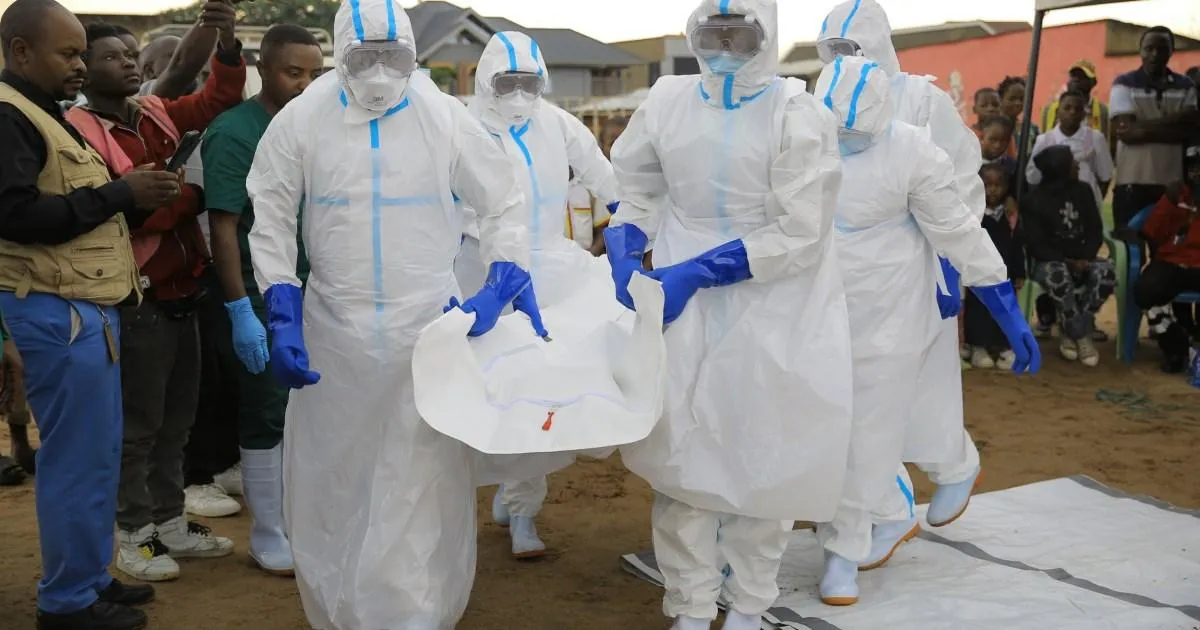
In the eastern Democratic Republic of Congo, where Ebola has become a fact of daily life and where mistrust of authority runs deep, a local politician’s final act was an attempt to save lives. Marie-Celestin Karondwa, acting president of the UDPS party in Butembo, stepped up to a radio microphone and spoke about the outbreak ravaging his country. He urged people to take prevention measures seriously, to understand that the virus was real, and to protect themselves and their neighbours. It was the kind of message that health officials and humanitarian groups have repeated for months, but in a region where false claims about the disease circulate as freely as the virus itself, it made him a target. Shortly after the broadcast, Karondwa was attacked in his own neighbourhood. According to reports, the suspected assailants beat him, stole his belongings, and set his house on fire. He later died from his injuries. His party said he was an innocent victim for having defended the party’s position on the existence of the Ebola virus disease and the threat it poses to the population. Butembo, in the northeastern part of the country, has become one of the most dangerous frontiers of an outbreak that has killed almost four thousand people in the Democratic Republic of Congo, the second-largest country in Africa. The killing of a politician who simply told the truth on the radio shows how deeply misinformation has penetrated, and how high the cost of courage has become. It is tempting to see Karondwa as just another casualty in a long-running crisis, but his death was not inevitable. It was the result of a poison that has spread alongside the virus, a poison made of rumour, conspiracy and anger. His voice should have been a lifeline. Instead, it became a death sentence.
Details of the attack remain painfully thin. Local party officials have not said how many people were involved or who they might be. What is known is that Karondwa was a public figure, a man with a voice, and that voice was used to talk about Ebola at a moment when many in the region do not want to hear about it. The UDPS federation in Butembo released a statement mourning his death and calling him an innocent victim of a senseless act. They described his crime as defending the truth in a climate of denial and suspicion. For his family, the grief is inseparable from anger. For his community, the message is terrifying: if a well-known politician can be beaten to death for speaking out about public health, what might happen to ordinary people who try to protect themselves? The attack did not happen in a vacuum. It is part of a broader pattern of violence against anyone associated with the Ebola response. Across eastern Congo, health workers have been ambushed, treatment centres have been vandalised, and isolation tents have been burned. The fear is not just about a virus; it is about a breakdown of trust between communities and the authorities, a breakdown that has made a deadly outbreak even harder to contain. In a place where the state has often been absent or abusive, outsiders’ promises of help can ring hollow. People have learned to survive by relying on their own networks, and when a uniformed official or a foreign doctor arrives with rules about burial and quarantine, it can feel like another form of control. Karondwa, as a local politician, was supposed to be one of them. Yet even he could not escape the suspicion that now surrounds any public discussion of Ebola. His death sends a terrible signal to others who might be considering whether to speak up.
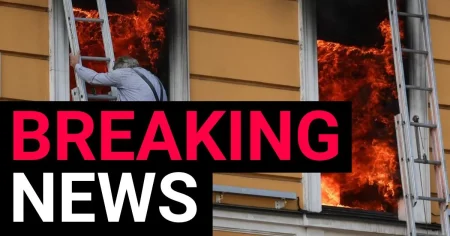
Misinformation and false claims about Ebola have been fuelling these attacks for years. One of the most damaging beliefs is that Ebola is not real, that it was invented by outsiders or used as a pretext for political control. In Rwampara, rioters set fire to isolation tents after the family of a young man were prevented from taking away his body because health workers feared he had died of Ebola. Instead of understanding the precaution as a measure to protect the living, the family and their neighbours saw it as an insult, a violation, or proof of a conspiracy. Such incidents are not rare. They happen because international responders, government officials, and even local leaders are often viewed with suspicion in a region that has experienced decades of neglect, exploitation and violence. When an outbreak occurs, the presence of armed escorts and foreign medical teams can feel more like occupation than assistance. Rumours spread faster than the virus: that the vaccines are dangerous, that health workers are stealing organs, that Ebola is a hoax designed to attract funding. In this toxic atmosphere, people like Karondwa, who try to bridge the gap between official science and community belief, find themselves caught in the middle. And sometimes they pay with their lives. The tragedy is that these attacks only make the outbreak worse. When health workers are driven out of a community, the virus is left to move unchecked. When people refuse to bring their sick relatives to treatment centres, they are not just endangering themselves but everyone around them. And when violence becomes the answer to fear, the most vulnerable pay the price: children, the elderly, the sick, and the displaced. Every attack on an Ebola response team is an attack on the possibility of ending the epidemic. Every lie told about the disease is a gift to the virus.
The outbreak itself remains one of the largest and most complex in the DRC’s history. According to the latest government figures, Ebola cases linked to the current Bundibugyo strain have surged past eight thousand. The country’s public health body has recorded 8,067 cases and 3,901 deaths, a fatality rate of 48.4 percent. That means nearly one in every two people diagnosed with the disease has died. Ebola is transmitted through direct contact with blood, bodily fluids, or contaminated surfaces, and it can spread rapidly in communities where healthcare infrastructure is weak and where burial practices bring families into close contact with the deceased. A person infected with Ebola cannot spread the virus until symptoms appear, which gives health teams a narrow window to identify and isolate cases. But in a region marked by conflict and displacement, tracing contacts and building trust is enormously difficult. There is currently no approved treatment for the Bundibugyo strain, although vaccines are being trialled and offer some hope. Officials have warned that while the number of new cases has somewhat plateaued, the outbreak is far from under control. Every new cluster threatens to reignite the epidemic, and every attack on a health facility makes the next case harder to find. The statistics are not just numbers. Behind each case is a person with a name, a family, a story. Behind each death is a funeral that could not be held properly, a home left empty, a community living in fear. The fatality rate of 48.4 percent is a reminder of how brutal this disease can be. It strikes quickly, often leaving little time for goodbyes. In some outbreaks, case fatality rates have varied from 25 to 90 percent, depending on the strain and the quality of care. The fact that so many people are still dying in this outbreak is not only a failure of medicine but a failure of the response to reach those who need it most.
Compounding the public health emergency is a wider crisis of violence and displacement. The DRC has been ravaged by internal conflict for decades, with armed groups operating across the east and millions of people forced from their homes. The Ebola outbreak has repeatedly crossed paths with this chaos. Families living in overcrowded camps, cut off from clean water and medical care, are especially vulnerable to infection. At the same time, the country has been involved in a protracted dispute with neighbouring Rwanda, a conflict that has further destabilised the region and made cross-border cooperation difficult. The international dimension of the crisis was on display at a White House press conference, when President Donald Trump was asked about the outbreak. An Angolan correspondent, Hariana Verás, who had recently travelled to Congo, told Trump that although the World Health Organization’s director had described the disease as under control, the country still needed help fighting Ebola. Trump responded by abruptly asking ‘how is Ebola going?’ The exchange was brief, but it captured something essential: the world’s attention tends to drift, while communities in Congo are left to live with the consequences. Ebola does not respect press conference schedules. It continues to spread through villages and cities where people are already struggling to survive conflict, hunger and displacement. For those living in the affected areas, the distinction between the Ebola response and the wider crisis is meaningless. A mother trying to keep her children alive in a camp for displaced people does not care whether the threat is a virus, a bullet or a lack of food. She needs safety, healthcare and hope. Karondwa’s death is inseparable from this larger context. He was not killed in a stable, peaceful country. He was killed in a region where violence is endemic, where state authority is weak, and where armed groups and criminal networks thrive. In such an environment, an Ebola outbreak is not just a medical emergency. It is a test of whether society can hold together in the face of fear.
Karondwa’s death should be more than a footnote in the long, grim chronicle of this outbreak. It should be a wake-up call. The Ebola response cannot succeed if it is built only on vaccines and isolation units; it must also address the fears, suspicions and grievances that make people lash out at those who are trying to help. Community engagement is not a luxury. It is a matter of life and death. Health workers need protection, but they also need to be seen as partners, not outsiders. Local leaders like Karondwa need support when they speak uncomfortable truths, not silence and isolation. And the international community needs to recognise that the fight against Ebola in the DRC is not over. It is a fight against a virus, yes, but it is also a fight against misinformation, inequality and violence. In the end, the most human response to this tragedy is to remember that Karondwa was not a statistic. He was a man who believed that the truth could save lives. He used his voice when many were silent, and he paid the highest price. The least we can do is honour his memory by refusing to let lies win. That means investing in trusted messengers, listening to community concerns, and providing the resources needed to contain this outbreak once and for all. It means remembering that every person who dies from Ebola was someone’s father, mother, brother or sister. It means not turning away when the headlines fade. The world has a short attention span, but the people of eastern Congo do not have that luxury. They live with the outbreak every day. They bury their dead. They watch their neighbours fall sick. They see their health workers attacked and their leaders killed. If we want to prevent another Karondwa, another Rwampara, another funeral, we have to take the fight against misinformation as seriously as we take the fight against the virus. The truth is the most powerful vaccine we have. And right now, it is not reaching enough people.