

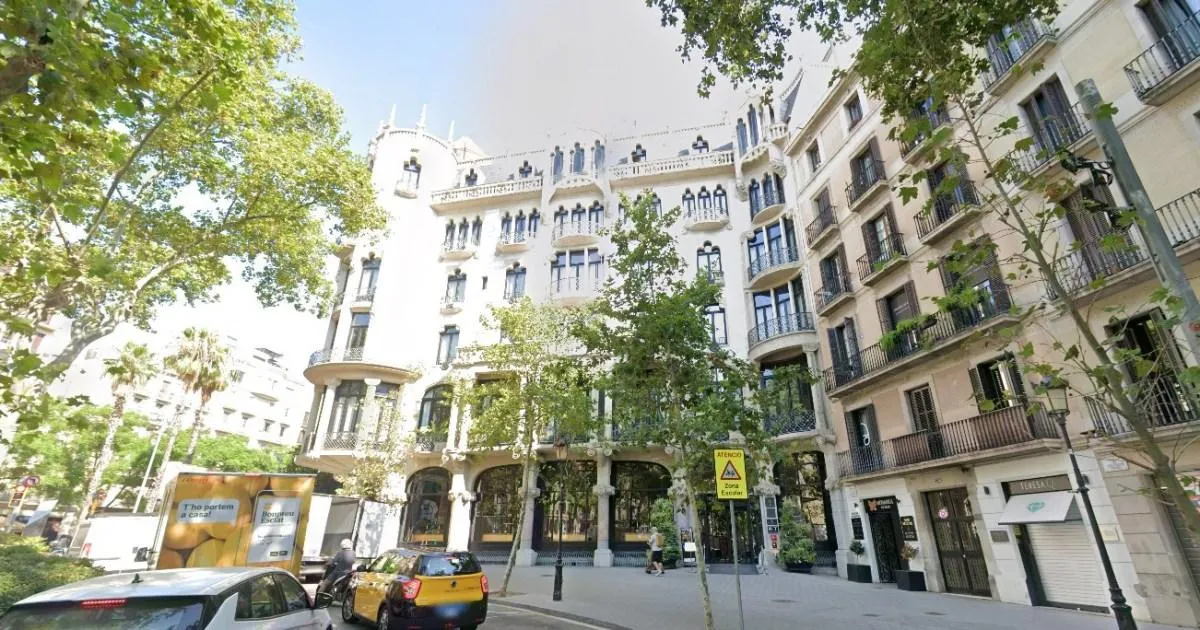
Barcelona was easing into the soft, golden light of a late afternoon when violence shattered the calm of one of its most beautiful streets. The Passeig de Gràcia, a broad, elegant avenue in the heart of the city, is known around the world for its Modernista architecture, its luxury boutiques, and its long, lazy café terraces where people sit for hours watching the world go by. It is a place of beauty and privilege, a boulevard where the spirit of Gaudí and the grandeur of Catalan design meet the rhythms of modern urban life. But shortly after 5.30pm yesterday, that image of sophistication was broken. Inside the Casa Fuster Hotel, a five-star landmark on this celebrated avenue, a 23-year-old man believed to be visiting from Eastern Europe was stabbed in the neck during a fierce argument with three other men. The hotel itself is a masterpiece of early twentieth-century architecture, a place that has long been associated with elegance, weddings, high tea, and the kind of discreet luxury that makes guests feel safe. Yet in a matter of seconds, its marble floors and polished hallways became the setting for a brutal attack. The three men involved did not stay to see what happened next. They fled the scene immediately, disappearing into the crowds of shoppers, tourists, and office workers who fill the area at that hour. Witnesses, stunned by what they had seen, called emergency services, and police rushed to the scene. But by the time they arrived, the attackers were gone, and the young man lay injured, bleeding, and fighting for his life in a place where such things are never supposed to happen.
The emergency response was swift, but the shock of the incident will take much longer to fade. Paramedics arrived within minutes and found the young man in a serious condition, with a neck wound that could easily have been fatal. They worked quickly to stabilise him before rushing him to hospital, where doctors later described his condition as serious but not life-threatening. The fact that he survived is a relief, but it does not diminish the horror of what took place. For the people who witnessed the attack, the memory of seeing a young man collapse in a pool of blood in such a glamorous setting will not be easily erased. Some were tourists on their first visit to Barcelona, expecting to find art, sunshine, and tapas. Others were local workers who pass through the Passeig de Gràcia every day and never imagined they would encounter such violence. The hotel itself, though widely reported to be the Casa Fuster, has not been officially identified by the police, and that lack of clarity adds to the unsettling atmosphere. What is known is that the stabbing was not a random act of terror or a failed robbery. According to the limited information available, it began as a row, an argument between a young man and three others that escalated with terrifying speed from words to violence. That detail makes the crime no less shocking, but it gives detectives a crucial starting point as they try to reconstruct the events that led to the attack and track down the men responsible.
For the 23-year-old victim, the ordeal is far from over. He is a young man, far from home, with his whole life ahead of him. At his age, he might have been travelling for pleasure, visiting friends, studying, or exploring the possibility of a new life in Spain. Instead, he is now lying in a hospital bed in a foreign country, surrounded by medical equipment and unfamiliar faces, recovering from a wound that came within inches of ending his life. His family, believed to be in Eastern Europe, have been informed of what happened, and they now face the agonising wait for news from a distant city. They cannot simply rush to his bedside; there are flights to book, arrangements to make, and a long journey ahead. Every phone call from the hospital will be both a relief and a source of new anxiety. The young man himself will have to deal not only with the physical pain of his injury, but also with the psychological trauma of knowing that three people wanted to hurt him badly enough to attack him with a knife. He will have to answer questions from police, think about what led to the argument, and try to make sense of a moment that changed his life forever. Even after his wound heals, the scars will remain. The face of the man who lunged at him, the sound of shouted words in a language that may not even have been his own, the sensation of warm blood on his skin—these are images that do not fade easily. He is alive, and for that his family and friends will be grateful. But being alive is not the same as being safe, and it will take a long time for him to feel secure again.
Meanwhile, detectives are working around the clock to find the three attackers. They are studying CCTV footage from inside the hotel, as well as the extensive network of security cameras that line the Passeig de Gràcia and the surrounding streets. They are looking for the moment the three men entered the building, the way they moved through the space, the expressions on their faces, and the route they took when they fled. Every frame could contain a clue. Were they known to the victim? Had they arranged to meet him, or did the confrontation happen by chance? Did they speak to each other before the attack, or did one of them act alone while the others watched? These are the questions that investigators are trying to answer. They will also interview hotel staff and guests who may have heard raised voices, seen a scuffle, or noticed something unusual in the minutes before the stabbing. The police have made no official public comment about the incident, which is itself a sign of how carefully they are handling the case. They do not want to risk compromising the investigation by releasing information too early. But behind the scenes, the manhunt is ongoing. Officers will be checking mobile phone footage captured by bystanders, reviewing social media posts, and appealing for witnesses to come forward. In a city as busy as Barcelona, there are almost certainly people who saw something without realising its importance. A man walking quickly, another wiping his hands, a car pulling away in a hurry—these small details could be the key to solving the case. The longer the trail goes cold, the harder it will be, but the police are determined not to let the attackers slip away.
The stabbing at the hotel has also landed against a darker backdrop of recent violence in the region. Just ten days earlier, a separate incident on a motorway near Barcelona sent shockwaves through Catalonia and beyond. Five masked men posing as police officers abducted a semi-naked victim on the busy AP-7 motorway, a major road that runs along Spain’s Mediterranean coast. The kidnappers, wearing balaclavas and high-visibility police jackets, brought traffic to a complete standstill before dragging the man out of his vehicle by his feet and bundling him into a car behind them. They had even fitted one of their cars with a fake police siren, making the entire operation look terrifyingly official. Motorists watched in disbelief as the scene unfolded in front of them, unsure whether they were witnessing a real arrest or something far more sinister. The victim was later found elsewhere in the region, having not suffered serious physical injuries, but the psychological impact of such an ordeal is impossible to measure. Police are still hunting those abductors. The two incidents are not necessarily connected, and there is no evidence that the same individuals were involved in the Barcelona hotel stabbing. But their proximity in time has inevitably raised questions about safety in and around the city. Barcelona is one of the most visited cities in Europe, a place that welcomes millions of tourists every year. It depends on its reputation as a vibrant, welcoming, and reasonably safe destination. Violent crime is relatively rare, but when it happens, especially in such public or elegant settings, it creates a sense of unease that is hard to shake. Residents and visitors alike are left wondering whether the city they love is becoming more dangerous, or whether these are simply isolated incidents that have been amplified by the shock of their unusual settings.
For now, the focus is on finding the three men who turned a five-star hotel into a crime scene, and on supporting the young victim as he begins the long road to recovery. His family will be desperate for answers, for justice, and for the chance to bring him home. The hotel staff, many of whom are trained to greet guests with warmth and professionalism, must now come to terms with the fact that their workplace was the site of such an attack. The guests who were staying there, or who passed through the lobby yesterday evening, will carry their own memories of sirens, police tape, and fear in a place they believed was safe. Barcelona, a city that knows how to celebrate life, now has to confront a darker story. But the city is also resilient. Witnesses came forward, emergency services responded quickly, and detectives are working through the evidence with quiet determination. The hope is that the attackers will be found, that they will be brought to justice, and that the young man will recover enough to leave the hospital and, eventually, to leave behind the memory of this terrible afternoon if such a thing is possible. In the meantime, the rest of us are left with a simple but unsettling reminder: violence can happen anywhere, even in the most beautiful places, on the most ordinary of days. The Passeig de Gràcia will reopen fully, the tourists will return, and the hotel will once again fill with music and laughter. But for one young man from Eastern Europe, and for everyone who witnessed what happened, the memory of a single moment will not be so easily erased.