
Paragraph 1: The Silence That Spoke Volumes
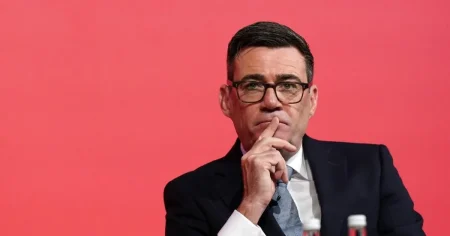
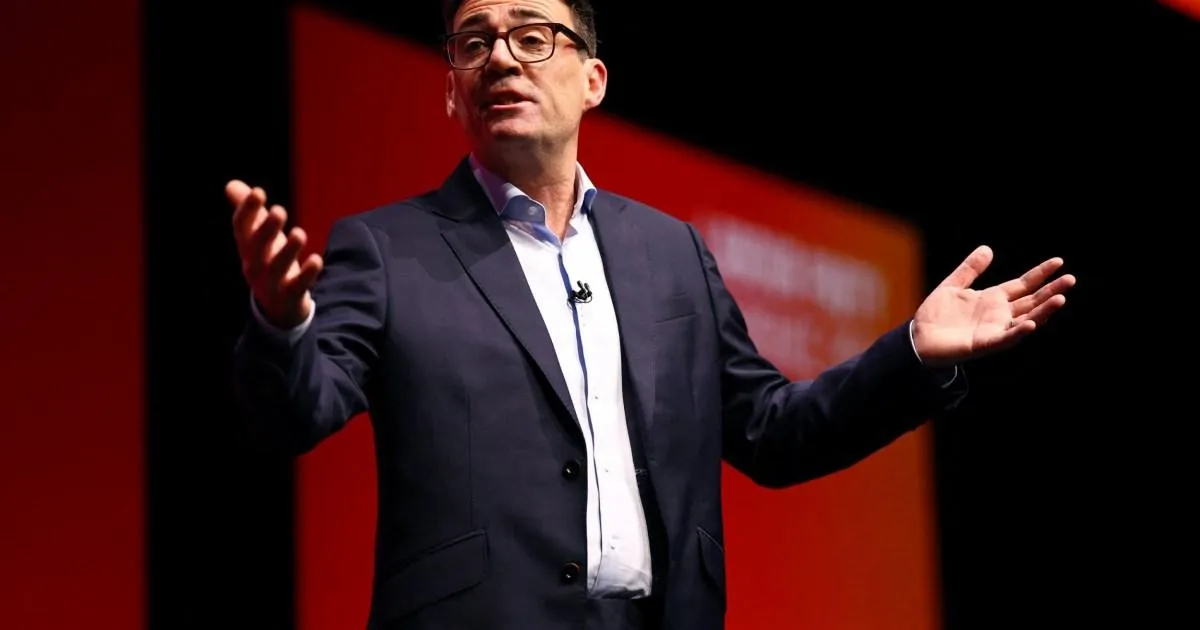
The moment I’ll carry with me from Andy Burnham’s speech to Labour conference wasn’t a soaring slogan or a policy announcement—it was a pause. A silence, stretching fifty-six seconds, that felt like an eternity in a room where hundreds of people had gathered to hear the new prime minister lay out his vision. For the first twenty seconds, the hall was utterly still, as if everyone was holding their breath. Then, slowly, the room began to find its feet, and a standing ovation rippled through the crowd like a wave. It was awkward, yes—there’s something profoundly uncomfortable about watching a leader stand still, the vacuum of sound almost physical. But it was also powerful in a way I hadn’t expected. The silence wasn’t a failure of words; it was a deliberate act of trust. Burnham was letting us in. I guessed, before he spoke again, that he was thinking about his father. His dad had died just over two weeks earlier, and the grief was raw, barely disguised. Sure enough, when he resumed, his voice cracked with emotion. But the silence itself had already done the talking. It told us that this was a leader willing to show vulnerability, willing to let the mask slip, willing to share a moment of human fragility in front of the people he now leads. In an age of carefully scripted political theatre, it was a breath of the real.
Paragraph 2: A New Atmosphere, a New Leader
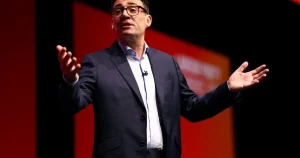
Throughout Labour conference this year, I’ve heard the same phrase over and over: “The vibes are different.” It’s a vague, almost clichéd way to describe a political mood, but it captures something genuine. The previous speech by Keir Starmer, just a year ago, had felt like a grim exercise in damage control—a leader struggling to project authority while contending with deep internal divisions and public fatigue. Burnham, by contrast, seemed to inhabit a different universe. He spoke without a lectern, his tie discarded, his shirt sleeves rolled up, as if he’d just walked in from a street-level conversation rather than a party summit. The difference wasn’t just stylistic; it was emotional. Starmer could produce applause lines, but he rarely produced tears. Burnham managed to move people in the room to cry—both with his words and, memorably, without them. When he talked about his father, when he paused to steady himself, you could see people dabbing their eyes in the audience. There was a palpable sense that this was a leader who understood loss, who carried his own history into the room, and who wasn’t afraid to let that history shape his politics. The conference felt less like a political rally and more like a gathering of people who genuinely believed they were part of something new. And that, perhaps, is the most important shift of all: Burnham has given Labour back its capacity for emotion, and emotion, as every political operative knows, is what drives change.
Paragraph 3: The Triple Lock Gamble
But it would be naive to think the speech was only about feeling. Burnham is a seasoned politician, and he knew exactly what he was doing when he chose to take a risk that no other future-facing leader has dared to touch: the state pension triple lock. This is the policy that guarantees pensions rise by whichever is highest—average earnings growth, inflation, or 2.5%. It is often called a “sacred cow” of British politics, and for good reason. Any party seen to be weakening it faces the wrath of millions of older voters, a demographic that disproportionately turns out on election day. Until now, only politicians who had announced they were leaving parliament—or were already gloriously retired—have dared to criticise it. They could say what everyone privately thought—that the triple lock is financially unsustainable in the long term—because they would never have to face the consequences at the ballot box. Burnham knows this. But he also knows that the country is ageing, that social care is in crisis, and that the cost of doing nothing will only grow. So he proposed something audacious: to “adjust” the triple lock from the start of the next decade, removing the element that ties pension increases to wage growth, and to use the savings to fund something transformative. The promise was clear: universal free social care in England, built on the same principles as the NHS. It’s the kind of vision that could reshape the social contract—or it could be political suicide. The received wisdom is that you don’t touch the triple lock and live to fight another election. But Burnham seems to believe he can make the trade-off palatable, that people will accept a slightly less generous pension rise if they know it guarantees dignity and care for themselves and their loved ones in old age. It’s a bet on the goodwill of the electorate, and it is genuinely risky. Whatever happens, this proposal will dominate the news cycle for weeks—and it may well be the thing history remembers most about this speech. But that would be a shame, because there was so much more to it.
Paragraph 4: A Sweep of Bold Ideas
Beyond the pension lock gambit, Burnham laid out a veritable cornucopia of policies that could, if delivered, change the face of British society. He announced the creation of a National Care Service, which he described as being “as significant as the creation of the NHS.” That is not a modest claim, but it’s one that landed with genuine enthusiasm among the Labour faithful. He also promised to repeal the ban on public ownership of water companies—a move that would bring a vital utility back into the public sphere, a long-standing demand of the party’s left and a practical response to the scandal of sewage in our rivers and the financial mismanagement of private water firms. On foreign policy, he spoke of forging closer ties with the European Union, a statement that was carefully calibrated to appeal to both remainders and those who value practical co-operation over ideological division. And then there was the biggest surprise of all: a new national commission on electoral reform, tasked with exploring how the voting system might change. This is a deeply sensitive topic within Labour, and I noticed that not every MP in the room joined the standing ovation for that one. You could see the hesitation on some faces, the calculation about how a change from first-past-the-post might shift their own seat’s security. But Burnham pressed ahead, signalling that he’s willing to take on not just the Tories but also the entrenched interests within his own party. It was a speech that reached in many directions—domestic, social, constitutional, international—and yet it never felt scattershot. Each initiative seemed to flow from a coherent idea: that Britain needs to be rebuilt on fairer foundations, and that the state has a positive, powerful role to play in that rebuilding. It was a vision of social democracy that felt both nostalgic and futuristic, rooted in Labour’s history but looking boldly ahead.
Paragraph 5: The Human Connection
What made the speech truly extraordinary, however, was the way Burnham wove these big-policy threads into something intimate. He didn’t simply list proposals like a bureaucratic manifesto; he told stories. He talked about his father, and about the fear and love that shape a family’s approach to caring for an older relative. He spoke of the anxiety ordinary people feel when they think about the future—whether their parents will be looked after, whether they will be a burden on their own children, whether their savings will be enough. In doing so, he transformed abstract policy into lived experience. The silence at the start of the speech was part of that transformation: it gave us the chance to dwell in the same space as his grief, and by extension, our own. Many leaders have tried to use personal anecdotes to connect with voters, but Burnham managed to do it without seeming calculated. The tears in his eyes weren’t a prop; they were real. The result was a speech that didn’t feel like a speech at all. It felt like a conversation, or perhaps a confession. This is a rare art in modern politics, where every word is poll-tested and focus-grouped. Burnham, who has been a public figure for decades, seems to have grown into a new kind of authority—one that doesn’t depend on invulnerability, but rather on the opposite. By admitting that he is still grieving, that he is human, he paradoxically made himself look stronger than any scripted robotic leader could. The conference hall responded not just with applause but with a collective sense of relief: here was someone who could hold the complexity of the moment, both politically and personally. That is why the memory of the stillness will outlast all the policy talk. We may forget the specific details of the National Care Service in six months, but we will remember the man who stood on stage and let himself feel.
Paragraph 6: The Test That Lies Ahead
And yet, even as the applause faded and the delegates filed out, a giant question hung in the air. It’s a question that has haunted Labour for years, and it applies to almost every leader who has ever inspired a crowd: can the rhetoric be matched with action? Burnham’s speech was intoxicating, but speeches are easy; governance is hard. The triple lock adjustment will face ferocious opposition from both the Tories and the tabloid press, who will present it as a betrayal of pensioners, no matter how carefully it is framed. The National Care Service will require an extraordinary bureaucratic effort and vast sums of money. Reforming water ownership will mean untangling complex contracts and compensating private shareholders. Closer ties with the EU won’t happen overnight, and electoral reform will provoke a civil war inside Labour itself. The gap between the soaring ambition of a conference speech and the grinding reality of Westminster is the graveyard of many a political career. Burnham will be judged not by the ovations he receives in the safety of a friendly hall, but by whether he can translate those promises into legislation, into budgets, into the everyday lives of voters. Keir Starmer, his predecessor, talked a lot about change and hope and a new Britain, but he struggled to deliver on many of his own pledges, and his premiership collapsed under the weight of unmet expectations. Burnham knows this; he’s been in politics long enough to see the bones of many a failed dream. The ultimate test, then, is not the speech he gave today. It will be whether, unlike Starmer, he gets the chance to give more than one—whether the public gives him the second lease on life that comes with winning a second election. That will require more than a stirring silence. It will require a government that actually works, that brings prices down, that fixes the broken NHS, that makes people feel their lives are getting better. If he can do that, the moment of silence will be remembered as the beginning of a new era. If not, it will be just another footnote in the long, bitter history of Labour’s broken promises. For now, though, Burnham has given his party something it hasn’t felt in a very long time: hope. And in politics, as in life, sometimes that’s the most precious thing of all.