


For a policy with the word “pension” in its name, the triple lock has a remarkable talent for making people furious. It sounds like something only an actuary could love, a dry technical formula buried in the small print of Treasury documents. But in British politics, few phrases provoke as much passion, or as much fear, as this one. The triple lock is the policy that decides how much the state pension rises every year, and since it was introduced by the Conservative-Liberal Democrat coalition in 2011, it has been treated by many as a sacred promise. The rule itself is simple enough: each year, the state pension goes up by whichever is highest of average wage growth, inflation, or 2.5%. That might not sound revolutionary, but the consequences have been enormous. Because prices and wages rarely move neatly together, the triple lock has acted as a ratchet. It means that once the pension rises, it never falls, and over time it has become increasingly generous relative to what people are earning. The numbers tell the story: since 2011, the state pension has increased by roughly 81%, while average wages have increased by only 59%. In other words, pensions have not just kept pace with earnings; they have sprinted past them. That is precisely why the policy is loved and hated in equal measure, and why Andy Burnham is expected to address it in his first speech as Labour leader to the party conference this afternoon. For millions of pensioners, this is not an abstract debate about fiscal policy. It is the difference between paying the bills and going without, between a warm home and a cold one, between dignity and anxiety. It is also a debate about the future of the entire welfare state, and about what Britain owes to people who have worked all their lives.
To its supporters, the triple lock has been one of the most successful policies of recent decades. They point out that Britain’s state pension was once among the stingiest in the developed world. For years, older people were expected to survive on savings or private pensions, neither of which most households actually had. The result was a glaring gap between the comfortable retirement enjoyed by the few and the precarious one endured by the many. The triple lock was designed to fix that imbalance, and its defenders say the job is still incomplete. They can cite the Institute for Fiscal Studies, which has found that the average pensioner in the UK is now at least as well-off as the average working-age person. That is a remarkable turnaround for a country that used to be embarrassed by its elderly poverty rates. It did not happen by accident. The state pension has risen faster than earnings for years, and the cumulative effect has been transformative. The moral argument has been set out with unusual force by Sharon Graham, general secretary of Unite the Union, who said this week that scrapping the triple lock would be “morally wrong.” She pointed out that many pensioners live on around £12,500 a year, a sum that hardly suggests luxury. Suggesting, she argued, that this group should give up their security to pay for social care was simply unfair. The strength of feeling goes beyond party politics. Polls consistently show that the triple lock is supported by large majorities in every age group, including young people who are expected to pay for it. That may seem strange, but it reflects a deeper social belief: after a lifetime of work, people are entitled to a retirement free from poverty. And with older voters much more likely to turn out at elections, politicians know that even whispering about change can have serious consequences. The triple lock, in other words, is not just a policy. It is a line in the sand, a promise that the state will not abandon its older citizens when they need it most.
Yet for all the affection in which it is held, the triple lock has a growing army of critics, and their argument is hard to dismiss. The British population is ageing, and it is doing so quickly. More people are reaching state pension age every year, and once they get there, they tend to live longer than any previous generation. That is a triumph, but it is also a strain. A policy that guarantees pensions rise faster than earnings means that the total bill for the state pension grows even faster than the economy itself. The Resolution Foundation, a think tank that studies living standards, has calculated that state pension spending will make up nearly half of the entire increase in welfare spending by the end of this decade. In normal language, that means the next few years could be dominated by a single number: the rising cost of promises made to older people. Critics do not deny that pensioners need support. They argue instead that the current formula is too rigid, too expensive, and unfair to younger generations who face high house prices, precarious work, and student debt. They also point out that money is finite. Every additional pound spent on the state pension is a pound that cannot be spent on the NHS, on schools, on local services, or on the social care system that so many older people depend on. And this is where the triple lock starts to feel less like a simple promise and more like a trap. Andy Burnham has made ambitious commitments, particularly around social care, which would require large sums of new money. If the triple lock remains untouched, those commitments could collide with reality. It is possible to imagine small, sensible reforms: removing the 2.5% floor, or calculating pension increases over a longer period to smooth out volatility. But in the current political climate, even a sensible tweak is treated as an attack. The result is a standoff between demographic reality and political emotion, with no obvious way out.
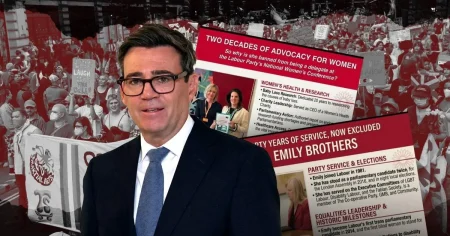
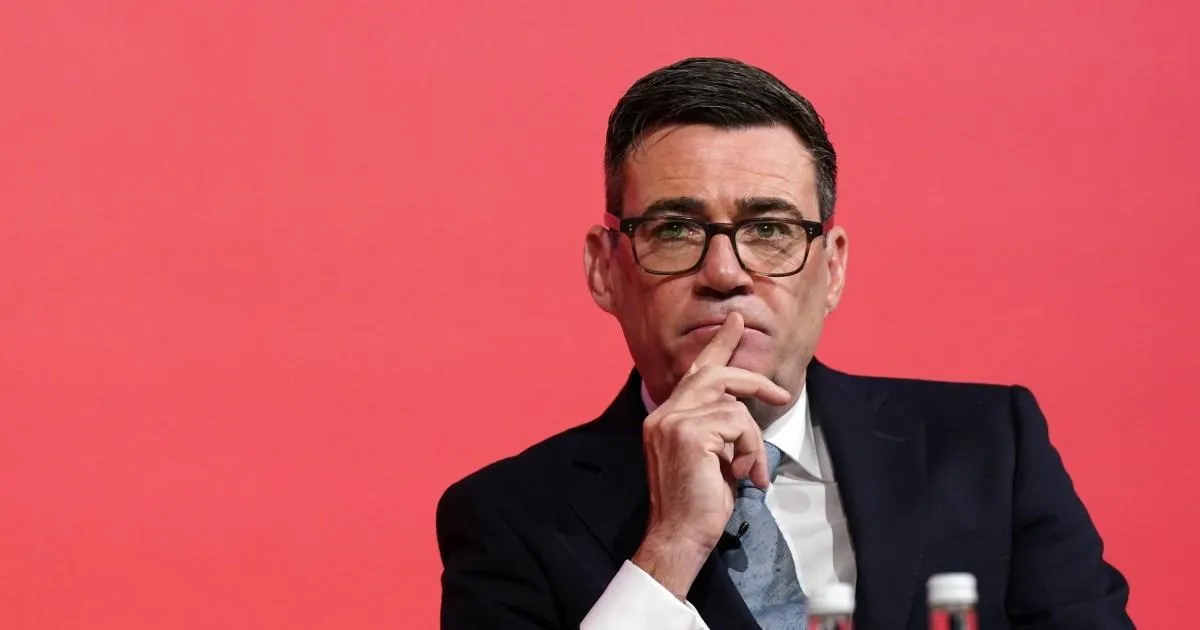
This is the volatile political territory that the Prime Minister and party leader, Andy Burnham, is stepping into this afternoon. His speech to the Labour conference is scheduled for 2pm, and it is expected to be a defining moment of his leadership. He has already said that he wants to bring water and energy under greater public control, a policy that will delight many in his party. He has also promised a new social care settlement, something that has eluded British governments for decades. But the funding questions are immense. Social care in England is in crisis, with hundreds of thousands of people going without the support they need, while those who do receive care often face ruinous costs. Fixing that system will require billions of pounds, not millions. The same is true for the wider public services that Burnham wants to improve. If the triple lock is sacrosanct, where does the money come from? That is the question he cannot avoid. He could use his speech to reassure pensioners that the triple lock is safe, which would be popular but expensive. He could announce a review of the policy, which would be fiscally prudent but politically dangerous. Or he could try to change the conversation entirely, arguing that the real problem is not the triple lock but the failure of the economy to grow, and that a more prosperous Britain can afford both decent pensions and decent public services. All three options carry risks. What makes this moment especially delicate is that it is his first conference speech as leader. His opponents, both inside and outside his party, will be listening for any sign of weakness. So will millions of voters, many of whom are watching with anxiety. Burnham needs to sound bold enough to inspire, careful enough to reassure, and honest enough to be credible. That is a difficult combination, and the triple lock is the sharpest test of whether he can pull it off.
The electoral arithmetic only makes the situation harder. Older people are the most reliable voters in Britain. They turn out in far larger numbers than the young, and they are fiercely protective of the benefits they have been promised. Anyone who has worked and paid national insurance for decades feels a moral entitlement to a state pension, and they are not wrong to feel that way. The triple lock has become a symbol of that trust, a way of saying that the state will not abandon people in their old age. Attempts to change it, even with the best intentions, would be met with headlines about betrayal. That is why successive governments have repeatedly delayed difficult decisions, kicking the triple lock down the road rather than facing the inevitable. It is also why the polls matter. Surveys consistently show that the triple lock enjoys support across all age groups, not just among the elderly. That is striking. In a country divided by so many things, this is one area where a broad consensus exists. Young people may grumble about the cost, but they also worry about their own futures, about their parents’ retirements, and about the kind of society they want to live in. The idea that everyone deserves a secure old age is one of the few genuinely shared values in modern British politics. It is also one of the most expensive. For any politician, attacking the triple lock would be like attacking the NHS: technically possible, but politically suicidal. Burnham knows this. He also knows that the longer the policy remains untouched, the harder it will be to reform in the future. The clock is ticking, and every year that passes makes the eventual reckoning bigger. There may come a point when the country has to choose between the triple lock as it exists today and the public services that everyone says they value. And when that choice arrives, political careers will be made and broken.
So what can we expect from Burnham’s speech? The most likely outcome is a careful blend of reassurance and ambiguity. He will probably say that the Labour Party will never break the promise of the state pension, and he will mean it. But he will also talk about the need for economic growth, about smarter ways to fund public services, and about a society that supports people at every stage of life. He will try to make the case that the real enemies of pensioner security are low wages, insecure work, and a weak economy, not the triple lock itself. In doing so, he may hope to avoid having to choose between his principles and his spending plans. But the debate will not go away. The triple lock is a symbol of something deeper, a national conversation about intergenerational fairness and the limits of public spending. It forces a question that no politician really wants to answer: what do we owe older people, and who should pay for it? As the population continues to age, that question will only become more urgent. The triple lock was a solution to an earlier problem, a way of lifting pensioners out of poverty and restoring dignity to old age. It worked. But the world has changed, and the policy is now at the centre of a much bigger argument about the future of the welfare state. Burnham will not solve that argument today. He may not even try. But by stepping up to the podium and choosing his words about the triple lock, he is acknowledging that the argument has arrived. Behind every percentage point, every formula, every think tank report, there is a human story: a pensioner deciding whether to turn up the heating, a family helping a parent with the shopping, a young worker wondering what will be left for them. The triple lock is not just about numbers. It is about the promises a country makes to its people, and how it keeps those promises in the years to come.