
Paragraph 1: The Whiplash of a New Premiership
Imagine starting a brand-new job, barely having had time to learn where the coffee machine is, and immediately being asked, “So, when are you planning to leave?” That is the strange reality facing Andy Burnham. He has only been Prime Minister for a few months, a blink of an eye in political terms, yet the chatter of a potential next general election has already begun to hum around Westminster like an unshakeable buzz. No sooner had Labour celebrated its return to power after a long, bruising spell in opposition than the conversation pivoted from triumph to uncertainty. Tory leader Kemi Badenoch has done her best to stoke this fire, claiming that Burnham is a “gambler” at heart—someone who might just “fancy his chances” if he thought the numbers could fall his way. Her argument is deliberately provocative, framed around the kind of high-stakes political calculation that makes seasoned commentators raise an eyebrow. She has suggested that if the Prime Minister cannot properly fund defence without slashing welfare, then he should have the courage to go back to the country and let voters decide. It is a sharp, pointed attack, and she has not been subtle about it. She even pointed to the resignation of John Healey, the Defence Secretary, as evidence that the government’s own internal machinery is unhappy with the direction of travel. In Badenoch’s telling, the Labour administration is already fracturing, and the only honest response is to take the temperature of the nation. But there is also something almost theatrical about the speed of all this. Burnham has not actually suggested he is about to call another election, and yet the speculative machinery is already in full motion. It is as if the British public, still catching their breath from the last campaign, are being asked to prepare for another round of the same exhausting political carnival. The truth is that governing is hard, and every government—especially a new one—needs time. But in the chaos of modern politics, patience is a luxury no one can afford.
Paragraph 2: The Polling Landscape—A Divided House
So, what would actually happen if Burnham did decide to roll the dice and call an election tomorrow? According to a major YouGov survey, the results would be less than decisive. Labour would remain the largest party, which might sound like reassurance for the Prime Minister, but the detail behind the headline is far more troubling. The survey suggests Labour would lose around 170 seats, a catastrophic drop that would strip away the comfortable majority Burnham currently enjoys. Instead of a clear mandate, the country would be plunged into a hung parliament—the kind of situation where no single party holds enough seats to govern alone, and where every piece of legislation becomes a fraught negotiation. It is the political equivalent of a game of poker where everyone is holding similar hands, and no one is brave or foolish enough to go all in. The Tories would come second, but they would not be in a position to claim victory either. And sitting right behind them, breathing down their necks, would be Reform UK. This is the backdrop against which Badenoch claims her party “fancy their chances.” It is a bold statement, but the numbers tell a more complicated story. The country is not moving decisively towards any single vision. Instead, it appears deeply fractured, split across multiple parties and competing priorities. For ordinary voters, this is hardly inspiring. Most people do not wake up hoping for weeks of coalition negotiations or the sight of party leaders bickering over who gets which ministry. They want stability, progress, and a government that can actually get things done. But the polling suggests that the electorate is in no mood to hand over a golden ticket to anyone. The result would be a political shrug, a collective “not quite sure” that would leave the country in a state of suspended animation, waiting for someone to somehow find a path through the noise.
Paragraph 3: The Strange Dance of Reform and the Tories
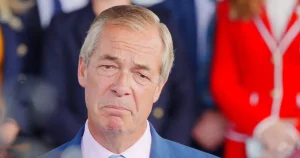
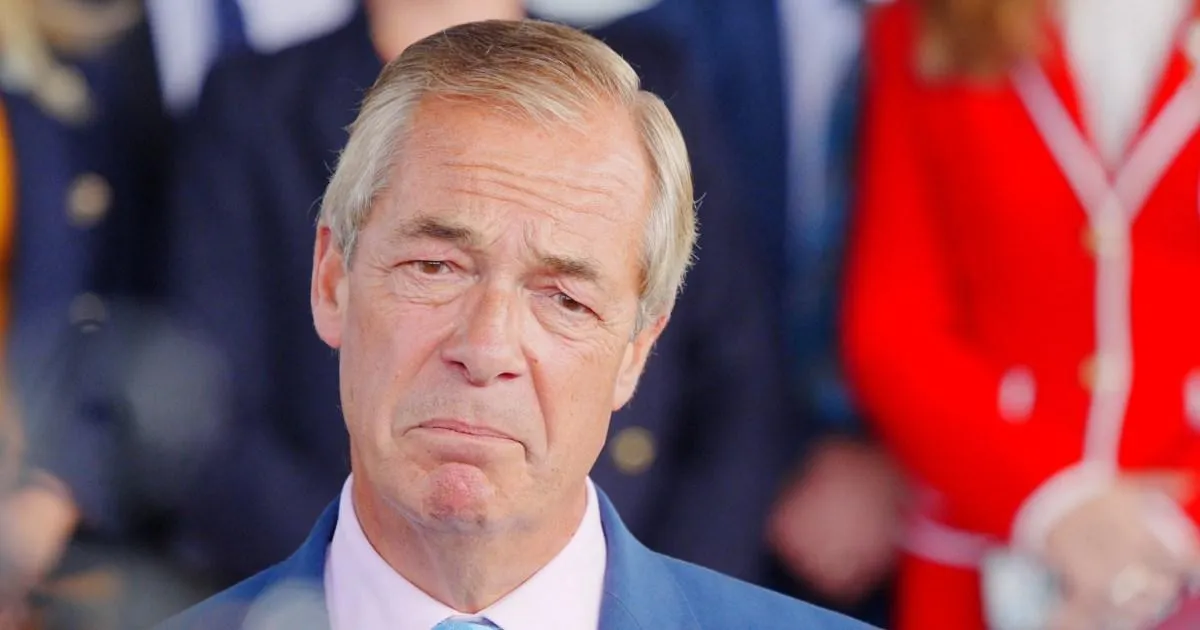
Perhaps the most fascinating element of this political soap opera is the relationship between the Conservative Party and Reform UK. The YouGov projection puts the Tories on 130 seats and Reform on 123—so close that the two parties are practically elbowing each other for space. This is a remarkable shift from last year, when Reform was projected to enjoy a surge that would have made them the undisputed powerhouse of the right. Now, their numbers have fallen dramatically, with the projection showing them taking 188 fewer seats than in the September 2025 version of the same poll. Still, it is a far cry from the five seats they actually won at the 2024 election. Today, Reform has eight MPs in Parliament, all of them defectors from the Conservative Party, and Nigel Farage remains a stubborn presence after holding onto his Clacton seat in a by-election against the famous Count Binface. The political imagery is almost absurd—a serious movement for national renewal, reduced to sharing headlines with a man in a bin costume—but it speaks to the strange, carnivalesque nature of modern politics. The arithmetic, however, is unforgiving. Even if the Tories and Reform somehow managed to form a coalition, their combined seats would still fall short of the 326 needed for a House of Commons majority. They could not govern alone, no matter how much they might resent that fact. And yet Badenoch has already ruled out a deal with Reform or the Liberal Democrats. She points to history as her warning: the two elections of 1974, and the painful coalition experience of 2010 to 2015, when her party had to make concessions to the Lib Dems and, in her view, lost the public’s gratitude as a result. It is a principled stance, perhaps, but it also looks like stubbornness in the face of mathematical reality. In a hung parliament, someone has to talk to someone. Ideological purity is a luxury that democracies can rarely afford.
Paragraph 4: The Fragile Allure of a Rainbow Coalition
If the right cannot find a way to work together, what about the left? The survey suggests that Burnham’s only real path to power in a hung parliament would be some kind of “rainbow coalition”—a messy, multi-coloured alliance of left-wing parties that could rally around a shared progressive agenda. On paper, this sounds hopeful, even exciting. The Greens are projected to see their numbers rise from seven to nine seats, which would give them a stronger voice. Plaid Cymru could gain nine seats, adding a Welsh nationalist flavour to the coalition. The SNP could pick up around ten seats, bringing Scottish grievances to the table. Combined, these parties could potentially provide the support Burnham needs to carry on governing. But a rainbow coalition is easier to imagine than it is to manage. Each of these parties has its own priorities, its own red lines, and its own voter base to answer to. The Greens might demand radical climate action. Plaid Cymru and the SNP would likely push for more autonomy and greater investment in their nations. There would be internal contradictions, moments of bitter compromise, and the constant threat of backbench rebellions. Governing would become an exercise in tightrope walking, with every decision freighted by the need to keep multiple fragile egos satisfied. For Burnham, this would be an exhausting way to run the country. It might also prove politically dangerous. Voters who backed Labour in the hope of decisive leadership could feel betrayed by endless horse-trading with smaller parties. The dream of a progressive alliance could quickly turn into a nightmare of indecision and point-scoring. Still, the alternative might be even worse. If Burnham cannot build a coalition, and if no other party can either, the country would face the prospect of another election within months—a cycle of uncertainty that would leave everyone exhausted and no one properly in charge.
Paragraph 5: A Land of Narrow Margins and Bruised Nerves
The most striking detail in the YouGov data might not be the seat projections or the horse-trading scenarios. It is the revelation that in more than a third of all seats, the winning margin would be less than five percentage points. That is a remarkable sign of just how conflicted the country has become. These are not landslides or safe havens; they are battlegrounds where every individual vote genuinely matters. People are not overwhelmingly convinced by any party, any leader, or any manifesto. Instead, they are weighing options, holding their noses, and voting for the least bad choice. This makes politics feel incredibly fragile. A few thousand votes scattered across the right seats could change the outcome of an entire election. It also means that campaign managers will obsess over every leaflet, every doorstep conversation, every stray comment from a candidate. The 2028 election, if it happens soon, could be won or lost on the thinnest of margins. For ordinary people, this is both empowering and exhausting. It is empowering because it means their vote really is important; no one can take democracy for granted. But it is exhausting because it means the country remains trapped in a state of perpetual tension, with no clear direction and no shared sense of purpose. Parties may claim to have the answers, but the polling shows a nation that is uncertain, divided, and perhaps a little sick of the whole spectacle. Burnham may be accused of being a gambler, but in this climate, every politician is taking a bet. The real gamble is whether the public can survive another election campaign without becoming completely disillusioned. The endless cycle of promises, debates, and headlines can feel more like entertainment than governance, and the stakes are far too high for that.
Paragraph 6: The Human Cost of Political Limbo
In the end, all of this speculation matters because politics is not a game. It is the mechanism through which schools are funded, hospitals are staffed, and streets are made safe. Behind every seat projection and coalition feasibility study are real people with real needs—families waiting for appointments, workers worried about their jobs, young people wondering if they will ever afford a home. When politicians talk casually about calling another election, they are not just making a strategic calculation; they are adding more uncertainty to lives that are already uncertain enough. The last decade has been a rollercoaster of referendums, snap elections, leadership contests, and global crises. Voters are tired. They are looking for leadership that feels steady, honest, and focused on the long term, not another round of tactical chicanery. Kemi Badenoch may believe the Tories “fancy their chances,” and Andy Burnham may or may not be tempted to roll the dice, but the people they serve are less interested in the game and more interested in the result. They want a government that can get on with the job without constantly looking over its shoulder. The polling suggests that the country is not ready to give anyone a decisive mandate, which means compromise and coalition-building are likely to remain part of the political vocabulary. But compromise is not a dirty word; it is how functioning democracies work. The challenge for Burnham, and for every leader, is to turn a hung parliament into a working government, to turn division into dialogue, and to turn the frustration of a conflicted electorate into the beginnings of a new consensus. It will not be easy, and it will require patience, humility, and a willingness to listen. But that is the price of democracy. Burnham might fancy his chances, but the real winners will be the voters—if, of course, someone finally gives them something worth voting for.