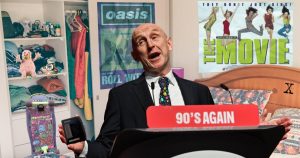


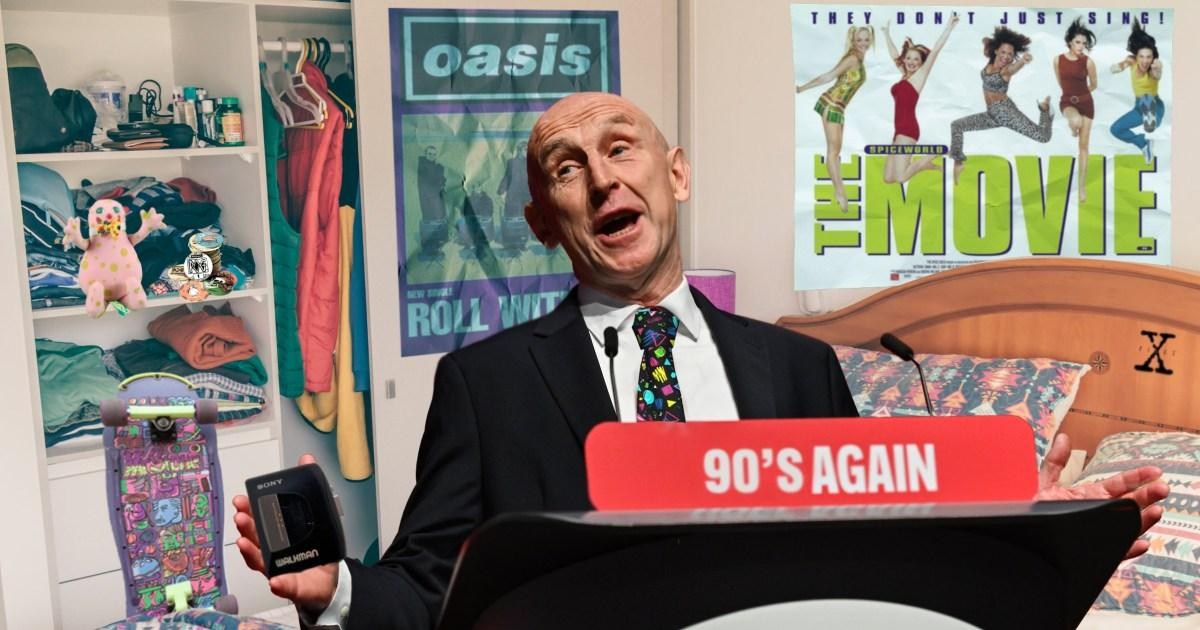
You know you’re properly in middle age when the decade you spent your youth in starts showing up in the conference speeches of cabinet ministers, and the UK has apparently reached that moment with a vengeance. The country is wallowing in nineties nostalgia, from the return of Oasis to the revival of Gladiators, and even the Labour Party’s new chancellor, John Healey, has noticed. Taking to the stage for his first conference speech since being handed the keys to the Treasury by Prime Minister Andy Burnham back in July, Healey couldn’t resist acknowledging the cultural flashbacks swirling around him. Oasis, he noted, are touring again – a bit of a favourite of the PM, who’s clearly still dreaming of being Liam Gallagher at a Knebworth reunion – while Gladiators has stomped back onto television screens, much to the delight of Housing Secretary Angela Rayner. But beneath the warm glow of nostalgia, Healey had a serious point to make, and he wasn’t going to let a bit of Britpop fool anyone into thinking the country is back in the halcyon days of Cool Britannia. The nineties might be back in fashion, he suggested, but the money that made New Labour’s era feel so confident and transformative is emphatically not.
That, in a nutshell, was the central tension of his address to the Labour faithful in Liverpool. “I have to level with you, conference, the money New Labour had in the nineties is simply not there now,” Healey said, and you could almost hear the collective sigh of resignation ripple through the hall. He went on to point out that economic growth under Gordon Brown, the former chancellor who became a totemic figure of that era, was more than double what it was during the Tory years that followed. “And Britain has it harder now,” he added, in a phrase that managed to be both a sobering reality check and a quiet plea for patience. It’s a tricky line to walk for a party that loves to invoke its own history, especially one that still carries the emotional weight of 1997 when Tony Blair swept into Downing Street on a wave of euphoria, ending eighteen years of Conservative rule. Healey himself had a front-row seat for that historic moment, having been elected as an MP in that very landslide, and he was soon working in the Treasury under Brown. To make matters even more meta, that entire political era has been given a strange second life on social media, with young people on TikTok creating fan edits of Blair, Brown, and their contemporaries as if they were characters in a prestige drama. Healey is living proof that the past is never really past – it just gets reblogged and remixed.
Healey’s own story is a deeply human thread through all this policy talk, and he leaned into it beautifully with a story that felt more like a fond memory from a family wedding than a set-piece political address. In 1999, at the party’s conference in Bournemouth, Healey was still the new kid on the block, surrounded by the big names of the era – Ed Miliband, Douglas Alexander, Ed Balls, all of them waiting in the wings. Then Gordon Brown arrived back from an International Monetary Fund meeting just before he was due to deliver his keynote speech, and there was a sudden hubbub behind the scenes. Someone realised Brown needed a red tie – the unofficial uniform of Labour politicians on the big occasion – but nobody in the room had one. Except Healey. “Suddenly, Gordon was just about to go on, and I said, ‘Gordon needs a red tie’, and the only person in the room wearing a red tie was me,” he recalled. So there, in the autumn of 1999, the future chancellor of the United Kingdom handed his tie to the actual chancellor, who then delivered his speech wearing it. Healey did get it back, of course, and revealed that Brown had signed it for him. He’d never worn it since – until today. That’s the kind of story that makes politics feel human, not like a press release. It speaks to loyalty, mentorship, and the strange little rituals that bind people together in high-pressure environments. And it also gives Healey a rather lovely way of connecting his own journey to the legacy he’s inherited, without having to say it in so many words.
The bulk of the speech, though, was not about ties or nostalgia, but about the brutal economic reality facing the country. Healey didn’t mince words when he laid out the culprits behind Britain’s sluggish growth and strained public finances. He rattled off a list of what he clearly views as a series of self-inflicted wounds: “Cameron’s austerity,” which squeezed public services and left communities feeling abandoned; “Johnson’s Brexit,” which redrew the country’s economic relationships and created uncertainty that still lingers; and “Truss’s mini budget,” the catastrophic fiscal event that sparked market chaos and became shorthand for reckless governance. Alongside those, he pointed to longer-term structural problems – centralisation of power in Westminster and decades of deindustrialisation that had hollowed out towns and cities. It was a sweeping indictment, but presented almost like a doctor describing a patient’s multiple chronic conditions rather than a politician scoring points. Britain, he argued, has been weakened for years, and no one should pretend otherwise. But Healey wasn’t there to deliver a eulogy. Instead, he insisted Labour was “stepping up again,” just as the party had done at other moments of national crisis. He reminded the audience that Labour had been the party that helped create the National Health Service and Nato in the aftermath of the Second World War, and that it was Labour that led the response to the global financial crash in 2008. The message was clear: this is what the party does. It comes into government when things are broken, and it rebuilds them.
To give that big-picture rhetoric some flesh, Healey also made a series of concrete announcements designed to show that Labour isn’t just about warm words and remember-when stories. He unveiled a broader rollout of the Local Apprenticeships Service, extending it to every mayoral authority in England, a move aimed at giving young people real paths into skilled work rather than pushing everyone towards university or zero-hour contracts. He talked up a £300 million investment from Rolls Royce in factories across the UK, the kind of flagship industrial backing that makes ministers feel like they’re genuinely rebuilding the country’s manufacturing base. And perhaps most dramatically, he confirmed that £6 billion of contracts to build docks for new submarines will be handed to British companies employing British workers. In an era when so much political discussion is abstract – about inflation rates, interest spreads, and productivity statistics – these announcements land with the satisfying thunk of tangible jobs being created in real places. They’re also a reminder that the Labour Party, despite its internal debates and intellectual fashions, still believes in the power of the state to shape the economy in ways that benefit ordinary people. Healey’s speech was, in many ways, a classic Labour pitch: yes, times are hard, and yes, the money isn’t what it used to be, but we have a plan, and that plan involves apprenticeships, submarines, and a belief that Britain can make things again.
The conference itself, of course, is bigger than just one speech, and Healey’s appearance was only part of a much larger political drama unfolding in Liverpool. He was joined on the main stage by other senior figures, including Defence Secretary Wes Streeting, Foreign Secretary Ed Miliband, and Home Secretary Shabana Mahmood, each offering their own vision of where the party is heading. But the most anticipated moment is yet to come: tomorrow’s closing address, which will be Andy Burnham’s first speech to Labour conference as prime minister. Burnham, who has been teasing his priorities in media interviews, is expected to lay out more details of his plan to introduce a national care service for England, a bold promise to fix a social care system that has long been described as “threadbare.” It’s a fitting way to cap off a conference that has felt, at times, like a conversation between the party’s past and its future. There’s something poignant about watching a party that rose to power in the nineties now trying to recapture that sense of purpose while grappling with a world that has become far more difficult to navigate. The Oasis reunion, the Gladiators revival, the TikTok fan edits of Tony Blair – they’re all fun, but they’re also a reminder that nostalgia is often a way of avoiding the present. Healey, to his credit, acknowledged that directly. He stood there in a tie Gordon Brown once borrowed, in front of a party that still carries the hopes of millions, and told them the truth as he saw it: the old days aren’t coming back, and the new days are going to require hard work. But he also made a case for why that hard work might be worthwhile. Because if Labour learned anything from the nineties, it’s that politics can change lives when it’s unafraid to act – and that a red tie, worn with conviction, can be a small symbol of a much bigger promise.