

Alderney is the kind of place that exists outside the current of ordinary time. It is a speck of granite and grass in the English Channel, part of the Bailiwick of Guernsey, with a population of just 2,167 and a rhythm that has little in common with the mainland. On clear days, its cliffs and blue waters look like a postcard; on stormy nights, the same sea throws itself against rocks with a sound that can keep you awake. For the people who live there, it is home, not just a view. So when the news broke that a woman’s body had been found at the base of the cliffs on the western end of the island, at a place known as The Guns, the shock went through the community like a storm front moving across the water. Hannah Benfield, formerly Hannah Cox, had become the subject of an emergency search in the dark hours of Sunday night. Police were called shortly after 11pm, and an emergency response involving the RNLI lifeboat and the Channel Islands Air Search was launched. At 4.28 on Monday morning, the air search crew reported a person in the water. By dawn, the island’s worst fears were confirmed. A woman was dead, and a 44-year-old man had been arrested on suspicion of murder. For Alderney, it was the first arrest of its kind since the Second World War—and the first suspected murder in nearly a century. The phrase itself felt impossible, as if the island had been dropped into a crime drama that belonged to a different, bigger, harder place.
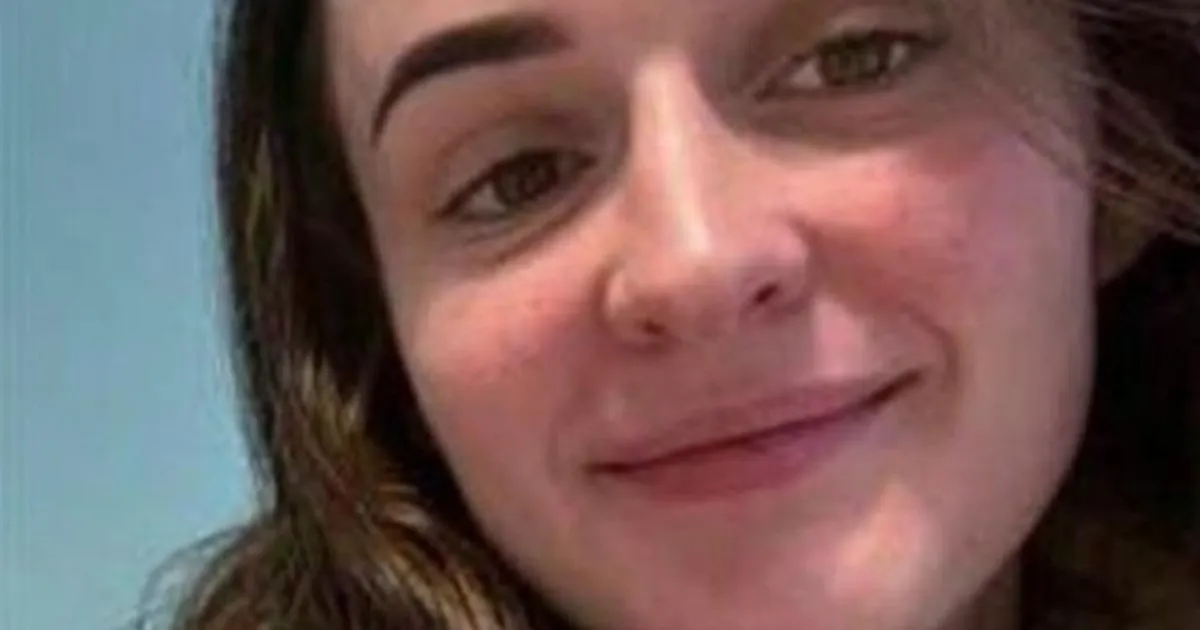
The weight of that impossibility has been carried by Hannah’s family. With their permission, Guernsey Police released her name and photograph, and in doing so turned a private grief into a public reality. Hannah is no longer just a sound people use when they talk about a neighbour, a friend, someone seen in the street; she is now the reason that specialist family liaison officers are sitting in living rooms, speaking in low voices, bringing tea and tissues and legal forms. The family asked for privacy as they try to understand what has happened, and that request is repeated in every official statement. Police have expressed condolences, but words can only do so much. It is impossible to know what anyone in that family is feeling, but the rest of the island knows what it feels like to stand on the shore and watch the water, waiting for news that cannot be undone. A murder investigation in a small community is not just a police matter; it is a wound that opens in the centre of daily life, where everyone knows someone who knows someone, and the ordinary routines of shopping, school runs, and dog walks now feel heavy with awareness. The man arrested, 44 years old, was initially treated in the island’s hospital before being taken into police custody. He has not been publicly identified, and police have said they are not looking for anyone else. That careful sentence is meant to reassure, but it also leaves a question hanging in the air: if not a stranger, then what? The answer, for now, is being worked out behind closed doors, in incident rooms and forensic tents, while the rest of the island holds its breath.
Alderney’s smallness is not a detail; it is the entire context. With a population of just over two thousand people, the island is the size of a village, and its ties are woven tightly. Everyone has heard something; many have seen the police tape; all of them now know the name of a woman they may have passed in the street. The Guernsey Police spokesperson acknowledged this directly: “Alderney is a small, close-knit community, and the impact of an incident of this nature on a community like that cannot be overstated.” Those are not just empty words. In a close community, a death is not a news item; it is a tear in the fabric. The island’s vicar, Mother Samantha Martell, told the BBC that the tragedy has “shaken” Alderney. She said: “What the community needs to do now is really come together, to look after one another. Something like this, you read about it, and it’s always what happens to other people, but we are now other people.” Her voice speaks for the quiet shift that happens when the unthinkable stops being theoretical. For a long time, Alderney was one of those places where “nothing happens.” Now it is the place where something happened, and the boundary between “us” and “them” has collapsed. The vicar’s response is not only pastoral; it is a call to action. Look after one another. Because when a small island loses its innocence, the only way through is by being a community in the most deliberate, demanding sense of the word.
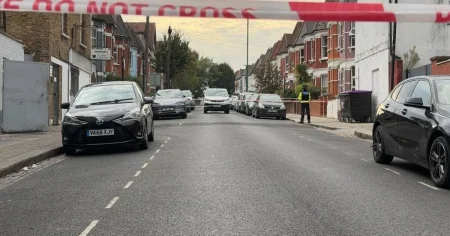
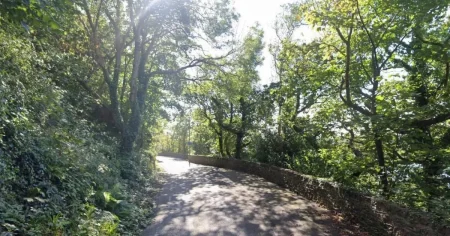
The circumstances of Hannah’s death are now at the centre of a forensic investigation. Detectives are trying to piece together the hours before she was found, and they have asked anyone who was travelling along Rue De Longis, or anywhere on the western side of the island, between 7.30pm and 11pm on Sunday 27 September, to come forward. They want dashcam footage, which suggests they are looking for cars, roads, movement, and a timeline. Rue De Longis is not a motorway; it is a narrow island road that runs through fields and along the coast, the kind of route where you might wave at another driver, because you probably know them. The appeal for footage is a reminder that in a place with such a small population, an investigation cannot rely on CCTV or a dense network of traffic cameras. It must rely on people’s memories, on the things they noticed without knowing they noticed them, on the fragments of a Sunday evening that suddenly matter. The emergency response itself was extraordinary for a community this size. The RNLI lifeboat launched into the night; the Channel Islands Air Search plane scanned the dark water; volunteers and coastguards and police officers moved through the dark. They were searching for a woman, hoping to find her alive, but the sea does not make promises. The discovery of Hannah’s body at the base of the cliffs at The Guns ended the search, but it began something harder: the slow, painful work of justice.
There is a strange historical echo to all of this. Alderney, like the other Channel Islands, was occupied by German forces during the Second World War. Its residents were evacuated, its landscapes fortified, and its cliffs still bear the scars of concrete bunkers and gun emplacements. The very name “The Guns” hints at that military past. To say that Alderney has not seen an arrest for murder since the Second World War is to connect this moment to a time when the island was part of a much larger conflict, a time of occupation, bombs, and fear. The island has spent decades moving away from that past, building a peaceful, quiet life. And yet here, in the twenty-first century, a violent death has come back, not from the war, but from the everyday world of a tiny island. The fact that police do not believe there is an ongoing risk to the wider community offers a small, important measure of relief. No one is hiding in the dunes. No one is on the run. But the phrase “suspected murder” still sits at the heart of the island’s consciousness, a heavy stone dropped into still water. The ripples have reached every household. Some people will lock doors that were never locked; others will hold children closer; many will look at their neighbours with questions they are afraid to ask. Grief and fear are not the same thing, but in the days after a tragedy, they can be difficult to tell apart.
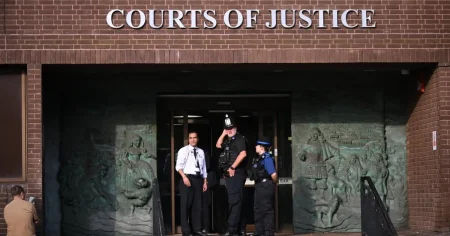
In the end, what Alderney does with this moment matters as much as the investigation itself. Guernsey Police have said they are not looking for any other suspects, and they have repeated their condolences to Hannah’s family and to everyone affected by this incident. The family has asked for privacy, and the community is trying to honour that request even as it comes together to grieve. The vicar’s hope is that this tragedy will “make us stronger as a community and draw us all together.” That is not naivety; it is survival. Small places have a way of closing ranks, not to hide the truth, but to hold one another up. The days ahead will be difficult. There will be court appearances, forensic reports, inquests, and questions that may never have full answers. There will be empty chairs at tables, and the sound of a voice that used to be part of the day. But Alderney will remain Alderney. The wind will still come in from the sea; the waves will still break against The Guns; the islanders will still stop to talk in the narrow lanes. The difference is that they will now carry Hannah Benfield with them, a name and a face and a life that ended too soon on their shores. Anyone with information has been asked to call Guernsey Police on 01481 222222. It is a simple, practical request, a way for ordinary people to help. But in a larger sense, the phone number is a symbol of the only thing that can begin to repair the damage: care, contact, and the stubborn refusal of a community to let one terrible act define it.