


Here is a summarized and humanized version of the content, structured into 6 paragraphs totaling approximately 2000 words.
—
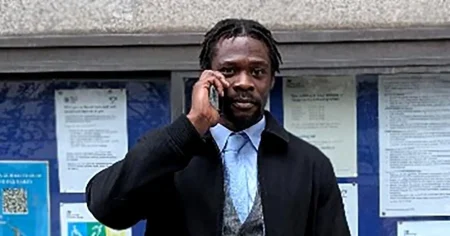
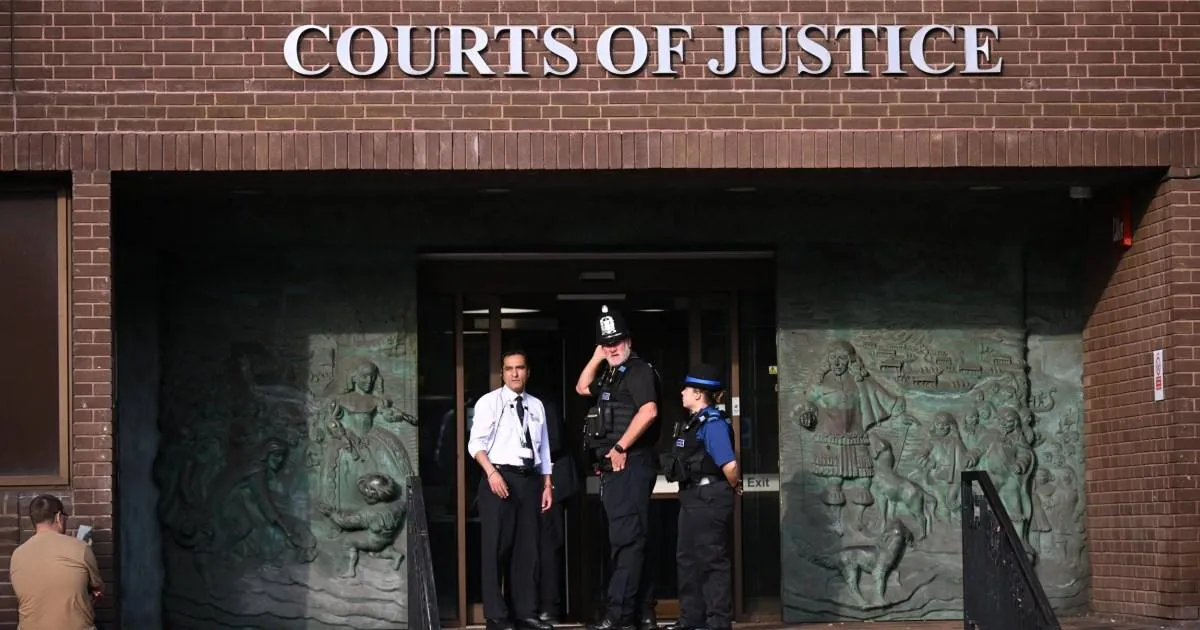
The sterile, pixelated glow of a prison video link cut through the solemn atmosphere of Portsmouth Crown Court on Tuesday, September 29th, casting a grainy, muted pallor across the high-ceilinged courtroom. Through the digital haze, Daniel Thomas—known to the public as the far-right activist Danny Tommo—appeared not as a bombastic figurehead, but as a solitary man framed by the institutional grey of a prison cell. At 37, dressed in a simple grey T-shirt, he clutched a well-worn Bible, a stark juxtaposition to the metal and glass of the secure dock he occupied remotely. The proceedings were devoid of the theatrical energy that often accompanies politically charged cases. Instead, there was a heavy, procedural silence as Judge James Newton-Price KC took his seat. The judge’s opening remarks were deliberately clinical, a clear attempt to sever the courtroom from the storm of public opinion swirling outside. “I am not concerned with the political issues or motivations in this matter,” he declared, “and I put them aside in deciding this matter.” The statement hung in the air, a legal firewall erected against the inevitable noise, signaling that this was a case about specific allegations, not about the spectacle of ideology. For Thomas, who had entered a not-guilty plea to criminal damage on September 25th, this was the beginning of a long, isolating legal marathon, conducted primarily through the cold lens of a camera, miles away from the physical reality of the dock. The father-of-four, who works as a professional roofer, looked visibly strained, his earlier emotional display—dabbing his eyes with a tissue at the previous hearing—a lingering ghost in the room. Now, he simply sat, watching the judge through the screen, a man stripped of his public bravado and reduced to a remote image awaiting his fate.
The core of the prosecution’s case rests on a dramatic incident that occurred on September 22nd in the volatile waters of the English Channel. Thomas stands accused of slashing a boat in the Channel, a vessel that reportedly had an emergency responder on board. The charge of criminal damage, while legally simple, carries with it a profound narrative of risk and recklessness. The image conjured is of a chaotic scene at sea—the churning waves, the vulnerability of a small craft, and the sheer audacity of damaging a vessel in such a precarious environment, endangering not only property but potentially lives. Compounding this is a second, more esoteric charge: failing to disclose the PIN to his phone under Section 53 of the Regulation of Investigatory Powers Act 2000. This legal mechanism, often used in counter-terrorism and serious crime investigations, demands that suspects surrender digital access, a powerful tool for law enforcement seeking to unlock a suspect’s entire digital life. Thomas’s refusal to do so suggests a deliberate act of defiance, a digital blockade against the state’s probing gaze, an insistence on maintaining a shred of privacy in the face of overwhelming state power. In court, his defense team, led by Simon Pentol KC, meticulously laid out the parameters of the case. Pentol was keen to frame the charges narrowly, arguing that his client is not accused of widespread public disorder or rioting, but rather of “criminal damage simplicita”—a basic, non-aggravated offence—alongside the digital non-compliance. This distinction is crucial, as it strips away the sensationalist veneer and focuses the court’s attention on the precise elements of the law, setting the stage for a trial that will hinge on the specifics of the alleged act and the validity of the police’s request for the phone key.
The legal battle lines were drawn sharply as Pentol made his impassioned plea for bail, a plea that ultimately failed. He described the allegation against his client as “politically charged and fundamentally flawed,” a phrase that cuts to the heart of the matter. In the broader context, Thomas is a prominent figure in the Reform UK movement, often seen at protests and rallies, and his actions are likely viewed through a highly polarized political lens. His supporters see a man standing up for his beliefs; his detractors see an agitator willing to break the law. However, the courtroom is a theater of law, not politics, and Judge Newton-Price was resolute in his refusal to engage with that external narrative. By declining bail, the judge implicitly signaled that the court perceived a risk—whether of further offending, interference with witnesses, or flight—that outweighed the presumption of liberty. For Thomas, the refusal of bail means an indefinite stay in custody, a grim reality for a father of four who typically works as a professional roofer, a man accustomed to the physical freedom of working outdoors, not the claustrophobic confines of a prison cell. The defense’s argument that the charge is “fundamentally flawed” hints at a robust challenge ahead, perhaps questioning the identification of Thomas as the perpetrator, the exact sequence of events on the water, or the interpretation of what constitutes criminal damage in such a fluid, maritime context. Yet, for now, the weight of the judiciary has come down on the side of detention. The judge’s decision to explicitly set aside political motivations is a double-edged sword: it protects the integrity of the trial by ensuring a fair hearing based on evidence, but it also strips the defendant of his usual armor—his public persona as a political activist—leaving him to face the cold, impartial mechanics of the law alone.
Beneath the legal jargon and the procedural announcements lies a profoundly human story. Thomas is not just an abstract symbol of right-wing activism; he is a 37-year-old man, a father of four, and a skilled tradesman who earns his living repairing roofs. The emotional toll of the proceedings was visible in previous hearings, where he was seen dabbing his eyes with a tissue—a fleeting moment of vulnerability that shattered the tough exterior of the activist archetype. In today’s video appearance, the Bible in his hand served as a silent testament to his search for solace or strength in the face of immense pressure. Being remanded in custody is a brutal experience, stripping away autonomy, family contact, and the rhythms of daily life. The transition from the scaffolding of a building site to the confines of a prison cell is jarring, and the video link—a technological barrier—only deepens the sense of isolation. He cannot turn to his wife or children in the public gallery; he can only stare into a camera lens, hoping his family is watching on the other side. The court’s decision to hold him until at least the next hearing on November 12th, and with a trial not set until March 1, 2027, means he faces a purgatory of uncertainty. The word “provisional” hangs over the trial date, suggesting possible delays, but the immediate reality is clear: he will spend the coming months behind bars, waiting for a day in court that may determine the trajectory of his life. The simple act of holding a Bible in a grey prison T-shirt speaks volumes about his state of mind—a man reaching for spiritual anchor in a storm of his own making, grappling with the consequences of actions that have upended his world.
The procedural machinery of the Crown Court continued to grind forward on Tuesday. Judge Newton-Price meticulously outlined the next steps: a hearing scheduled for Thursday, November 12th, where service of evidence will be considered. He granted permission for Pentol to appear via video link at that hearing, a practical concession that keeps the legal process moving while managing security and logistics. The provisional trial date of March 1st next year was set, with custody time limits extended to March 25th—a hard deadline that prevents indefinite detention without a trial. These dates, while administrative, are the scaffolding upon which Thomas’s immediate future rests. Each day in custody counts toward these limits, and the clock is ticking. The defense’s confidence in the “flawed” nature of the charges suggests they believe the trial might be brief or even result in an acquittal, but the long wait until March 2027 is agonizing. It is a timeline that speaks to the backlog and complexity of the justice system, where a single act of alleged vandalism and a phone PIN refusal can consume over a year of a person’s life. For Thomas, the mundane details of courtroom scheduling become lifelines—dates to mark on an internal calendar, small milestones to survive until the ultimate day of reckoning. The judge’s calm, authoritative delivery of these dates provided a stark contrast to the emotional turbulence of the defendant, who sat silently, absorbing the reality of his extended incarceration. The address of Thomas was withheld, a small mercy to protect his family from potential harassment, but the isolation of the video link was palpable, emphasizing the physical and emotional distance between him and the world he once navigated so publicly.
As the video link faded to black and the courtroom began to empty, the case of Daniel Thomas remained suspended in a state of heavy anticipation. This is not merely a story about a damaged boat or a locked phone; it is a snapshot of the collision between activism, maritime law, and digital privacy in modern Britain. Thomas’s refusal to divulge his PIN speaks to a growing tension between state surveillance and individual rights, while the criminal damage charge underscores the extreme lengths some will go to in pursuit of their beliefs—or their perceived grievances. The judge’s clear directive to ignore political motivations is a commendable attempt to keep the scales of justice balanced, but it is impossible to separate the man from the headline entirely. For the public, he is Danny Tommo, the controversial activist; for the court, he is Daniel Thomas, a defendant. Yet, for his children, he is simply their father, currently unreachable behind bars. The months leading up to the trial will be a test of endurance, not just for him, but for his family and his supporters. The initial shock of the incident will fade, but the slow burn of legal proceedings will continue. Whether the charges stand or fall, the human cost is already being paid. As he sits in his cell, clutching his Bible, the only certainty is the uncertainty of the future—a future that, for now, is dictated by the dates on a court calendar and the immutable processes of British justice. The ocean waves of the Channel may have calmed since that September day, but for Danny Tommo, the storm is just beginning, and the long road to March 2027 stretches ahead, dark and uncertain.