
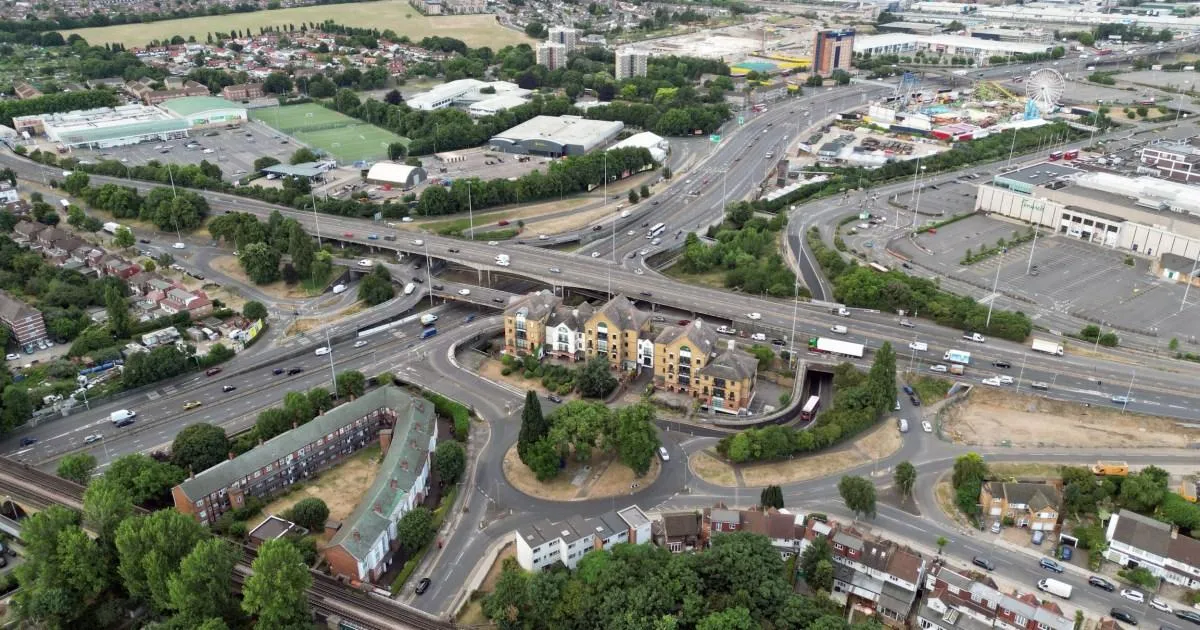
Few things test a driver’s patience quite like roadworks on a route you rely on every single day. That’s exactly what’s about to happen for anyone who uses the Brent Cross flyover in north London, a crucial bridge on the A41 that carries more than 120,000 vehicles a day. For drivers, this isn’t just another set of cones and a bit of a delay; it’s a major disruption to the rhythm of daily life. Commuters heading between Golders Green, Hendon, and the wider North Circular area will need to brace themselves for slower journeys, narrow lanes, and overnight closures, because the structure is undergoing what Transport for London calls “safety-critical” repairs. The flyover has been living with a heavy weight restriction since October 2022, meaning trucks and lorries over 7.5 tonnes have been forced onto local side roads, creating headaches for residents and businesses alike. Now, after months of checks and planning, the structure is finally getting the treatment it needs. But the cure is going to hurt a little before it gets better, because these works are expected to last up to two years. TfL has been clear: journeys will take longer, lanes will be reduced, and patience will be tested. Yet hidden behind all that disruption is a quieter, more reassuring story: this is about making sure a vital piece of London’s transport network is safe and strong for decades to come.
So why exactly is this happening now, and why is the work so extensive? The flyover has been under a 7.5 tonne weight limit since October 2022, which was introduced as a precautionary safety measure. Inspections had revealed that the maximum weight the structure could safely carry was lower than previous checks had suggested, which is a very polite way of saying the bridge was not as robust as everyone had hoped. Heavy vehicles were redirected away from the flyover onto nearby local roads, but that was never a long-term solution. It just pushed the problem elsewhere, sending lorries rumbling through residential streets and causing congestion in places not designed for them. The upcoming works are designed to fix the root cause. They include strengthening the flyover’s structure itself, replacing safety barriers on the flyover and on the approaches to improve driver safety, and installing a brand-new waterproofing system. For those unfamiliar with road engineering, waterproofing might sound minor, but water is one of the biggest enemies of concrete and steel. Over time, moisture seeps in, corrodes reinforcement, and quietly weakens the whole structure. New waterproofing will help protect the flyover from the elements and extend its lifespan considerably. TfL has described the A41 Brent Cross flyover as “one of London’s most important road structures,” and that’s not an exaggeration. It’s a vital strategic route for people, businesses, and freight, connecting communities across north London and beyond. The project has received £10.8 million in government funding, and the ultimate goal is not just to repair damage from the past, but to reduce the risk of future unplanned closures and emergency repairs. In other words, think of this as open-heart surgery: disruptive, expensive, and anxiety-inducing, but absolutely necessary to avoid a far worse crisis further down the road.
For anyone trying to plan their commute around the disruption, the details are important. The work will affect the A41 Hendon Way, the A406 North Circular, and a number of surrounding roads. There will be a lane restriction on the A41 Hendon Way between Thursday, October 1 and Wednesday, October 28, 2026, which is a long stretch of reduced capacity that will inevitably slow traffic during peak hours. Then, from October 29, a contraflow system will be in place on the flyover itself, meaning one lane will be kept open in each direction using the opposite side of the carriageway. This kind of setup is standard for major bridge works, but it requires drivers to pay extra attention to temporary signs and barriers. There will also be a series of overnight closures to allow more intense phases of work to happen safely. The A406 North Circular westbound is scheduled to close overnight on Wednesday, September 30, from 10pm until 5am the following morning. The A41 Hendon Way southbound between the Vivian Avenue and The Vale junctions will close overnight on Thursday, October 1 and Friday, October 2, also from 10pm to 5am. And for those heading northbound, the A41 Hendon Way between the same junctions will close overnight on Monday, October 5 and Tuesday, October 6, again between 10pm and 5am. These may sound like small windows, but overnight roadworks have a habit of causing surprises for night-shift workers, early-morning drivers, and anyone who assumes the roads will be clear at 2am. TfL is urging motorists to avoid the A41 and A406 Brent Cross area where possible, to allow extra time for journeys, and to consider walking, cycling, or taking public transport instead. That advice is easier said than done for families with school runs, tradespeople with vans full of tools, or carers making rounds, but it’s a sign of how serious the disruption will be.
Buses are also part of the picture, and while they will continue to operate through the Brent Cross area, passengers should be prepared for diversions and alternative stops, especially during the overnight closure periods. There will be nights when the usual bus route simply doesn’t exist, and commuters will need to check signs, apps, and announcements before leaving home. TfL has tried to soften the blow by pausing the works between November and early January, which is a thoughtful gesture aimed at reducing disruption for Brent Cross Shopping Centre and all the shoppers who flock there during the festive season. Nobody wants to be stuck in a traffic jam on the way to buy Christmas presents, and pausing during the holiday period gives both locals and visitors a bit of relief. But once January arrives, the work resumes, and the long grind continues. For local residents, this will feel like an eternity. They’ve already spent the last couple of years dealing with heavy lorries on local roads, the noise, the wear and tear on pavements, and the frustration of watching huge vehicles squeeze through streets designed for much smaller cars. Now they face months of lane closures, contraflows, and overnight crews, not to mention the inevitable knock-on effects, with traffic spilling onto residential streets as drivers search for shortcuts. It’s a heavy ask of a community that has already made sacrifices. But there’s also a sense in which this is the final stretch. The repair programme has a clear endpoint, and when it’s done, the flyover can finally return to full service, allowing heavy vehicles back onto the main route and taking the pressure off local roads. That thought may be cold comfort at 8am on a rainy Tuesday, but it’s the light at the end of the tunnel.
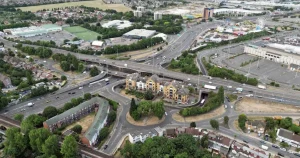
What makes this project so significant isn’t just the concrete and steel; it’s the role this flyover plays in the everyday lives of thousands of people. The Brent Cross flyover sits at the heart of a wider interchange that connects north London neighbourhoods like Golders Green and Hendon, right next to one of the city’s biggest shopping centres. For local residents, it’s the bridge you cross without thinking, the link between home and work, school and shops, friends and family. For businesses, it’s a vital artery for delivery trucks, freight, and commuters who keep the economy moving. For the freight industry, the current weight restriction has been a logistical nightmare, forcing drivers to plan alternative routes, add extra time to their journeys, and navigate unfamiliar streets. The repair works are therefore about much more than preserving a piece of infrastructure; they’re about restoring trust in a route that London relies on. TfL’s own words underline this beautifully: “It is a vital strategic route for people, businesses and freight, connecting communities across north London and beyond.” That’s not just transport jargon, it’s a reminder that roads like this are not abstract engineering projects. They carry ambulances to hospitals, parents to school gates, delivery vans to front doors, and friends to nights out. When a structure like this is weakened, everyone feels it, even if they don’t know the exact reason why the traffic is crawling. The £10.8 million investment from the government is a clear signal that this route matters, not just to Londoners but to the wider regional and national economy. The work is about reducing the risk of future unplanned closures, which would be even more disastrous, causing sudden gridlock, emergency diversions, and expensive last-minute repairs. In that sense, the current chaos is a planned, managed, and ultimately worthwhile investment in stability.
Living with roadworks is never fun, but it helps to understand what these two years of disruption are buying. Once the strengthening, barrier replacement, and waterproofing are complete, the Brent Cross flyover will no longer need the weight restriction that has been in place since 2022. Heavy vehicles will be allowed to return to the high road, taking them off the residential streets where they’ve caused so much disruption. The structure will be safer for every driver, with new barriers reducing the severity of any future incidents, and the waterproofing protecting the bridge from the slow, silent damage that water causes over time. More importantly, the risk of emergency closures will drop significantly. Instead of waking up one morning to find the flyover suddenly shut with no notice, Londoners will endure planned, scheduled, and communicated disruption now in exchange for more reliable journeys later. That’s the quiet bargain of public infrastructure: you put up with the inconvenience today so that tomorrow is safer and smoother. TfL has made it clear that they understand the burden, urging people to avoid the area where possible, allow extra time, and consider alternative modes, walking, cycling, or public transport. The holiday pause shows they’re thinking about the human side of the equation, too, giving shoppers and families a window of calm before the work resumes. So for those who depend on this route, the advice is simple: plan ahead, leave earlier, check your bus route, and maybe rediscover a side street or a train station you’d forgotten about. It’s going to be a long two years, and there will be frayed nerves and missed meetings and moments of pure frustration. But when the flyover finally reopens in full, with fresh barriers, a stronger structure, and a proper waterproof coat, it will quietly do what it has always done best: carry people where they need to go, without them even thinking about it. That, in the end, is the greatest compliment any road can receive.