
There are moments in life that seem to vanish as quickly as they arrive—youthful scuffles, street-corner tensions, a flash of violence. But every so often, a single moment refuses to stay in the past. It grows, changes shape, and eventually returns with devastating consequences. That is the story of two young men from south-east London, whose lives became permanently entangled on a September afternoon in 2006. Jordan Burton was just 14 years old when he joined a group of youths who attacked 16-year-old Daniel Allright in Lewisham. At the time, the attack might have been written off as another piece of teenage brutality: Daniel was hit, badly wounded, and survived. But survival came at a cost. He sustained a serious head injury, suffered bleeding around the brain, and developed epilepsy. For years, he lived with the consequences. Then, in March 2022, at the age of 31, he died during a seizure in his bathroom. Only then did the law begin to look at the 2006 attack in a different light. Burton, now 33, had long since admitted his role in the violence, pleading guilty to violent disorder and unlawful wounding in 2008. But after Daniel’s death, prosecutors charged him with murder. This week, a jury found him guilty. The courtroom was quiet as the verdict was read. Burton showed no emotion at first, but then lowered his head, holding it in his hands as his family wept in the public gallery. Daniel’s family, by contrast, had finally heard the law acknowledge what they had always known: that the attack never really ended, and that the boy who walked away from that street fight would one day have to answer for the death it caused.
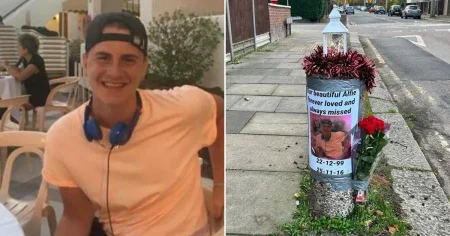
The attack itself was brutal and brief. Daniel was on his bike with two friends, having just left his home in Oscar Street. According to the statement he later gave police, he and his friends were in an area called Friendly Gardens when a group of males approached them and tried to rob them. One of them, a black male whom Daniel later identified as Burton, asked if he wanted to fight. Before Daniel could respond, Burton was handed a piece of wood and struck him with it repeatedly. Two white males joined in, hitting him with weapons while Daniel tried to shield himself with his arms. The violence only stopped when a person came out of a shop and told the attackers to leave him alone. They scattered, leaving Daniel bloodied and hurt in the street. He was taken to hospital, where doctors found significant bleeding around his brain and dangerous pressure building inside his skull. He underwent a craniotomy—a procedure in which part of the skull is removed to relieve pressure—and survived. But the brain had been injured in a way that could not be undone. In March 2007, just a few months after the attack, Daniel had his first epileptic seizure. He was prescribed medication, and for a while, the seizures were managed. But they never disappeared. Over the years, the condition tightened its grip. In the months before his death, his seizures became more severe, more frequent, and more frightening. The man who had been a fun-loving teenager, someone who rode his bike around Lewisham and had his whole life ahead of him, was now a prisoner of an injury inflicted by someone else’s violence. He was not the only person affected. His mother watched her son struggle, witnessed every seizure, and lived with the fear that any attack could be the one that took him. On March 25, 2022, Daniel texted her to say he had suffered a seizure and had a bad headache. The next day, he was found dead in the bath at his home. A post-mortem examination found no drowning, no natural disease. The cause of death was post traumatic epilepsy—the direct result of a head injury he had suffered sixteen years earlier.
In the immediate aftermath of the attack, the police investigation moved quickly. Burton was arrested in connection with the incident in September 2006. In interviews, he gave a peculiar answer: he said he had seen what happened, but denied being involved and denied knowing anyone involved. It was a position that would not survive scrutiny. Daniel, even while recovering, was able to identify Burton as the person who had struck him first. The evidence, combined with witness accounts, was enough to charge Burton. In 2008, he pleaded guilty to violent disorder and unlawful wounding. It was an admission, but a carefully limited one. He was not admitting that he had intended to cause Daniel really serious harm. He was not admitting to the full weight of what the violence had done. In the eyes of the law at the time, this was perhaps enough. The case was resolved, and Burton was punished for the assault. But the legal system, like Daniel, carried the wound forward. The other attackers also faced consequences: one pleaded guilty to violent disorder in 2007, while another admitted using threatening words or behaviour. Daniel was left to live with the injuries, and the wider community was left to wonder whether justice had been truly served. For Daniel, the attack was not a closed chapter. It was a lifelong sentence of medication, hospital visits, seizures, and the constant awareness that his brain had been damaged. For Burton, meanwhile, the 2008 guilty plea may have seemed like the end of the story. He would have expected to move on, to leave the teenage violence behind. But the law has a doctrine of causation that reaches further than the immediate moment. When Daniel died in 2022, prosecutors returned to the old files and began piecing together the chain that ran from that street corner to the bathroom floor. The question was no longer simply whether Burton had taken part in a fight. The question was whether his participation in the attack had caused a death. In October of last year, he was charged with murder. The charge was built on the principle that a person whose unlawful violence leads to death can be held accountable for that death, even if the mechanism took sixteen years to unfold.
At trial, the prosecution set out a case that leaned heavily on the medical evidence. Prosecutor Duncan Atkinson KC told the jury that Daniel had developed epilepsy as a result of the attack. This was not a matter of speculation. The first seizure came in March 2007, barely six months after the assault. Daniel was then prescribed anti-epileptic drugs, and for years his life was shaped by the condition. But the severity of his seizures increased, especially in the months before his death. When his body was found, forensic pathologists were careful to rule out other causes. There was no evidence of drowning and no natural disease. The cause of death was post traumatic epilepsy. The prosecution argued that this epilepsy was directly traceable to the head injury inflicted in 2006. Burton, they said, was an “active and deliberate participant” in the assault. Mr Atkinson reminded the jury that Burton had pleaded guilty to violent disorder and unlawful wounding in 2008, which was confirmation of his involvement. The fact that others who were identified were not standing trial did not change Burton’s responsibility. The prosecution’s case was that the chain of causation was clear: but for Burton’s attack, Daniel would not have suffered brain injury; but for the brain injury, he would not have developed epilepsy; but for the epilepsy, he would not have died. Therefore, Burton’s unlawful act contributed to the death. This is the principle of causation, the thread that connects a teenage act of violence to a charge of murder decades later. The jury also had to consider whether Burton intended to cause really serious harm at the time, a question made difficult by the fact that he was only fourteen. But the evidence of repeated blows, and the use of weapons, was enough to convince them that he had crossed that threshold. On Tuesday, the jury returned its verdict: guilty of murder. It was a verdict that reached back across the years and drew a line from a piece of wood, an advertising board, and a bicycle chain to the quiet, tragic end of Daniel Allright’s life.
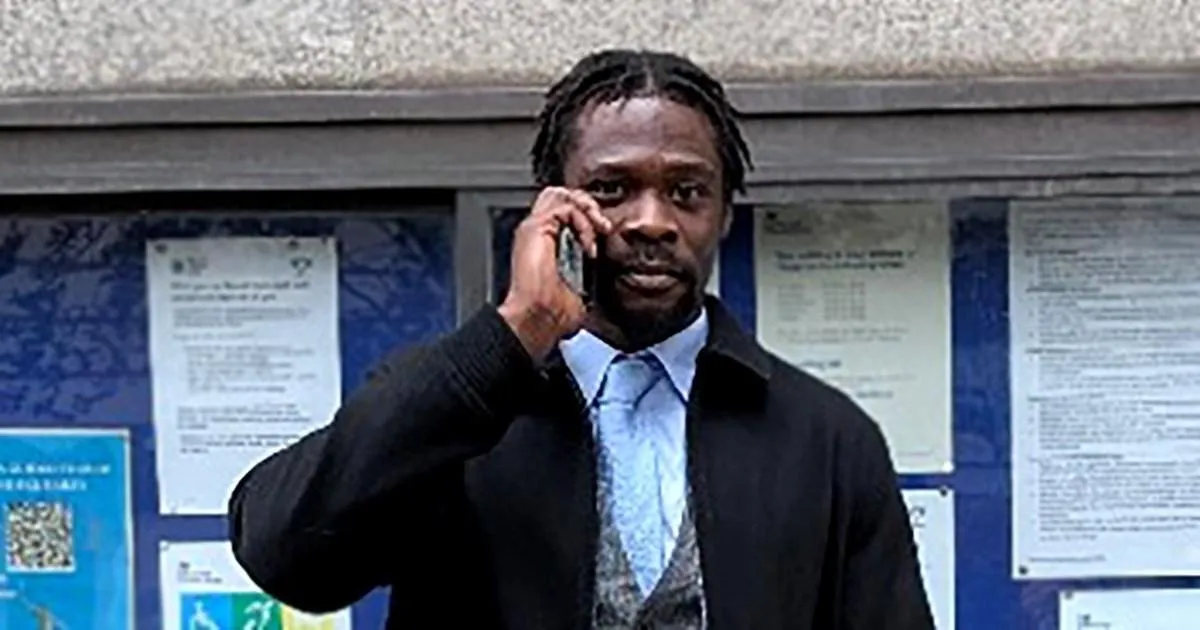
The moment of the verdict was unbearably heavy. Burton, now 33, stood in the dock as the jury foreman delivered the word “guilty.” His face was still, expressionless, as if the news had not yet reached him. But then he turned his gaze to the public gallery, where members of his family were sitting. He saw their tears. Slowly, he lifted his head and dropped it into his hands. The contrast between the two families in the courtroom could not have been greater. On one side, the family of the convicted man, shattered by the reality of life imprisonment. On the other, Daniel’s family, finally hearing an acknowledgment that the violence which had shadowed their lives for so long had been recognized for what it was. They had waited more than a decade and a half for this moment. They had watched Daniel struggle, suffer, and ultimately die. They had heard the details of his injuries, his epilepsy, his seizures, and his final text message. For them, the verdict was not a victory; there could be no victory. But it was an answer. It told them that the law understood the full weight of what had happened, and that the person who had started it could not hide behind the passage of time. Judge Anthony Leonard KC will sentence Burton on Wednesday. Because he has been convicted of murder, the sentence is fixed by law: life imprisonment. The judge will set a minimum term, the number of years Burton must serve before he can even be considered for release. In a case like this, there is no automatic tariff. The judge will weigh Burton’s age at the time of the attack, his subsequent guilty pleas, and the unusually long delay between the assault and the death. But the life sentence will be written into his future. The teenage boy who once picked up a piece of wood and swung it at another boy’s head will now spend a significant part of his adult life in prison. The question of what he has done with the years since 2006—whether he matured, apologized, or changed—becomes part of the background, but it cannot erase the chain of causation that began in a Lewisham park and ended in a bathroom in 2022.
This case is a sobering reminder that violence does not always end when the blood stops flowing. Sometimes it hides inside the body, waiting to resurface years later. Daniel Allright did not die with a sudden blow in the street. He died at home, in the quiet privacy of his bathroom, after years of living with the consequences of someone else’s decision to hurt him. His death was not a random tragedy; it was the final chapter of an injury that should never have happened. Burton might not have set out to kill him. He might not have known that a piece of wood swung at a teenage head could echo for decades. But the law, and common humanity, says that we are responsible for the consequences of our actions. The teenage brain may not fully grasp that, but society holds adults accountable. In this case, the adult was the same person as the teenager, just older. Justice has a strange rhythm. It can move haltingly, pause for years, and then, in a single courtroom moment, catch up with the past. For Daniel’s family, the guilty verdict brings no comfort that can fill the empty chair at the table. It cannot undo the seizures, the hospital appointments, the fear, or the final parting. But it does provide a measure of public recognition that their son was not merely a victim of a street robbery or a gang fight gone wrong. He was a boy whose future was stolen, and a man whose death was caused by that theft. The long gap between the attack and the murder charge, and the even longer gap between the attack and the death, will make this a case that legal scholars discuss for years. Yet at its core, it is not a complicated matter. It is about a human being who was hurt, who suffered, and who died because of that suffering. It is about another human being who took part in the hurt and now must face the full consequences. As the sentencing date approaches, the community in Lewisham may reflect on the fragility of life and the lasting damage of youth violence. No one can say what Daniel would have become had he never crossed paths with Jordan Burton. But he deserved the chance to find out. In the end, all the legal arguments, all the evidence, all the tears in the public gallery, come down to a simple truth: a life was cut short because someone chose violence on a September afternoon. The verdict cannot bring Daniel back, but it says, loudly and clearly, that his life mattered, and that the person who helped end it must answer for it.