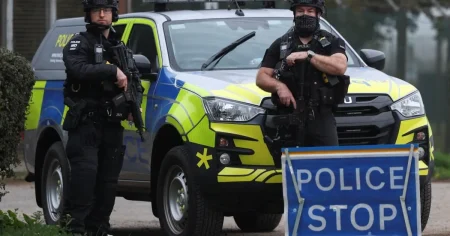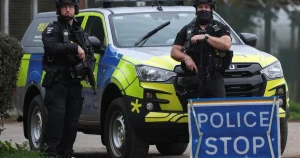
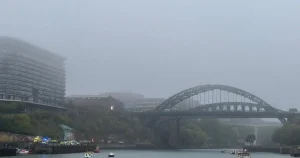


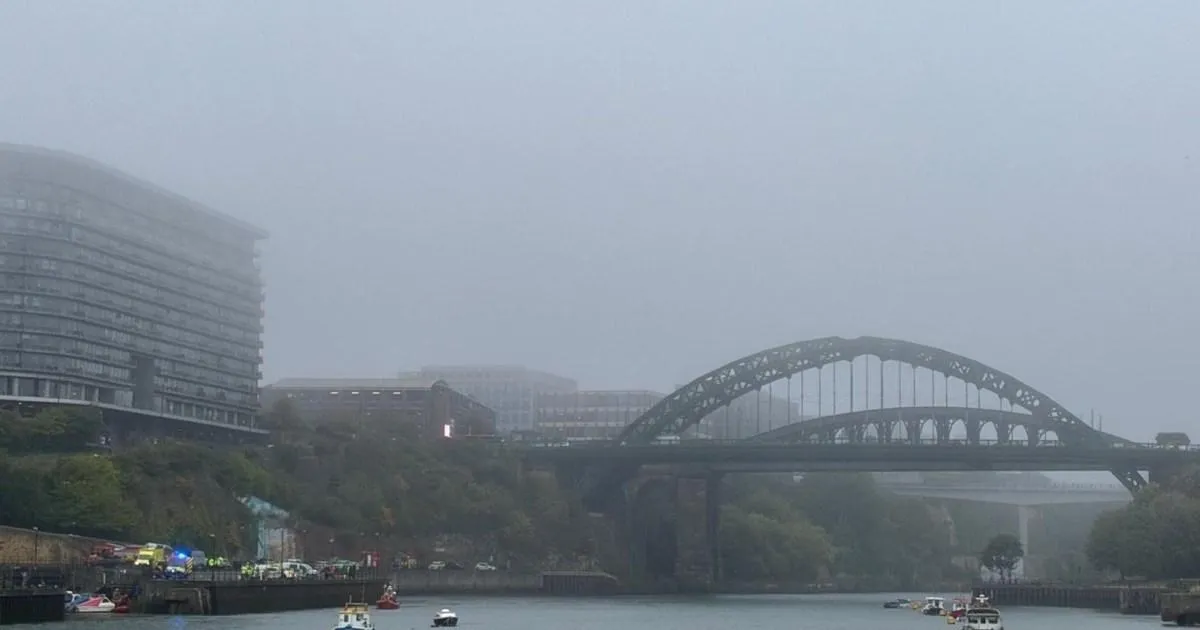
The River Wear, a waterway that usually winds its way through Sunderland as a steady, quiet presence, became the focus of a terrifying and urgent emergency on Tuesday afternoon. Near the familiar landmark of Wearmouth Bridge, a car somehow left the road and plunged into the cold, dark water, shattering the ordinary rhythm of the day. Within minutes, the air was filled with the wail of sirens and the thrum of helicopter blades as police, firefighters, coastguard teams, paramedics, and volunteer lifeboat crews converged on Panns Bank. The scene transformed into a sprawling, chaotic tableau of blue lights reflecting off the river’s surface, with emergency vehicles lining the banks and boats slicing through the water in a desperate search. What made this rescue effort all the more heart-stopping was the initial, sickening fear that teenage lives were hanging in the balance. A police cordon was quickly thrown up and then extended, creating a boundary of anxious separation between the emergency operation and the ordinary world of traffic, shoppers, and passersby who suddenly found themselves witnesses to a potential tragedy. The air ambulance landed in a nearby space, its arrival a stark visual reminder of how grave the situation had become, while lifeboat volunteers scoured the river from the water, their eyes scanning every ripple and shadow. Even as the response grew, the Wearmouth Bridge remained open to traffic, a thin thread of normalcy stretched over a scene of turmoil, while the public was urgently asked to stay away—not only for their own safety but to give the rescuers every possible chance to do their agonizing work.
The details that emerged painted a truly horrifying picture: four people had been in the vehicle when it entered the water, but only one—the driver—had reportedly managed to escape and get out of the car. That left three others, believed to be teenagers, unaccounted for and feared to be trapped somewhere beneath the surface of the river. It is almost impossible to comprehend the terror of those moments: the sudden loss of control, the impact with the cold water, the rush of the river filling the car, and the frantic, desperate struggle to get out. For the driver who managed to surface, the relief of survival must have been instantly crushed by the realization that three friends or acquaintances were still missing. It is a scenario that every parent fears, every community dreads—a seemingly ordinary trip transformed in an instant into a nightmare. The response began just after 1.30pm, when Northumbria Police received the report, and the area near the Wearmouth Bridge became the center of a massive multi-agency effort. Coastguard teams, firefighters, police officers, paramedics, and the air ambulance all raced to the scene, each bringing their own skills but united by the same grim purpose. The river, which had always been part of the landscape, suddenly became a hostile and dangerous environment, and the rescuers knew that every second counted. The fear was not just that the teenagers were in the water, but that time was running out.
The scale and coordination of the emergency response was nothing short of extraordinary. Northumbria Police were first to confirm the incident, with a spokesperson explaining that a report had been received shortly before 1.30pm about a car entering the River Wear near the Wearmouth Bridge. The police quickly established a cordon, which was later extended, and asked the public to avoid the area entirely. This was not simply a matter of crowd control; it was an indication of how complex and dangerous the situation remained. The North East Ambulance Service (NEAS) provided a more detailed account, revealing that a 999 call had been received at 1.23pm, and that an emergency ambulance, a clinical team leader, three officers, an air ambulance, and the full Hazardous Area Response Team (HART) had been dispatched. The presence of the Hazardous Area Response Team is itself a sign of the severity of the incident—these are specially trained and equipped personnel who deal with the most dangerous and difficult environments, including water and chemical hazards. The ambulance service confirmed they were working closely with the coastguard and police, with crews remaining on scene. Tyne and Wear Fire and Rescue Service (TWFRS) also issued a statement, confirming that two fire appliances, a fire boat, and a number of officers had been deployed to assist with the ongoing rescue efforts. The fire boat, in particular, is a crucial piece of equipment in a river rescue—a floating platform from which crews can search, reach into the water, and potentially recover people or wreckage. The involvement of so many different services, each with specialized roles, underscored the seriousness of the moment and the determination of the emergency services to leave no stone unturned.
Behind the formal statements and the flashing lights, however, there was a deeply human tragedy unfolding. The official updates were careful and measured, but the raw emotion of the situation could be felt in the air. Residents living near Panns Bank spoke in hushed tones as they watched the boats on the water, their faces etched with worry. Onlookers gathered at the edge of the cordon, some clutching their phones, not to take pictures but to send frantic messages to friends and family—checking whether their own teenagers were safe, or whether they knew anyone who might have been in the car. The families of the missing teenagers, if indeed they had been identified, were surely enduring the most agonizing wait of their lives. Every minute that passed without news would have been a torment. The emergency services, for all their professionalism, were not working in a vacuum; they were acutely aware that somewhere out there, parents were waiting to hear whether their child would come home. The lifeboat volunteers scouring the river were not just doing a job—they were part of this community, and the urgency they felt was personal. The air ambulance landing nearby brought with it a flicker of hope, a symbol of the medical care that would be needed if anyone was found alive. But it also served as a stark reminder that this was not a drill. This was real, and the outcome was uncertain.
In times like these, the true character of a community comes into focus. The response to the incident was not just about the official rescue services, but also about the help offered by ordinary people. Members of the public were urged to avoid the area, not out of exclusion but out of necessity, so that the emergency crews could operate effectively and unimpeded. The fact that boats were seen on the water and lifeboat volunteers were working tirelessly meant that many hands were involved in the search. The coastguard, the police, the fire service, the ambulance service—all of these agencies came together seamlessly, their blue lights creating a strange, urgent beacon on the riverbank. But there is also a quieter, more human layer to such an event: the passerby who spotted the car and phoned 999, the dispatcher who sent the alert, the first officer to arrive at the scene, the medic preparing triage protocols. Every one of these people was connected to a broader effort to preserve life. And in the background, there was the river itself—cold, indifferent, and dangerous. The Wear has been a source of life and history for Sunderland for centuries, but on this day, it was the enemy. The struggle between the rescuers and the river was a battle against time, against temperature, against the unforgiving physics of water. It is a battle that has been fought many times before, but each time it is new, and each time the stakes are unbearably high.
As the afternoon wore on and the search continued, the mood was one of collective anxiety. The Northumbria Police spokesperson’s words—”we would ask members of the public to avoid the area”—were a plea for calm and cooperation, but they also hinted at the scale of the ongoing operation. The NEAS confirmation that they remained on scene, working with the coastguard and police, reflected a complex, evolving situation. The TWFRS statement about the fire boat and officers assisting with “ongoing rescue efforts” kept the faint ember of hope alive; the word “rescue” rather than “recovery” was deliberate and quietly optimistic. But everyone understood that there was a fine line between the two. The incident was a stark reminder that life can change in an instant, that a journey across a bridge can end in tragedy, and that the teenagers lost in the water were someone’s children, someone’s friends, someone’s whole world. The most human response was to hold onto hope, to watch the river, to pray for a miracle. The emergency services continued their work, methodical and determined, even as the daylight began to fade. They knew that the community was watching, waiting, and silently pleading. The story was not yet over, but it had already left a deep impression on the city of Sunderland. The cars on the bridge, the people at the cordon, everyone who heard the news—all were united in a shared sense of shock and sorrow. And at the center of it all was the river, holding its secret, while brave men and women did everything in their power to bring an answer to the surface.