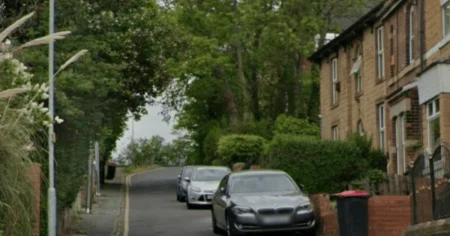

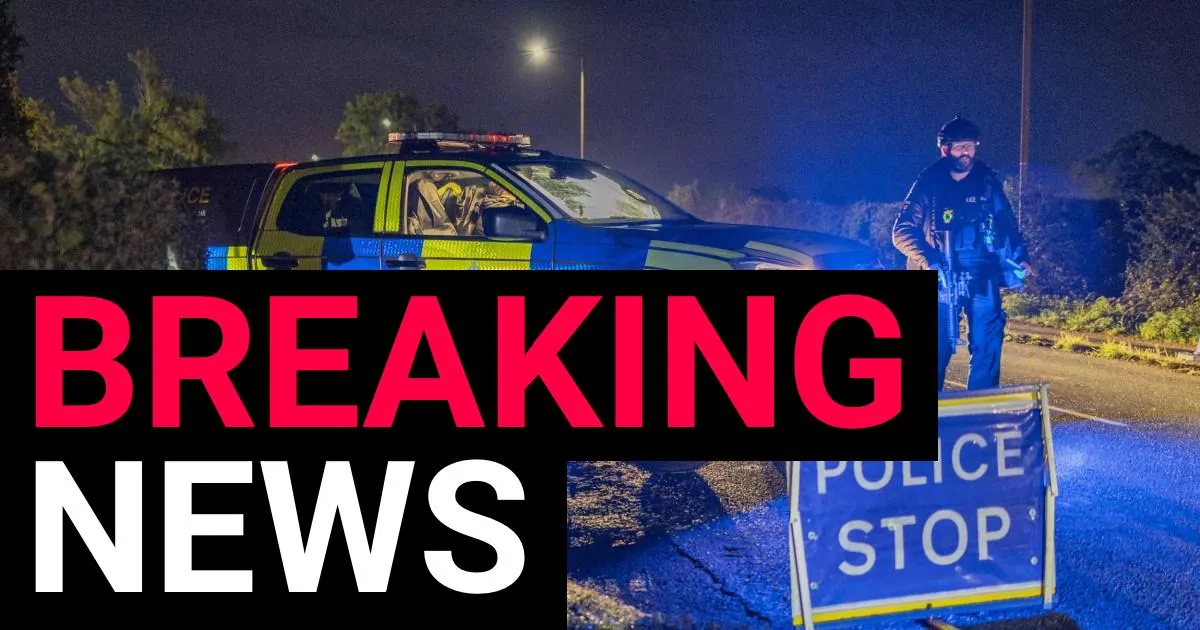
In the rolling countryside of the Cotswolds, where the first hours of a Sunday morning are usually given over to stillness, birdsong, and the quiet hum of farm machinery, the early darkness was shattered by something far more sinister. A farmer driving home along the narrow, winding lanes near RAF Fairford spotted activity that did not belong: a group of men, several vans, movements that suggested a careful, deliberate attempt to remain unseen. What followed has become one of the most chilling suspected terror plots to hit Britain in recent years. At first, the story seemed to have a clean and reassuring shape: a vigilant farmer had seen something suspicious, called the authorities, and foiled a potential attack before it could happen. But then a strange new detail emerged, one that made the whole episode feel even more bewildering. According to reports, police were already on their way before the farmer ever arrived, because one of the five suspects themselves is believed to have called 999. We may never know exactly why that call was made. Perhaps a man lost his nerve. Perhaps there was a misunderstanding between accomplices. Perhaps it was a strange act of conscience, or a deliberate attempt to muddy the waters. Whatever the reason, it means the interception of this alleged plot was not a single stroke of luck, but a messy, human tangle of panic, instinct, curiosity, and suspicion, all colliding in the dark of night.
The five men were arrested on suspicion of explosives offences after three vans were discovered near the base, and for many people the immediate fear was that an attack was already in motion. RAF Fairford is not an anonymous patch of countryside. It is a working military airfield with deep ties to British and American defence operations, a place that has been part of the strategic fabric of the nation for decades. In a sleepy corner of Gloucestershire, such a base can feel like a quiet neighbour, more about distant aircraft noise than imminent danger. That illusion was broken in the early hours of Sunday. Yet as the morning wore on, the picture began to change. Assistant Commissioner Laurence Taylor, the head of UK counter-terrorism policing, stepped forward to deliver what he must have known would be deeply unsettling news. He confirmed that no improvised explosive devices had been found in the vans. That was a relief, but it was a fragile one, because he also confirmed that a quantity of petrol had been recovered. Petrol, of course, is not a bomb. But it is an ingredient, a tool, a potential accelerant, and finding it abandoned near a military installation in the dead of night is not something any community wants to hear about. The bigger shock, however, was yet to come: the five men had been released on police bail. They were not free in any meaningful sense, because they remain under investigation and must adhere to strict conditions, but they are no longer in custody. For those who believed the threat was over, the announcement felt like a door being left ajar.
Taylor’s statement was careful, measured, and steeped in the language of procedure. He said: “The safety of the public is at the forefront of our investigative decision-making, and this was certainly the case yesterday. I understand why this development will have come as a surprise to many, but I’d like to reiterate that it was an investigative decision, and one which is grounded in experience and careful consideration of policing powers.” Those words are not easy to hear when fear is running high. The instinctive reaction is to ask why anyone suspected of involvement in a terror plot could possibly be allowed back into the public realm. The answer, Taylor insists, lies in the slow, meticulous nature of counter-terrorism investigations. Police sometimes need to watch, follow, and build a case through evidence rather than simply holding suspects and waiting. Releasing men on bail, under strict conditions, can be a calculated move designed to uncover more of the network, to see who they talk to, where they go, what they do. It is a gamble, but it is the kind of gamble that British counter-terrorism policing has taken before, often with success. Still, for people in the surrounding villages, the thought that men suspected of planning violence are walking around, even with restrictions, is enough to keep the nerves raw. The investigation is far from finished, and Taylor’s phrasing made it clear that this was not closure. It was a shift in tactics.
The international dimension of the case has only deepened the sense of unease. The Times reported that police are investigating whether the group were acting as proxies for Iran, a line of inquiry that, if proven, would transform this from a purely domestic terrorist scare into a shadowy act of state-sponsored hostility. The idea of proxies is a chilling one. Instead of an organised cell with clear ideological motivation, a proxy might be someone recruited, manipulated, or paid to carry out actions on behalf of a foreign power, perhaps without the same lifelong commitment to a cause. That raises difficult questions about how such people are detected, how they are prosecuted, and what exactly their mission was. Some reports attached to the incident have claimed that it carries “all the hallmarks of Iranian involvement,” though it is important to remember that these are early assessments, not conclusive findings. What is clear is that the investigation now stretches far beyond the lanes around RAF Fairford, into the realm of international diplomacy, espionage, and covert action. A suspected terror plot that might have its origins in Tehran, or at least in the broader tensions of the Middle East, is a far more complicated puzzle for British police and security services to solve than a homegrown conspiracy. It involves intelligence sharing, diplomatic pressure, and the slow work of tracing how and why these men were drawn into such a dangerous plan.
Security expert Will Geddes, speaking to Metro, offered a compelling theory about what the men were actually doing when they were caught. “This seems to have been a dry run rehearsal before an attack,” he said. “Many terrorists get picked up during what we call hostile surveillance detection – when they’re taking photographs, driving routes, etc. I think this was their penultimate dry run before actually doing the attack itself.” Those words paint a striking picture. The men were not necessarily there to plant a bomb that night. They were there to learn. To test the roads, to identify blind spots, to see how quickly police could respond, to rehearse their movements until they could perform them without thinking. Dry runs are a common part of terrorist planning, the quiet, unglamorous work that happens before violence becomes real. But they are also a vulnerable time for plotters, because rehearsal forces exposure. It forces people to be seen on roads where they do not belong, in vehicles that look out of place, at hours when honest citizens are asleep. The fact that no explosives were found does not mean nothing was happening; it may simply mean the plot was not yet ready. Geddes’ phrase “penultimate dry run” suggests something even more worrying: that this was not the first rehearsal, and perhaps not the last, but the final practice before a real attempt. If that is true, the interruption came just in time, and the five men may have been doing exactly what terrorists do before an attack: making mistakes that would ultimately save lives.
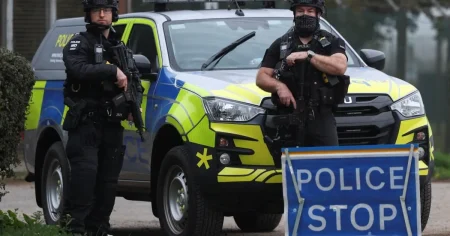
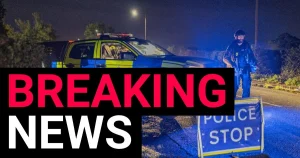
For the community around RAF Fairford, and for the wider British public, the aftermath has been a period of frayed nerves and hard questions. Roads surrounding the air base have been under tight security, a visible reminder that danger was not a distant headline but something that came disturbingly close to home. The fear of follow-up attacks has not gone away. Headlines attached to the story warn that the RAF Fairford plot is “not over” and that further action may yet be coming. In such circumstances, it is easy to feel helpless, to wonder whether the authorities know what they are doing, to question the decision to release suspects on bail. But there is also a quieter, more human story underneath the panic. A farmer saw something strange and did not ignore it. A suspect, for reasons unknown, picked up the phone and called 999. Counter-terrorism officers, trained to read patterns of hostile surveillance, responded quickly enough to stop whatever was being prepared. Those are not small things. They are the ordinary but vital human actions that sometimes make the difference between a plot and a tragedy. The investigation continues, the men remain under strict supervision, and the police are still working to uncover the full picture. The story is not over, but for now, the threat has been met, not with fear alone, but with resolve, procedure, and the stubborn instinct of ordinary people to notice when something is wrong and to do something about it.