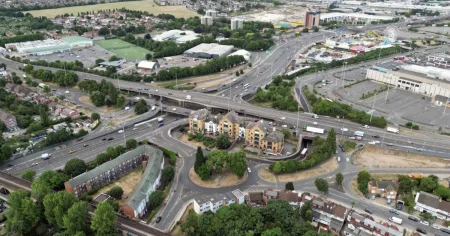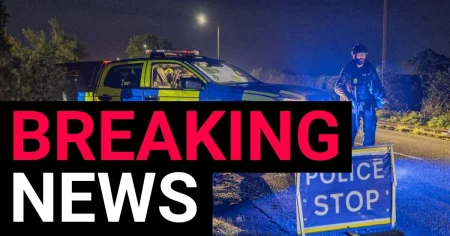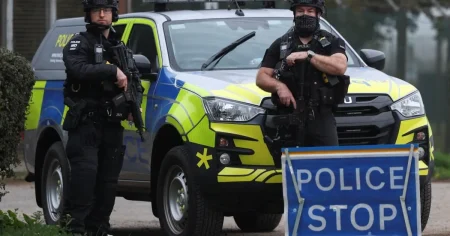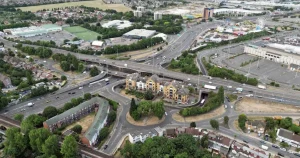
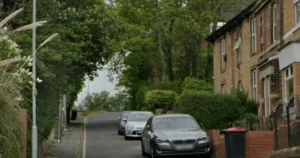
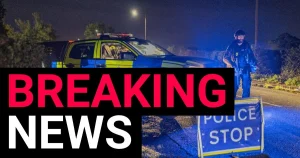

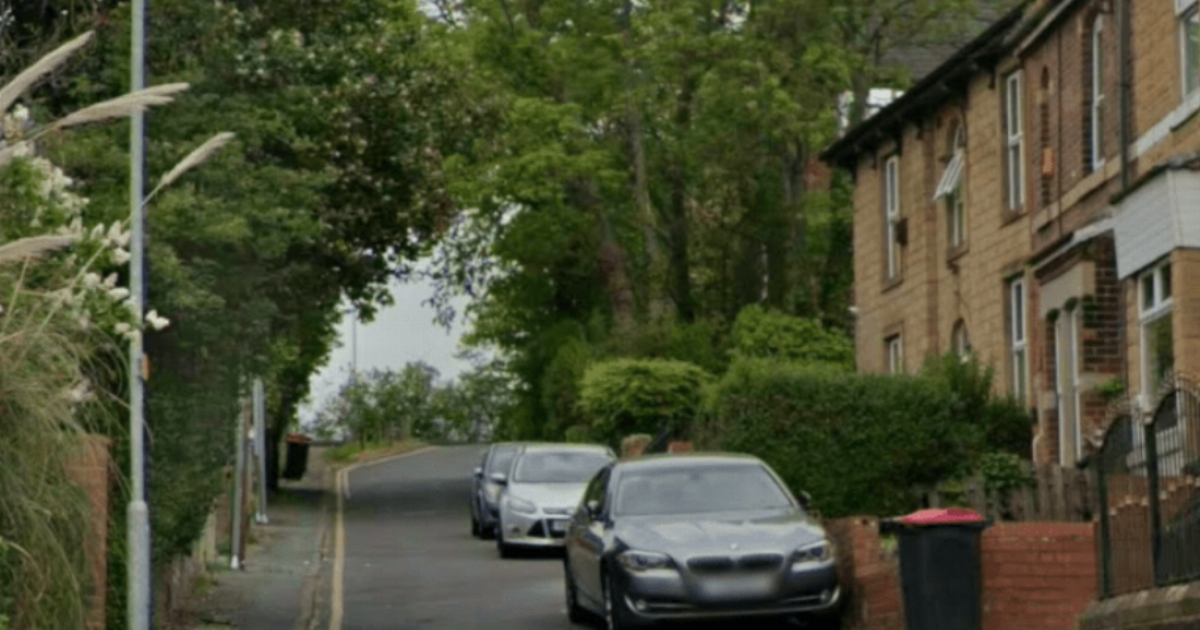
On an otherwise ordinary Tuesday afternoon, the quiet residential street of Clifton Mount in Rotherham became the scene of a sudden and devastating tragedy. Emergency services were called to reports of an explosion along a row of terraced homes, and what they found would shake the local community to its core. At 1.18pm, responders discovered the body of a man among the debris, a life lost in circumstances that remained shrouded in uncertainty. The explosion, whose cause was not immediately known, tore through the stillness of the neighborhood, leaving behind not only physical damage but also a deep sense of shock and bewilderment among those who live nearby. For the residents of this close-knit area, the afternoon’s events unfolded like a nightmare they could not wake from. The presence of police cars, fire engines, and emergency personnel filled the narrow street, their flashing lights casting an ominous glow over the terraced houses that had stood for generations. Neighbors emerged from their homes, some in tears, others simply staring in disbelief at the scene before them. The fragility of everyday life had been exposed in the most brutal way, and the community was left to grapple with the sudden, violent interruption of their routine. As the hours passed, the initial chaos gave way to a somber, heavy silence, punctuated only by the quiet murmur of residents speaking in hushed tones, trying to make sense of what had happened on their doorsteps.
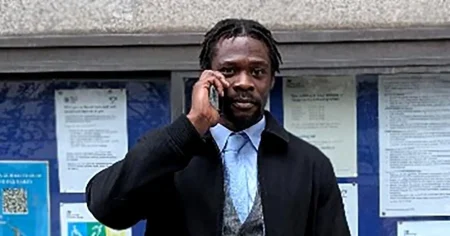
Among those caught in the unfolding drama was Craig Cockram, a local resident who lived in a nearby block of flats and was forced to evacuate along with many others. He described the moment of the explosion as a sound he would not soon forget, telling the BBC that he “heard a bang…as if there was a shooting.” His words captured the raw, jarring nature of the event, a noise so sudden and violent that it seemed to belong to a different world entirely, not the familiar, peaceful surroundings of a residential street in South Yorkshire. For Cockram, the shock was palpable. “I’m just shocked, bemused,” he said. “I can’t believe what’s happened.” His reaction was shared by so many who found themselves thrust into the middle of a tragedy they had never anticipated. The evacuation, which forced residents to leave their homes and gather at a safe distance, added to the sense of dislocation and anxiety. People stood in clusters, clutching whatever belongings they had managed to grab, their faces etched with worry and confusion. Some wrapped their arms around each other for comfort, while others stared blankly at their phones, desperately seeking updates or reassurance. The explosion had not just damaged buildings; it had shattered the psychological safety of a community that had always considered its neighborhood peaceful and secure. In the aftermath, the simple act of waiting became an agonizing ordeal, as the uncertainty of what had happened, and who had been affected, hung over everyone like a dark cloud.
South Yorkshire Police soon released a statement that confirmed the worst fears of those who had been holding out hope. A spokesperson said: “Emergency services attended and a man was sadly found deceased.” The words were brief and formal, but they carried the weight of an immense loss. The statement went on to explain that, in collaboration with South Yorkshire Fire and Rescue Services, enquiries were ongoing to confirm the cause of the explosion. Yet, in a small measure of relief for the wider community, the police also emphasized that “initial enquiries indicate that there is no risk to the wider community.” This reassurance, though necessary, did little to ease the emotional turmoil of the moment. The road, which had been closed to allow emergency services to carry out their vital work, was later reopened, a sign that the immediate danger had passed, but also a stark reminder that life would not simply return to normal. For the residents of Clifton Mount, the reopening of the road was a strange and hollow milestone. Cars could pass again, and pedestrians could walk by, but the scene they encountered was forever altered. The investigation, painstaking and meticulous, would continue behind the scenes, with experts working to piece together the events that led to the explosion. Every fragment of debris, every twisted piece of metal, and every cracked brick would be examined in the hope of finding answers, not only for the authorities but for the family and friends of the man whose life had been so abruptly cut short.
In the wake of the tragedy, Cadent Gas, the company responsible for the region’s gas network, also issued a statement, offering their condolences and clarifying their involvement. A spokesperson said: “First and foremost, our thoughts go out to the loved ones of the individual who has lost their life in tragic circumstances.” They confirmed that their engineers had been called to the scene, but importantly, they stated that the incident was “not an issue related to our gas network.” This clarification was a crucial detail, as explosions in residential areas often raise immediate concerns about gas leaks, and residents were understandably anxious about the safety of their own homes. The spokesperson added: “Cadent’s role on site has been to support the emergency services as best we possibly can, and we will continue to do that.” While the gas company’s involvement was, in this case, supportive rather than causal, their presence served as a reminder of the many agencies and organizations that must work together in the aftermath of such an event. The focus, however, remained firmly on the human cost. Behind every official statement, every technical investigation, and every safety assessment, there was a person who had died, and a circle of family and friends left to mourn. The precise circumstances of the explosion would eventually become clear, but for those who had lost someone, the search for answers was not an intellectual exercise; it was a deeply personal and painful journey, driven by the need to understand how and why their loved one had been taken from them.
Beyond the official responses, the explosion left an indelible mark on the community of Rotherham, a town that has faced its share of challenges over the years but has always been known for its resilience and solidarity. In the days following the incident, the street where the explosion occurred became a place of quiet pilgrimage, as neighbors and well-wishers gathered to pay their respects and offer support in whatever small ways they could. Flowers began to appear near the scene, their bright colors a stark contrast to the grey debris and the somber mood. Those who lived in the terraced homes nearby spoke of their anxiety and sorrow, not just for the man who had died, but for the sense of safety that had been taken from them. An explosion, by its very nature, is a sudden and violent event, one that leaves no time for preparation or understanding. It intrudes upon the mundane rhythms of daily life, turning a routine Tuesday afternoon into a moment of terror and loss. The residents who had been evacuated were left to wonder when they could return, whether their homes were intact, and how they would process the trauma of what they had witnessed. Neighbors who had previously exchanged little more than a nod or a brief hello now found themselves talking at length, sharing their fear and their grief, finding comfort in the presence of others who understood what they were going through. It was in these small, human connections that the community began to heal, slowly and tentatively, from the shock of the tragedy.
As the investigation continues and the community begins to come to terms with what has happened, there is a profound sense of loss that will not soon fade. The explosion on Clifton Mount is a reminder of how fragile life can be, and how quickly everything can change. For the family and friends of the man who died, the days ahead will be filled with grief and unanswered questionsaging; but they will also be met with the support of a community that refuses to look away from their pain. The authorities have promised to find the cause of the explosion, and that promise offers a path toward closure, however difficult that path may be. In time, the physical scars on the street may be repaired, and the road will be fully reopened, but the emotional scars will remain, carried by all those who were touched by this tragedy. Yet, amid the sorrow, there is also a quiet determination to remember the person who was lost, not just as a victim of an accident, but as a human being whose life mattered. The shock may linger, the questions may remain, but the community’s resolve to support one another, to seek the truth, and to honor the memory of the one who died, will endure. In the end, that is perhaps the most human response to tragedy: to grieve, to question, but also to come together, to hold on to one another, and to find a way to move forward. The street on Clifton Mount will be forever changed, but so too will the lives of everyone who witnessed the fragility of life on that fateful Tuesday afternoon.