



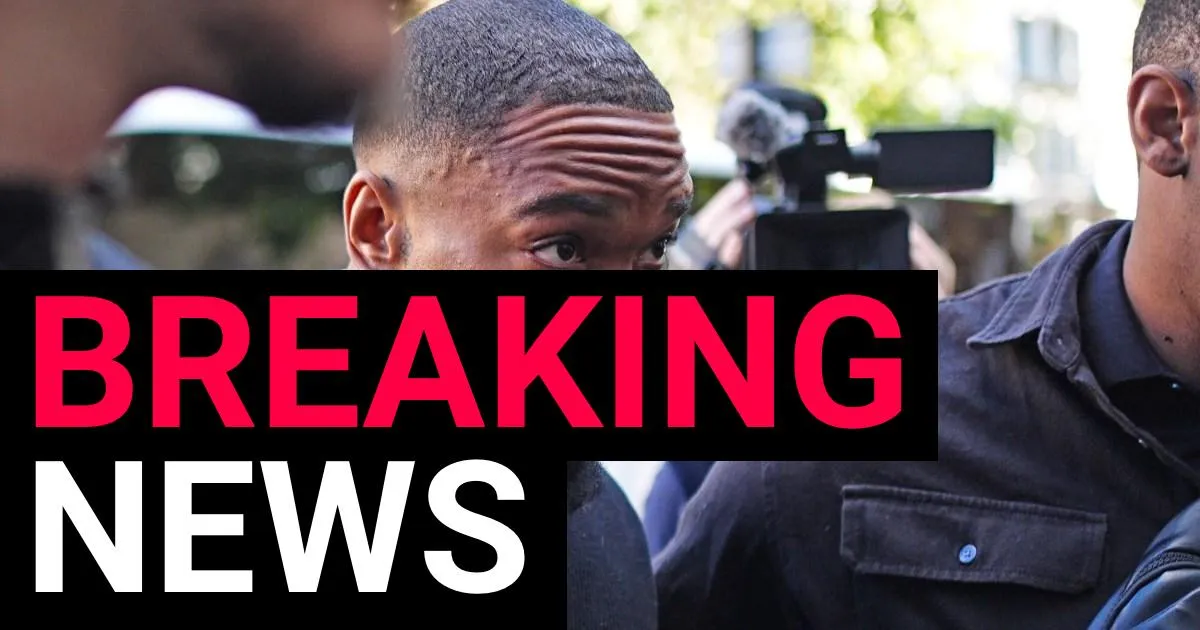
The morning light was still pale over London when Ivan Toney arrived at court, stepping out of a car into a scene that felt a world away from the roar of a stadium. The England striker, a 30-year-old footballer who has made a career out of staying calm in the most chaotic moments, was dressed in a black top over a shirt and tie, flanked by three members of his entourage. It was shortly after 9.30am when he walked into the building, and by the time he stood in the dock, the familiar confidence of the penalty spot had been replaced by something more subdued. He confirmed his name and age, then answered the charge that has hung over him since late July: assault occasioning actual bodily harm. The alleged victim is Saber Da Silva, and the incident is said to have taken place at a nightclub on Wardour Street in Soho on December 6 last year. Toney, from Northampton, entered a plea of not guilty. In doing so, he set the stage for a legal battle that could take months, and which will test not only his freedom but his reputation, his career and his peace of mind. Footballers are used to being judged. Every pass, every miss, every goal is analysed by millions. But this was a different kind of judgement, one that happens in a hushed courtroom rather than a packed arena, and the stakes were far higher than three points. Toney has spent years training his body and mind to perform under pressure, but no amount of practice can prepare a person for the moment they are asked to defend themselves against a criminal charge. The charge itself suggests that the alleged victim suffered injuries that are more than trivial, and the prosecution will need to convince a jury that Toney was responsible. For now, he has said he is not guilty, and the law presumes him to be innocent until proven otherwise. But the weight of the occasion was visible in the simple details: the dark clothing, the companions at his side, the early-morning arrival that made the whole thing feel less like a celebrity scandal and more like a sobering reality.
Toney’s spokesperson had already tried to set the tone before the hearing, releasing a statement that was both careful and human. “Ivan acknowledges the charge and although he is naturally shocked, he looks forward to being given the opportunity to clear his name in court,” it read. The word “shocked” stands out. It suggests a man who did not see this coming, or at least did not want to believe it. It is one thing to receive a phone call from your lawyer telling you that charges have been announced in the media; it is another to stand in a courtroom and hear your name read out in connection with an assault. Assault occasioning actual bodily harm is a serious offence in English law, carrying a maximum sentence of five years’ imprisonment, although many cases are dealt with in the magistrates’ court and sentences vary widely. The phrase “actual bodily harm” covers any hurt or injury that interferes with the health or comfort of the victim, and it is more serious than common assault. The fact that the Metropolitan Police investigated the case and the Crown Prosecution Service authorised the charge means there is enough evidence to justify putting the matter before a court. Toney’s plea of not guilty means that evidence will now be tested properly. His legal team will likely focus on the reliability of witness accounts, the circumstances of the night, and whether the alleged assault can be proven beyond reasonable doubt. None of this will be quick, and none of it will be easy. The legal process is notoriously slow, and Toney will now have to live with the uncertainty for weeks or months. There will be hearings, disclosure of evidence, witness statements, and possibly a trial. Each step will be reported, dissected and shared on social media. For an athlete whose mind needs to be clear to perform at the highest level, this is an immense distraction. But it is also a necessary process. The courts exist to determine the truth, and Toney has chosen to fight rather than accept the charge. That is his right, and it is a right that should be respected.
To understand why this case has resonated so strongly, you have to understand how far Ivan Toney has come. He was born in Northampton, a town better known for its shoe industry than its footballing royalty, and he started his career at Northampton Town. From there, he moved to Wigan Athletic and Peterborough United, spending his early twenties in the lower leagues, where the football is physical, the wages are modest, and the dream of playing for England feels very distant. He was not a wonderkid; he was a worker, a player who had to grind for every opportunity. In 2020, Brentford took a chance on him, and Toney repaid that faith in spectacular fashion. Over four years at the club, he scored 72 goals, establishing himself as one of the most dangerous strikers in the country. His penalty technique, which involved a long pause before striking the ball, became a signature move and made him a cult hero among fans who appreciated the psychological battle between taker and goalkeeper. In 2024, he made a surprise move to Al-Ahli in the Saudi Pro League for a reported £40 million, a transfer that divided opinion but undoubtedly changed his life. At Al-Ahli, he has continued to score, racking up 55 goals in 62 appearances and proving that he can still perform at a high level. His international career has been shorter than some might have expected, but no less meaningful. He has won ten caps for England and scored one goal, and he was part of the squads for Euro 2024 and the 2026 World Cup this summer. To play in a World Cup is the pinnacle for any footballer, and Toney achieved that. Yet he was not selected for the latest England squad for the Nations League ties, and while that decision may have been based on form or tactics, the legal case adds an unavoidable complication. For a player who has spent his entire career proving people wrong, this is just another obstacle—but it is one that cannot be solved with hard work alone.
The incident at the centre of this case took place on December 6 last year, at a nightclub on Wardour Street in Soho. Soho is one of London’s most famous entertainment districts, a place where celebrities, tourists and locals mix in bars and clubs that stay open late into the night. It is also, sometimes, a place where arguments can flare in crowded spaces. According to the charge, an altercation occurred that left Saber Da Silva with injuries, and the police were eventually involved. The investigation took months, and the charge was not announced until late July. That delay must have been agonising for everyone involved. For Da Silva, it meant waiting to see whether justice would be done. For Toney, it meant living under a cloud of suspicion while trying to continue his career. The fact that the alleged victim has been named in reports adds another layer of sensitivity; this is not a faceless accusation but a specific claim made by a specific person. Toney’s legal team will no doubt examine every detail of that night, from the layout of the nightclub to the testimony of witnesses, in an attempt to undermine the prosecution’s case. The public, meanwhile, will be left to speculate, because the full facts have not yet been presented in court. What is already clear is that the case has become a turning point in Toney’s life. He is no longer just a footballer who scores goals and celebrates in front of adoring crowds. He is a defendant, a man whose private actions are now being scrutinised in public. The language of the courtroom is cold and formal, but the emotions behind it are anything but. Fear, anger, confusion, hope—all of these are swirling around a single night in Soho that Toney may wish he could relive differently.
Even before this case is resolved, it has already had consequences. Toney missed out on the latest England squad for the Nations League ties, and while the England manager would never publicly admit that a pending court case influenced selection, it would be naive to think it played no part. International football demands not only skill but also focus, and a player facing a criminal trial is not in the ideal state of mind. At club level, Al-Ahli have invested heavily in Toney, and they will be monitoring the situation with concern. A player’s value is tied to his reputation, and allegations of violence can damage that reputation even if they are later proven false. Sponsors are cautious, fans are divided, and the media will continue to use the phrase “Ivan Toney assault case” in headlines until the verdict. Toney’s spokesperson has said he wants to clear his name, and that is the right ambition. But the process of clearing a name is rarely clean. It involves lawyers, court dates, public scrutiny, and the slow drip of details that may or may not be accurate. For Toney, the next chapter of his career will be defined not by goals or assists, but by how he handles this crisis. He has always been a player who thrives on pressure, who seems to enjoy proving doubters wrong. But this is pressure of a different kind. It cannot be relieved by scoring a hat-trick or winning a big match. It can only be relieved by the slow, uncertain machinery of justice. And even then, the memories of this period will not simply disappear.
At its core, this is a human story, not just a sports story. Ivan Toney is a man who has worked his whole life to reach the top of his profession. He has experienced the joy of scoring in front of thousands, the pride of pulling on an England shirt, and the financial security that comes with a huge contract. But he has also experienced the fragility of that world. One night, one allegation, one charge can change everything. The legal system is designed to be fair, and Toney is entitled to the presumption of innocence. He has denied the charge, and the burden of proof rests with the prosecution. If he is acquitted, he will try to rebuild his career and move on, though the memory of this ordeal will remain. If he is convicted, the consequences could be severe, both legally and professionally. For the alleged victim, Saber Da Silva, this is also a difficult time; coming forward with an allegation can be traumatic, and the outcome of the case will matter deeply to him. For the rest of us, the case is a reminder that fame is not a shield. Footballers are not superheroes; they are human beings who make mistakes, face accusations, and sometimes find themselves in difficult situations. As Toney left the court this morning, he carried with him the knowledge that his life is now being examined in a way that no football match could ever prepare him for. The next time he steps onto a pitch, he will be playing for more than just a club or a country. He will be playing for his name.