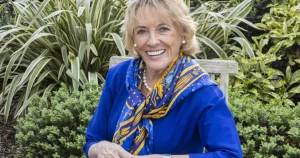


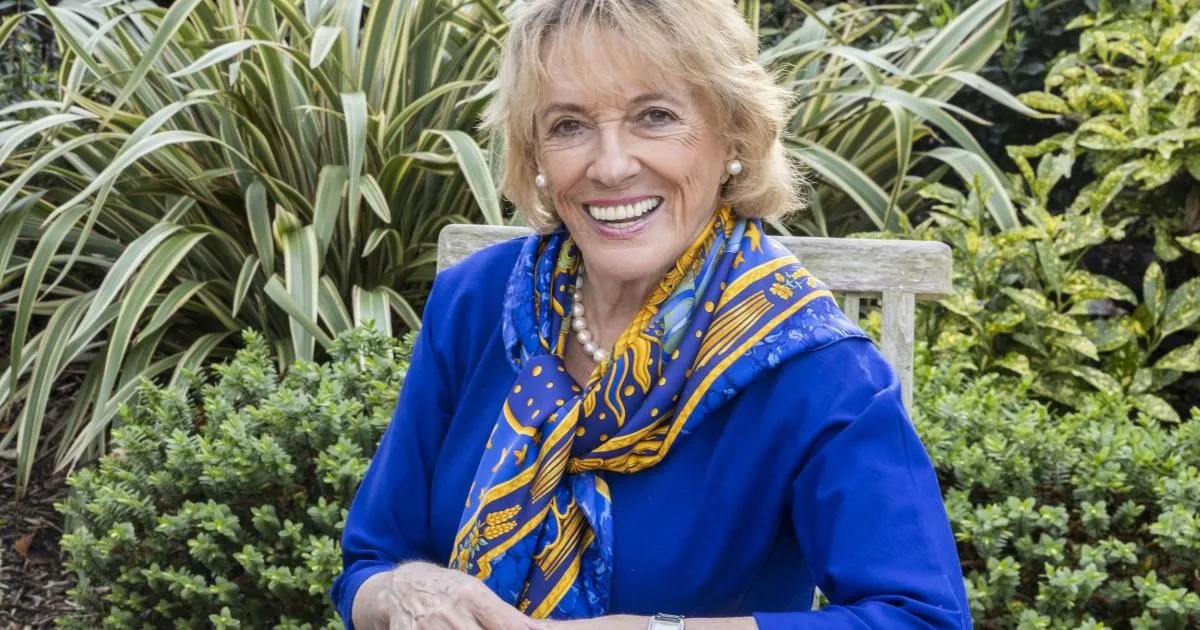
It is with profound sadness that we share the news of Dame Esther Rantzen’s passing at the age of 86. The beloved broadcaster and tireless campaigner died on Wednesday, surrounded by the love of her family, who described her as the “most wonderful woman.” Her death marks the end of an extraordinary life defined not only by a groundbreaking career in television but also by a deeply personal and courageous fight for assisted dying in the United Kingdom. For years, Dame Esther had been living with lung cancer, a diagnosis she had spoken about with remarkable openness and grace. Her family’s announcement, heartbroken yet filled with admiration, has triggered an outpouring of affection and respect from colleagues, politicians, and the countless members of the public whose lives she touched through her advocacy and her warmth.
Dame Esther’s final months were marked by a battle that went far beyond her illness. In February, she revealed that her cancer treatment had stopped being effective, sharing that the “miracle drug” she had been using had “stopped working.” With her characteristic honesty, she told The Observer, “I’m still here. Not for much longer.” She acknowledged with heartbreaking clarity that she would not live long enough to see the assisted dying bill become law in England and Wales. This was not a statement of self-pity but rather one of quiet acceptance and fierce determination. She spoke openly about her desire for a swift and painless end, and her fear of a prolonged, unbearable death. Most poignantly, she admitted that if her suffering became too great, she would have to consider traveling to Dignitas in Switzerland, alone. The thought of such a lonely journey, undertaken by a woman who had spent her life bringing people together, highlighted the cruel reality of the current law.
Her advocacy was not abstract; it was rooted in her own experience and in the experiences of so many others facing terminal illness. Dame Esther described the rejection of the assisted dying bill by MPs earlier this month as a “tragic day.” The plans, which would have legalised assisted dying for terminally ill adults in England and Wales, were voted down, a decision that devastated campaigners and supporters. For Dame Esther, this was not merely a political setback but a deeply human failure. She had long argued that the current law, which criminalises anyone who helps a loved one to die, is “messy and cruel.” Her frustration was palpable as she spoke about the lack of choice and dignity afforded to those who are dying. She believed strongly that terminally ill people should have the right to decide how and when they die, free from suffering and surrounded by their loved ones, rather than being forced into desperate measures.
In perhaps her most revealing reflection, Dame Esther explained why she had not yet made the journey to Zurich. “Why did I not buzz off to Zurich as I had planned when my life became unbearable?” she asked. Her answer was a testament to her resilience and her connection to life. “Unfortunately, when I was strong enough to make the flight and go to Dignitas, my life was not unbearably painful, indeed I was able to relax in my beloved cottage in the New Forest.” This honest admission captures the impossible position so many dying people find themselves in. The decision to end one’s life is not one made lightly, and for Dame Esther, the moments of calm and beauty in her beloved cottage were enough to make her want to stay. Yet she knew that this respite could end at any moment. “Obviously, I would prefer that my end could be swift and painless and I could ask for help now I’m dying. But I can’t,” she said, underscoring the painful reality that her options were limited by a law she spent years fighting to change.
The tributes that have poured in since her death paint a picture of a woman who was as beloved privately as she was publicly. Her daughter, Rebecca Wilcox, has been a constant presence alongside campaigners like MP Kim Leadbeater, and the image of them demonstrating together just days before Dame Esther’s death served as a powerful symbol of a family’s love and a cause’s urgency. Dame Esther was not just a campaigner; she was a mother, grandmother, and friend. Her family’s statement, calling her the “most wonderful woman,” speaks to the deep personal loss behind the public figure. Her legacy, however, will live on. She used her final months to give a voice to the voiceless, to challenge the stigma around dying, and to fight for a more compassionate society. Her courage in the face of her own mortality was nothing short of inspiring, and her work will undoubtedly continue to influence the national conversation around assisted dying for years to come.
As we mourn her loss, it is also important to remember the cause she championed with such passion. Dame Esther’s own journey with lung cancer brought renewed attention to a disease that affects tens of thousands of people every year in the UK. She wanted others to be aware of the symptoms—a persistent cough, coughing up blood, persistent breathlessness, unexplained tiredness and weight loss, or an ache or pain when breathing or coughing—because early detection can save lives. But more than that, she wanted a world where no one should have to suffer needlessly at the end of their life. Her death is a profound loss, but her fight is not over. In the words of her own advocacy, she would want us all to continue pushing for a future where dying with dignity is a right, not a privilege. Dame Esther Rantzen may be gone, but her legacy as a woman who brought light into the darkest of places will never fade.