


After a terrifying week in the occupied West Bank, a 22-year-old British student is back home in London, trying to process an experience that he says left him shaken, angry, and deeply aware of the reality faced by Palestinians every single day. Finn Joughin, an International Relations and History student at the London School of Economics, had been spending his summer break teaching English in the region when he decided to travel to Umm Al-Khair, a small Palestinian village near Hebron. The village is almost entirely surrounded by Israeli outposts and has long been a target of settler intimidation, so Finn joined a group of volunteers who stay there in solidarity with local families, offering a protective international presence. What was supposed to be a peaceful visit turned into a nightmare last Saturday, when he was dragged away at gunpoint, held in a concrete bomb shelter, and eventually deported by Israeli authorities. Speaking after his return, Finn described the ordeal as “a plain and simple kidnapping and assault,” and admitted he was afraid as he was held by armed settlers who accused him of crimes he says he never committed. The entire experience, he said, was “strange and bizarre,” but he was quick to add that what happened to him was “pretty lax” compared to what Palestinian villagers face on a regular basis. Still, the fear and helplessness he felt in that moment are impossible to shake, and his story has drawn attention to the escalating violence and lawlessness in the West Bank, where settlers operate with apparent impunity and ordinary Palestinians live under constant threat.
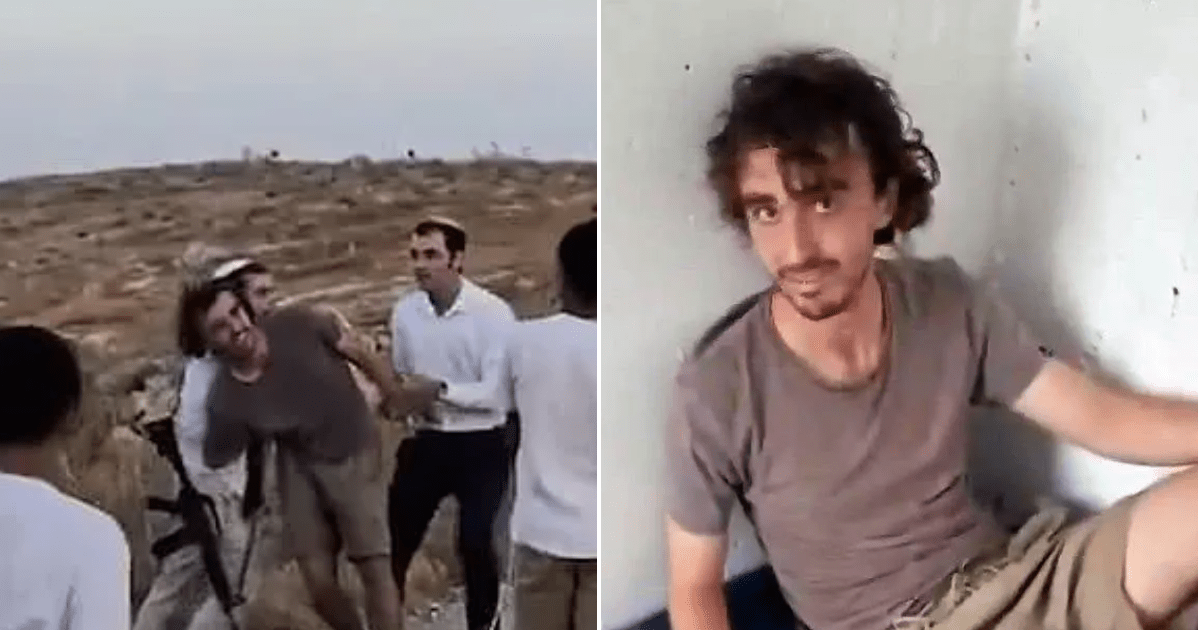
The incident began in a way that could not have seemed more innocent. Finn was playing football with local children in Umm Al-Khair, enjoying the kind of simple afternoon that should be universal in childhood. But then, he recalled, “a bunch of settler families and their kids came onto the pitch,” and the mood shifted instantly. The teenagers from the settler group ran down the streets and broke into one of the villagers’ houses, where they began trying to tear down a fence. Without hesitation, Finn moved to stand against the fence, using his body to shield the property from destruction. He was careful, he said, not to provoke anyone, even when younger children in the group tried to push and kick him, shoving past him in an attempt to undo the fence. “I was trying to be very careful not to provoke them,” he said, describing the tense moment when one of the adults started grabbing and pushing him into the road. Then everything happened quickly. Two armed adults appeared, grabbed him, and one put him in a chokehold while another twisted his hand behind his back. He was conscious of the fact that they were carrying weapons, and as they forcefully and violently pulled him away, he understood that resistance would be futile and dangerous. Video footage circulating on social media shows Finn attempting to shield the fence as armed adults and children press against him, followed by images of him being dragged away by Israeli settlers. It is a chilling sequence, and for Finn it was the beginning of a terrifying ordeal that would see him stripped of his freedom and forced to listen to accusations he could barely understand.
Finn was taken to a concrete shed that appeared to be a bomb shelter, where he was held for about thirty minutes with a man carrying a gun standing at the door. He was alone, afraid, and had no idea what was going to happen to him. The settlers who had captured him were all in plain clothes, and while two men in military uniform eventually appeared, they offered him no help. When Finn tried to explain what had happened, one of the soldiers spat at him and shouted, “shut the f**k up.” Inside the bunker, he was filmed without his consent while a settler shouted allegations in Hebrew at him, accusations that he could not fully understand but that he knew were false. His property was taken from him, and he was not allowed to leave. In that moment, Finn said he tried to remain calm and positive, appealing to the settlers’ basic humanity and speaking with them reasonably, but his efforts were completely futile. He was terrified, not knowing whether the armed men would hurt him or whether he would ever be released. The psychological toll of being held at gunpoint, choked, and dragged into a dark shelter is hard to overstate. Finn’s ability to stay composed under such pressure is remarkable, but the trauma of those thirty minutes will likely stay with him for a long time. He later expressed gratitude that the ordeal happened to him rather than to a Palestinian villager, because, as he said, a Palestinian would not have had the same legal recourse. That statement says everything about the inequality that defines life in the occupied West Bank, where international volunteers can at least hope for consular protection and media attention, while locals are left entirely vulnerable.
After about half an hour, Israeli police officers arrived and took Finn to a police station, where he was held throughout Sunday. The accusations against him began as general assault, but were later upgraded to an indecent act against a minor, a charge that Finn, his lawyer, and the activists who had been with him in Umm Al-Khair all strongly denied. He was then taken to a courthouse in Jerusalem, where he says he was eventually told that his hearing had been cancelled and that he would be deported. The Israeli Embassy, in response to the incident, said that police had determined there was sufficient evidentiary basis concerning his alleged conduct, and that a complaint had been filed against him on suspicion of assaulting a minor and other offences. But Finn says that a judge would have found him innocent, and that the charges were simply a tool used by settlers to get him detained. “Assault and attacks against children are the go-to claims that settlers like to make to get someone detained,” he said, adding that while it was horrifying to have his name dragged through the mud, he remained steadfast in knowing he had done nothing wrong. The embassy also said that the investigation materials were transferred to the Population and Immigration Authority and that the individual was removed, while calling on visitors to respect the law. For Finn, the entire legal process felt like a foregone conclusion, designed not to deliver justice but to silence a witness and remove him from the territory. He was put on a flight back to the UK on Monday, relieved to be home but deeply troubled by what he had seen and experienced. The fact that he was deported without a proper hearing, after being kidnapped by armed settlers, speaks to a system in which international solidarity activists are treated as criminals while those who commit violence against Palestinians face few consequences.
Finn’s story is not an isolated incident, but part of a broader pattern of settler violence that has been intensifying across the West Bank. Umm Al-Khair itself is surrounded by Israeli outposts, which are illegal under both international law and Israeli law, although some receive state services and funding. Israeli settlements in the occupied West Bank are regarded as illegal under international law, a position that Israel disputes, but the practical impact on Palestinian communities is undeniable. In the same weekend as Finn’s abduction, dozens of settlers attacked the West Bank village of Qusra, forcing the military to intervene and remove them. Foreign journalists were also injured by masked settlers in an attack in the town of Jalud. These are not random acts of violence; they are coordinated efforts to intimidate, displace, and terrorize Palestinian communities, often with the backing or tolerance of the state. Finn described how settlers regularly walk through Umm Al-Khair carrying assault rifles, deliberately trying to worry and intimidate residents. “Everyone in the Umm Al-Khair village has at some point been harassed,” he said. He also expressed a haunting certainty: “This will happen again next Saturday and the Saturday after and so on.” The violence is cyclical, predictable, and deeply entrenched, and the international community has largely failed to hold anyone accountable. The Foreign Office has confirmed that it is aware of what happened to Finn and has raised the case with Israeli authorities, providing consular assistance through the British Embassy in Tel Aviv. But for the Palestinian families who live under this threat every day, there is no embassy, no consular assistance, and no flight home to safety. Their homes are dismantled, their children are terrorized, and their futures are stolen, often with the world looking away.
Now that Finn is back in London, he is trying to make sense of an experience that he never expected to have. He is relieved to be safe, and grateful that he was the one who was targeted instead of a Palestinian villager, because he knows that his British passport and international status gave him at least some layer of protection. But he is also determined to speak out about what he witnessed. His story has already drawn international attention, and he hopes it will inspire others to care about the ongoing suffering of Palestinians in the West Bank. The image of a young British student being kidnapped at gunpoint and held in a concrete bunker for simply standing in front of a fence is a stark reminder of how dangerous life has become for those who try to protect Palestinian communities. It is also a reminder that the world must do more than issue statements and express concern. Finn’s ordeal ended with a deportation order, not with a prosecution of his attackers, and that sends a frightening message: that settlers can act with impunity, that violence against internationals is tolerated, and that the lives of Palestinians are treated as expendable. Finn may be home now, but his mind is still in Umm Al-Khair, with the children he played football with and the families he tried to protect. He knows that next Saturday, another group of volunteers will face the same terrifying reality, and that the cycle will continue unless something changes. His hope, in sharing his story, is that the world will finally pay attention and that the international community will pressure Israel to end its support for illegal settlements and settler violence. For now, he is trying to recover from the trauma, comforted by the knowledge that he did the right thing, and determined not to let fear silence him.