



In the high-pressure world of Australian politics, where every move is scrutinized under the unforgiving lens of public opinion, a recent controversy involving Liberal Party politician Mark Parton has sparked a heated debate about the boundaries between professional duty and personal expression. The incident began when reports surfaced alleging that Parton had sent a rather unprofessional text message—specifically stating, “And f— my job is boring. Wanna swap”—accompanied by a candid photo from an ongoing committee meeting. For days, the story swirled through local media, fueled by the explosive allegation that the message had been directed at a sex worker, a claim that naturally threatened to derail his political career and personal reputation.
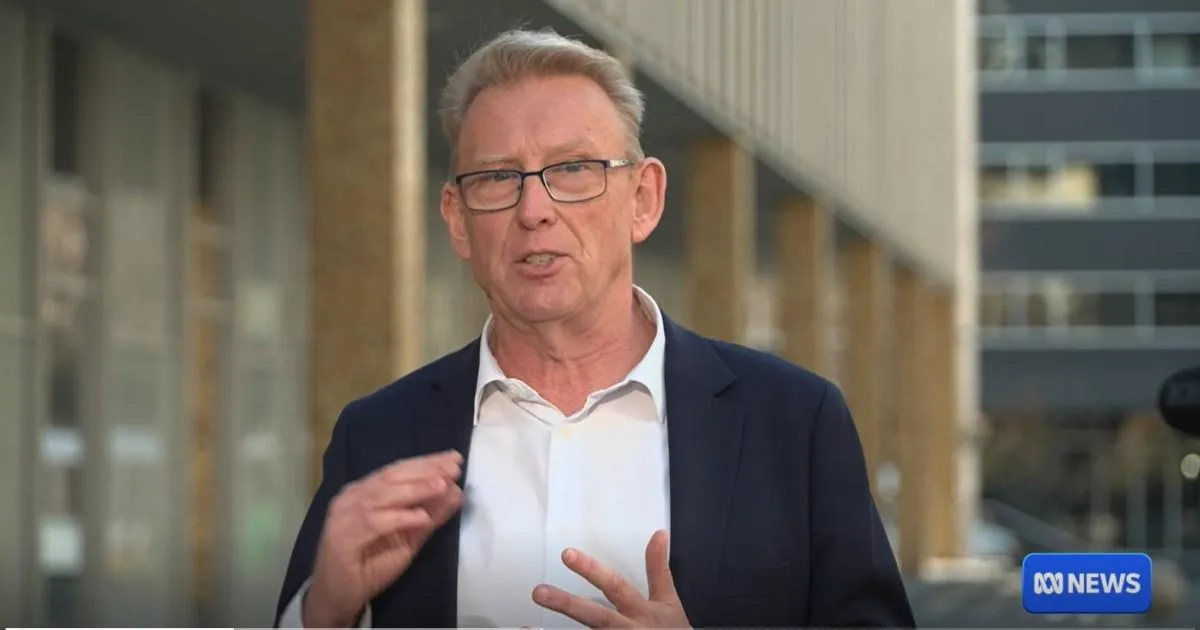
Initially, Parton took a combative stance, dismissing the allegations entirely as a calculated “smear” campaign designed to undermine his credibility. However, as the pressure mounted and the scrutiny intensified, he was forced to pivot. On Thursday, he held a press conference where he admitted to sending the text message but vehemently denied the most damaging part of the accusation: that the recipient was a sex worker. By confirming the content of the message while rejecting the context imposed upon it by his critics, he attempted to draw a line in the sand, refusing to divulge the identity of the recipient and insisting that such private communication was entirely outside the scope of public interest.
The situation offers a fascinating glimpse into the human side of governance, illustrating how even those elected to represent the people are susceptible to the same boredom and frustration as any other worker. In his defense, Parton argued that the high-stakes environment of parliament does not preclude the existence of private, informal communication. He framed his behavior as being reflective of his “larrikin” personality—an Australian term that captures a spirit of irreverent, good-natured mischief. For Parton, the text was merely an off-the-cuff venting session, a momentary lapse of professional decorum that he believes many others in his position have likely experienced but managed to keep hidden from the public eye.
Beyond the personal embarrassment, this incident touches on the modern challenge of digital privacy for public figures. Parton’s argument, while controversial, highlights a legitimate question: where does a politician’s private life end and their public role begin? He maintained that his frustration with the job did not hinder his ability to hold the government to account, suggesting that a lack of interest in a specific, tedious hearing does not equate to a lack of commitment to his constituency. It is a defense that resonates with anyone who has ever complained about a dull afternoon at the office, yet it remains a risky position for a high-ranking official expected to maintain an aura of unwavering focus and decorum at all times.
The fallout from the incident has been swift and, for Parton, ultimately favorable from an administrative standpoint. The official complaint lodged against him was dismissed, effectively closing the matter within the halls of government. Rather than retreating further into the background, Parton has taken an aggressive stance against the accusations, referring the matter to the police as a form of harassment. By shifting the narrative from his own conduct to the nature of the allegations made against him, he has attempted to reclaim his narrative and portray himself as the victim of a malicious political attack rather than the perpetrator of a scandalous breach of conduct.
Ultimately, the episode serves as a reminder of the fragility of professional reputations in the age of instantaneous digital leaks. While the specific details of the text were undoubtedly crude, the broader conversation has shifted toward the standards we hold for our representatives. Should we expect politicians to be robots of constant professionalism, or can we accept that they, too, occasionally need to blow off steam with a cynical text? As the dust settles on this controversy, Mark Parton’s ordeal remains a cautionary tale of how one impulsive moment can quickly escalate into a public crisis, forcing even the most seasoned politicians to reckon with the blur between their private feelings and their public lives.