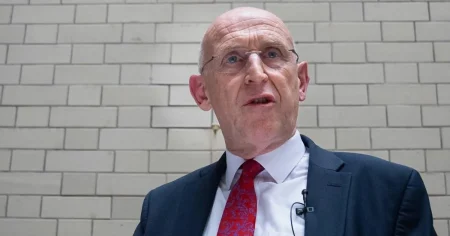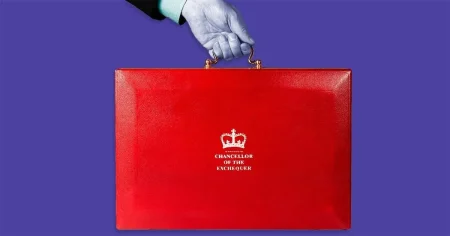
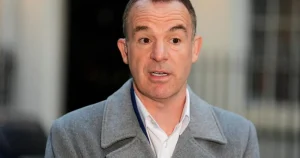

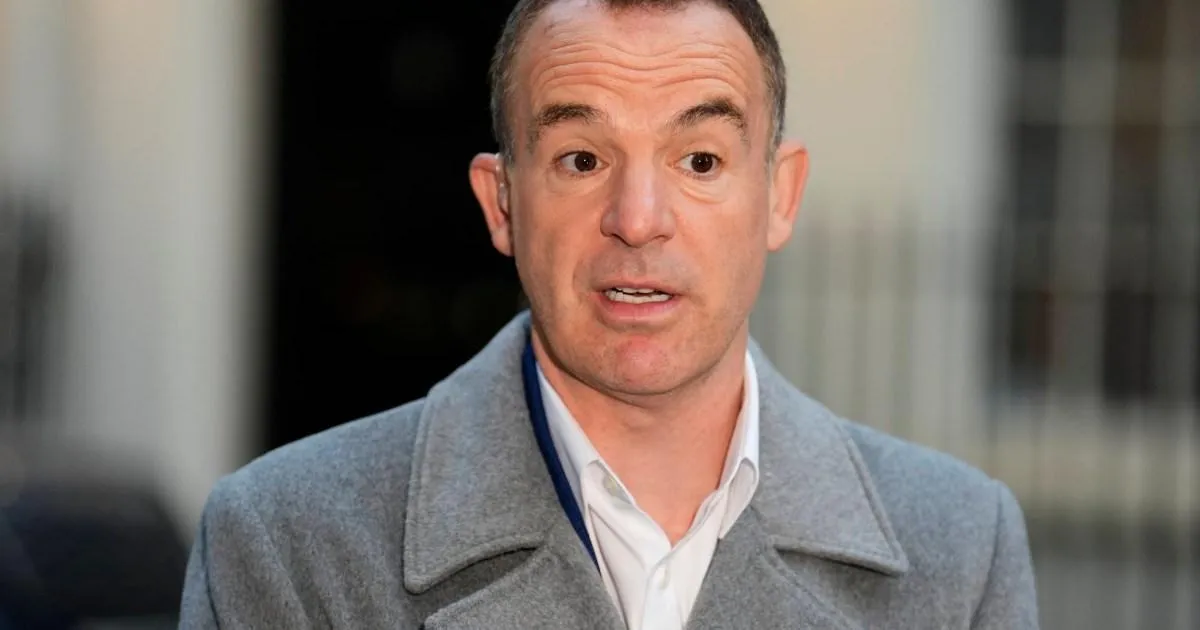
Outside 11 Downing Street this morning, Martin Lewis looked like a man who had just been handed a long-awaited gift. The Money Saving Expert, famous for turning the tangled knot of personal finance into something people can actually understand, had been to see Chancellor John Healey just hours before the Autumn Budget was due to land. And the news he came out with was enough to put a spring in anyone’s step: gas standing charges, the fixed daily fees that appear on energy bills regardless of whether you use a single unit of gas, are on their way out. For millions of people, those charges have felt like a quiet little tax that arrives every month, invisible but relentless. You can turn your heating off, wrap yourself in blankets, and still the bill arrives with that familiar fixed sum tacked on top. The Chancellor called the system “unfair and outdated,” and it is hard to argue with that. These costs are not linked to how much gas you use; they are simply there, covering the pipes, the maintenance, the admin, and various social and environmental schemes that are bolted onto the system. Even if you never turned on a gas fire, never boiled a kettle on a gas hob, and lived in a home with no gas supply at all, you would still have to pay your share if that charge was on your account. It makes no sense, and that is precisely why the Treasury has decided to shift the charges into the unit rate instead. This means that, from next year, or as soon as possible after, your energy bill will more closely reflect what you actually consume. It is a huge moment for consumer rights, and it did not happen by accident.
Martin Lewis, speaking to the Today programme after his meeting, was almost buzzing with vindication. He has been campaigning for this change for years, and he did not hold back in explaining why it mattered so much. He called the standing charge a “moral hazard,” which is a phrase that sounds technical but is actually deeply human. The problem is simple: if a significant chunk of your bill is fixed no matter what you do, then why bother trying to reduce your usage? Half my bill is standing charges and there is nothing I can do about it, people tell him all the time. And they are right. When you are paying for gas you do not use, the incentive to conserve disappears. It feels pointless to turn the thermostat down when the standing charge will still be there, watching you, waiting for your direct debit. Lewis described it as a “poll tax on energy,” and that image sticks. A poll tax is flat, unfair, and hits everyone the same regardless of their circumstances. It does not care if you are rich or poor, healthy or ill, careful or wasteful. It just demands its money. That is why the moral hazard is so corrosive: it discourages good behaviour and punishes people who are already trying to do the right thing. Imagine a pensioner who is terrified of high bills, sitting in a cold living room with a hot water bottle, refusing to put the heating on, only to find that the standing charge still eats into their income every week. That is not fairness. That is a system that has lost its way. Lewis, with his characteristic insistence on practical change, had asked the Chancellor about something else too: whether the same logic could be applied to electricity standing charges. Healey, he said, had told him he would be working on that over the next year. It was a read-between-the-lines answer, but for people who follow energy policy it felt like a promise, or at least the start of one.
The mechanics of this change are important, because there is no such thing as a free lunch, not even in politics. The standing charges are not disappearing into thin air; they are being moved into the unit rate, the amount you pay for every kilowatt-hour of gas you use. That means the overall pot of money that energy companies collect will not suddenly shrink. What changes is who pays what and how much. According to the Treasury, around 60 per cent of households with a gas account will save money, with the average saving coming in at about £45 a year. That is not a fortune, but for many families it is a couple of weeks’ worth of shopping, or a welcome buffer in a cold month. The savings will be concentrated among people who use less gas. If you live in a small flat, if you are out at work all day, if you prefer to cook with an electric hob and only use gas for the occasional shower, you are likely to see your bill go down. But for people who use a lot of gas, the picture is different. High users, those who live in large, draughty homes, or who have the heating on all day because they have young children or elderly relatives or a health condition that leaves them sensitive to cold, may see their bills rise further than they would otherwise have done. That is the brutal arithmetic of redistribution. The fixed costs still need to be paid, and if they are not collected through a flat charge, they have to be collected through the price of the gas itself. So this is not a tax cut, and it is not a magic solution to the cost-of-living crisis. It is a reshuffle, a shift in philosophy, a decision that the people who use more should pay more, and that people who use less should be rewarded for their restraint. For some, that is the very definition of fairness. For others, it is a cause for deep concern, especially when the same logic is applied without thinking about the reasons behind high usage.
The concerns were voiced quickly, and they came from a place that is hard to dismiss. Dame Clare Moriarty, the chief executive of Citizens Advice, was on the same radio programme this morning, and she sounded a note of caution. Yes, she said, quite a lot of people on low incomes are lower gas users, and they will benefit from this change. But she pointed out that not everyone who uses a lot of gas is wasteful. Disabled people, for example, may need to heat their homes all day because they are at home and unable to move around, or because they have medical conditions that require warmth. People living in poorly insulated homes, often the same people who cannot afford to improve their insulation, are losing heat all the time, and they have no choice but to turn the heating up to compensate. For them, this measure could actually end up making things worse, not better. It is the old problem of treating symptoms rather than causes. A tariff change is not a home insulation scheme. It cannot fix the fact that too many homes in this country are cold, damp, and expensive to heat. It cannot cushion the impact for a family living in a terrace house with holes in the walls and a landlord who will not fix the windows. What it can do is create winners and losers, and the losers are often the people who are already struggling the most. This is not an argument for keeping standing charges forever. It is an argument for looking at the whole picture, understanding why people use energy in the way they do, and making sure that the most vulnerable are not left out in the cold. The Chancellor and his team will need to hear that message, because the devil is always in the detail.
There is another, much darker cloud hanging over all of this. The end of gas standing charges is a structural reform, but it is not going to bring the materiality of people’s energy bills down. In fact, the timing could hardly be more worrying. Forecasters are predicting an increase of as much as 27 per cent in the average household energy bill when the next price cap comes into effect at the start of next year. The reason is the war in Iran, which continues to force up international gas prices, and that pressure feeds directly through to our bills. Martin Lewis was blunt about this: there is “going to have to be a support package put in place for January.” He said that when he met the Chancellor this morning, he got a “read-between-the-lines answer that yes, he will be doing it.” That is a relief, but it also shows how fragile this all is. One policy change, however welcome, cannot protect people from global shocks. The energy market is a beast, and it does not care about political promises or consumer campaigns. It is driven by supply, demand, war, speculation, and the weather. A change to standing charges is a bit like rearranging the deckchairs on a ship that is still sailing through a storm. It makes the deck more comfortable, and it gives people a fairer view, but the waves are still coming. And yet, there is something hopeful in the broader direction of travel. Last week at Prime Minister’s Questions, the Prime Minister, Andy Burnham, had already hinted that changes were on the way. He said he had asked the Chancellor and the Energy Secretary, Miatta Fahnbulleh, to look into removing gas standing charges. This morning, he went further, saying that abolishing them is “about basic fairness and giving people more control over their bills.” He spoke about being determined to reform “our broken energy market” so that it better serves the public interest. That is the kind of language that gives people hope, even if the road ahead is long.
The Budget, according to reports, is set to kick off a series of “deep reforms” to the UK’s energy system, all aimed at bringing costs down and reducing household bills. One of the most exciting ideas is to “decouple” gas from electricity prices. Right now, the price of gas often sets the price of electricity, even when that electricity was generated by renewables like wind or solar. That is bizarre. It means that when gas prices spike, the cost of your renewable electricity rises too, even though the wind cost nothing and the sun was free. It is a little like if you went to a restaurant, ordered a vegetarian meal, and the bill was based on the price of beef because the restaurant also served steak. Decoupling would change that, allowing cheaper.clean energy to actually lower bills. It would be a genuinely transformative reform, and it would speak to the same basic principle behind the end of gas standing charges: that people should pay for what they use, and that the structure of the market should not be allowed to punish them. But that is a project for the long term, and in the short term, the public is still going to be looking at their January bills with a sense of dread. Martin Lewis, as ever, will be there to explain it all, to tell people what they can do, and to hold the Government to account. The scrapping of gas standing charges is a real and important win, and it is worth celebrating. It was not a handout and it was not a gimmick; it was a correction, a recognition that a system designed for a different era needs to change. But the bigger fight, the fight for a fair and affordable energy system, is still being fought. And with a budget, a winter, and a global energy crisis all converging at once, the stakes have never been higher.