

The storm season announced itself with a ferocity that no one could ignore. Over the past days, the United Kingdom has been battered by two named storms — Austen and Boelo — sweeping in with torrential rain, howling winds, and a destructive energy that turned ordinary roads into hazard zones and familiar landscapes into scenes of chaos. The aftermath has been sobering. In north London, a 29-year-old man lost his life when a tree crushed his car; in Scotland, a 60-year-old man was killed on Sunday. Those are not just numbers on a weather report. They are fathers, sons, partners, colleagues — people whose ordinary days were interrupted by extraordinary weather, and whose families are now left to piece together the fragments of a life changed in an instant. And yet, true to the British climate, there is no time to linger in the aftermath. No sooner have the winds died down than a new meteorological challenge is settling over the country. This time it is quieter, softer, but no less disruptive in its own way: fog. The kind of grey, creeping, all-enveloping mist that muffles sound, blurs familiar streets, and makes the journey home feel like moving through a cloud. Drivers are being warned to brace for challenging conditions in the days ahead, especially on Thursday, when dense fog is expected to form overnight and linger through the morning rush hour. For millions of commuters across central and southern England, this means slower journeys, longer travel times, and a need to be more attentive than ever behind the wheel. There is something strangely poetic about the shift: from the dramatic violence of a storm to the silent, almost deceptive stillness of fog. But make no mistake — fog carries its own dangers. The weather is not done with us yet, and the best way to face it is with patience, preparation, and a healthy respect for what the heavens can do.
As the storms eased, many people in southern and central England were treated to a brief spell of mild weather and clear skies — a merciful pause that allowed communities to catch their breath, inspect the damage, and begin clearing up fallen branches and debris. But that calm is deceptive. Meteorologists at the Met Office are now keeping a close eye on a new feature in the forecast: a slow-building area of high pressure that is quieting the winds and bringing drier conditions, but also allowing the air to settle into something more still and damp. Under these conditions, mist and fog are beginning to creep in. Overnight and into Thursday morning, fog is expected to form across parts of east Wales, the West Midlands, Northamptonshire, and large stretches of East Anglia. For people living in these areas, the morning will likely start with a world wrapped in grey cotton wool — visibility reduced to milky whites and blurred shapes, streetlights glowing like soft lanterns in the gloom. In some places, fog could be dense enough to cut visibility down to just a few feet, making even the most familiar route feel uncertain. The Met Office warns that the fog may not burn off quickly. Some patches could linger well past the peak morning rush, possibly until lunchtime, which means school runs, work commutes, and delivery drivers will all have to contend with unusually difficult conditions. Temperatures will feel chillier than the thermometer might suggest, because grey, damp air tends to seep into the bones, and the absence of sunlight can make the day feel darker and colder than it actually is. For those heading out early, the advice is simple: wrap up warm, leave a little earlier, and do not take the clear morning for granted. What seems like a gentle mist at your doorstep can quickly become a dense wall of fog a few miles down the road, and the difference between these two realities can be the difference between a safe journey and a dangerous one.
Looking further ahead, the forecast is a mixed bag — a reminder that early autumn in Britain is rarely tidy. The high pressure that is currently suppressing the storm energy will bring a largely drier and quieter end to the week for many, particularly away from the north and west, where rain remains possible. Steven Keates, the Met Office’s deputy chief forecaster, explained that the high pressure will ease the winds and settle things down, although he cautioned that northern and western parts of the British Isles could still see some rain. On Friday and Saturday, there is a chance of showers in those areas, while much of the rest of the UK should remain dry. But the calm is not guaranteed to last. Forecasters are also highlighting a risk of night-time fog in parts of eastern and southern England, and that fog could return again early next week, re-establishing the same hazards that drivers will likely face on Thursday. There is something about fog that feels more intimate than rain or wind. It does not shout; it whispers. It does not batter; it conceals. It turns the landscape into a series of half-remembered shapes and muffled sounds, and it asks us to slow down and pay attention. For commuters, that can be both a nuisance and a safety concern. For those who drive for a living — truckers, delivery drivers, taxi drivers, bus drivers — it can mean hours of concentration and stress behind the wheel. And for pedestrians and cyclists, it can hide dangers that would normally be obvious, from potholes to approaching vehicles. The forecast is a reminder that, even as the storm season seems to pause, the weather always has another mood. The key is to be flexible, to adjust expectations, and to listen to the warnings issued by those who study the atmosphere for a living. They are not trying to alarm us; they are trying to protect us. And a few minutes of extra caution in the morning is a small price to pay for arriving safely at the destination.
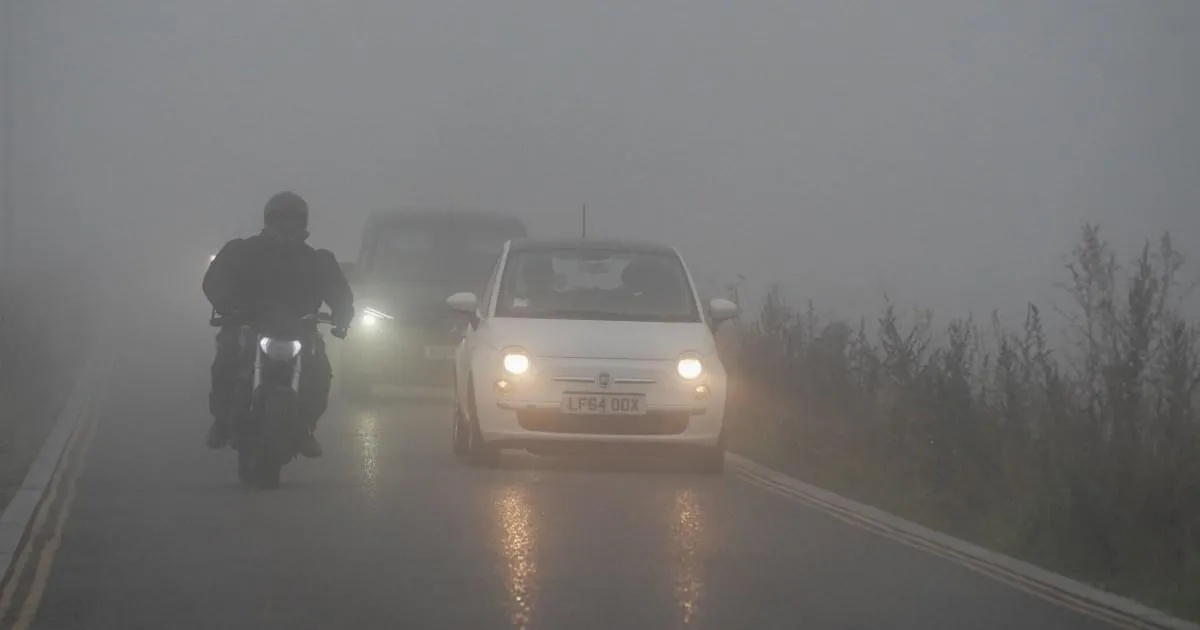
For drivers, thick fog is one of the most treacherous conditions the British climate can serve up. Unlike heavy rain, which gives you time to react, or snow, which forces you to slow down almost instinctively, fog is silent and subtle. It reduces visibility gradually, often without the driver noticing until suddenly the road ahead seems to dissolve into a white void. It distorts distances, making distant brake lights seem further away than they are, and hides hazards until the very last moment. Fog is particularly common from October to March, which means we are now entering the season when it is most likely to strike. In especially dense fog, visibility can drop to just a few feet — barely enough to see beyond the bonnet of the car. That is a terrifying prospect on a motorway or a fast A-road, and it demands a very different approach to driving. The AA, a motoring organisation, has published a list of practical tips designed to help drivers navigate low visibility safely, and they are worth remembering even if you think you have driven in fog a hundred times before. First, use dipped headlights, wipers and demisters as a matter of course. The demister is not just for your windscreen; it keeps your mirrors and side windows clear, which is essential when you are relying on every possible clue to understand what is around you. You should also turn on your fog lights when you need them, but remember to switch them off again when visibility improves — leaving them on can dazzle other drivers and actually make the roads more dangerous. Be wary of other drivers who forget to switch on their own headlights; they may be driving around in a grey world without fully realising how invisible they are. Adjust your speed to the conditions, even if it means going slower than you would like. Slow down so that you have more time to stop, and increase the gap between you and the vehicle ahead from the usual two-second rule to a more generous three seconds. This is not just a piece of technical advice; it is a lifesaver. In fog, the distance you need to stop is not about your skill or your brakes — it is about how quickly you can perceive, react, and avoid the unexpected. At junctions with poor visibility, the AA suggests opening your window and listening for traffic before moving off. It sounds old-fashioned, but sound can reach you before sight, and that extra split second of warning could be exactly what you need. Dense fog can make driving feel like a video game set on the hardest difficulty, but with the right preparation and mindset, it is possible to get through it safely.
Yet beyond the practical advice, there is a deeper human story to all of this. The last few days have reminded us, in the starkest possible terms, that the weather is not just a topic for small talk — it affects life and death. The deaths of the two men in the storms are tragedies that resonate far beyond the headlines. They are reminders that a fallen tree can turn an ordinary street into a place of sorrow, and that strong winds can turn a coastal path into a place of no return. We often talk about weather warnings in terms of travel disruption and power cuts, but behind those warnings are emergency services, search teams, doctors, and neighbours who go out in dangerous conditions to help others. They are the ones who clear the roads, mend the roofs, and respond to calls in the middle of the night. And we, as ordinary citizens, have a role too. We can check on elderly neighbours who may feel trapped indoors by cold and fog. We can avoid making unnecessary journeys during the worst conditions, leaving the roads clearer for those who truly need to travel. We can be more patient with the people around us — the driver who is creeping along at ten miles an hour because they cannot see, the cyclist who wobbles slightly as they cross a misty junction, the parent walking a child to school in the grey dawn. The human side of weather is not just about what we do to protect ourselves. It is about the small, quiet acts of kindness that make communities stronger when the world turns against us. A little patience goes a long way in fog. A little understanding can make all the difference to someone who is anxious or frightened behind the wheel. And a willingness to watch out for one another is, in the end, the most important preparation of all.
As the week unfolds, then, the weather offers us a strange gift: a moment of quiet after the noise, a chance to slow down and pay attention. The fog that is sinking over parts of the UK may be inconvenient, but it is also a reminder that nature is not something we control. We can only respond to it with humility, wisdom, and care. For those braving the roads on Thursday morning, the message is simple: take your time. Leave a little earlier. Check your lights, clear your windows, and give yourself the space to react to whatever appears out of the murk. For the rest of us, it is an opportunity to appreciate the softer side of the changing seasons — the mystery of a foggy morning, the hush that settles over the streets, the stunning sight of trees disappearing into a pearlescent sky. And if the fog returns next week, we will know what to do. We will be ready, not because the weather is predictable, but because we have learned to be patient. The storms brought destruction, but they also brought communities together, put emergency workers to the fore, and renewed our sense of how fragile our routines can be. Let us carry that understanding into the fog, and into every day the weather throws at us. Wrap up warm, look out for one another, and remember: this too shall lift. The sun may be hidden today, but it is still there, and the forecast suggests a drier, quieter end to the week for many of us. Until then, drive carefully, stay safe, and do not let the greyness steal your peace. The roads are waiting, and so is the day ahead — even if we cannot see all of it from here.