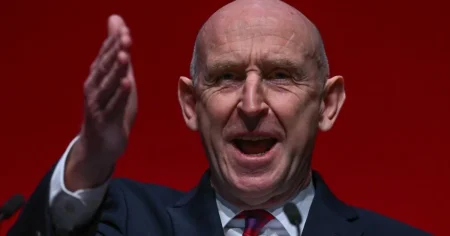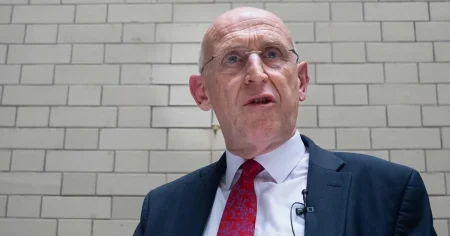


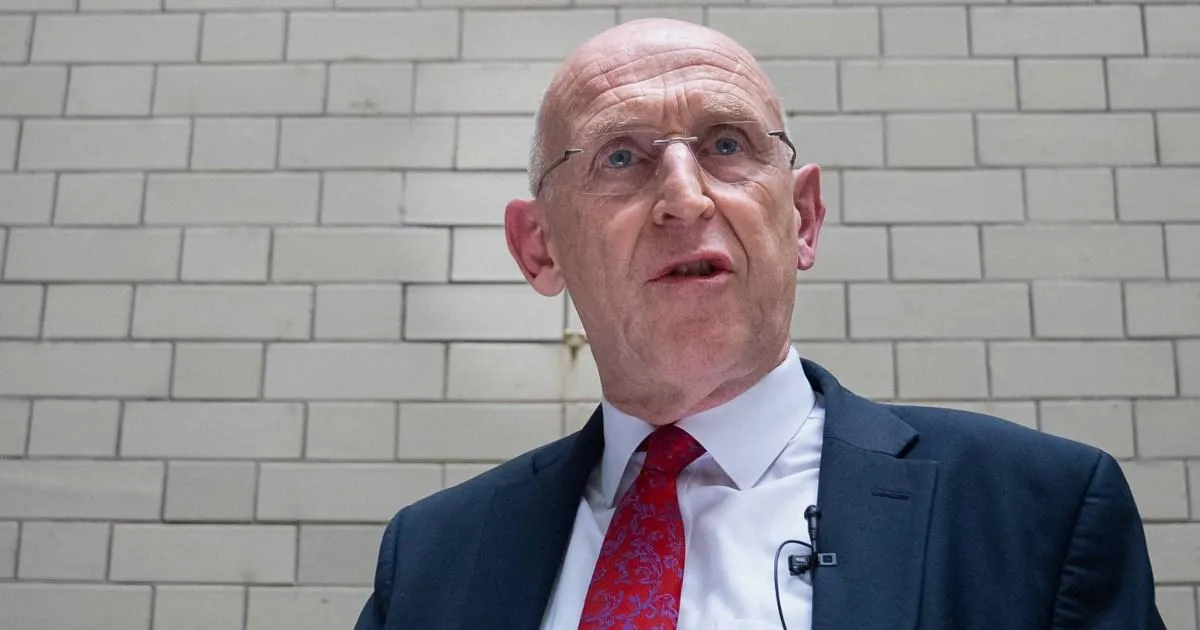
Today Chancellor John Healey will stand at the despatch box and deliver the Autumn Budget, the first of Prime Minister Andy Burnham’s Labour government. These set-piece political events can feel distant from everyday life, but the contents will quickly filter down into your bank balance, your rent, your supermarket receipt, your pension and your heating bills. Healey has spent the past month making sure nobody expects a cheerful giveaway. He has warned that the UK faces a “tough Budget”, and pointed to the ongoing conflict in Iran as a factor with a “strong influence” on tax and spending decisions. At the same time, he has tried to reassure voters that he and Burnham are “in lockstep in our determination to meet the fiscal rules” — the government’s self-imposed limits on borrowing. In other words, expect pain, but also expectation management. The challenge for Healey is to convince a public that is already worrying about prices that the plan is fair. He will announce the details from 12.30pm, with the famous red box making its traditional appearance, and the words will be picked apart for hours afterwards. But for now, there is a real sense that this is a defining moment for the new government. It is not just about spreadsheets and Treasury forecasts; it is about whether Labour can convince people that it can manage the economy without making life worse for those who are already struggling. Every choice made in this Budget tells a story about who the government trusts and who it expects to carry the burden.
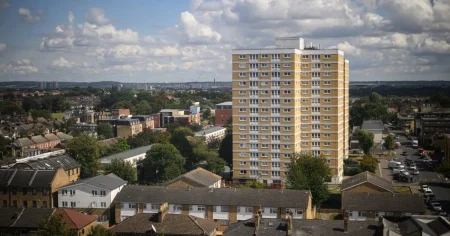
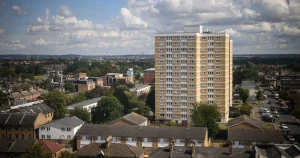
Housing is where the human impact may be most visible. Recent reports suggest Healey will commit more than £1 billion to social and affordable housing in England, which is a serious signal of intent for a government that has promised to build its way out of the housing crisis. The money is designed to be spent where it is needed most, but there is also a plan to hand greater powers and funding to mayors and regional leaders, giving them more control over house-building in their areas. That is an important shift, because it moves decisions closer to local people rather than keeping them in Whitehall. For anyone who has spent years trying to find a home they can afford, the phrase “social and affordable housing” can feel abstract, but in practice it means more roofs over people’s heads, more stability for families and a little less pressure on rents and mortgages. It also creates jobs, apprenticeships and a sense of place. The construction sector has been battered by inflation, labour shortages and uncertainty in recent years, so a steady pipeline of investment is essential. Alongside this, Healey is expected to announce support for small breweries. That may sound niche, especially compared with billions in housing and defence, but breweries are part of the fabric of many communities, as well as a tax issue for small businesses. They employ local people, draw people into pubs and town centres, and contribute far more than the beer they sell. In a budget full of big national numbers, support for local employers is one of the quieter but real announcements.
Defence is set to be one of the biggest themes, and the mood is distinctly uneasy. Healey is thought to be planning billions in extra spending for the military, a move that has been foreshadowed by Defence Secretary Wes Streeting’s stark warning that the UK must be ready for war within 1,000 days. That kind of timeframe gets people’s attention because it is close enough to feel real. It has also been accompanied by a new government campaign urging Brits to be ready for emergencies and disasters, from extreme weather to disruption of supply chains. The combination of more defence spending and a public preparedness drive is a signal that the world feels more volatile. For ordinary households, this means two things. First, defence spending is about national security, but it is also about jobs: shipbuilding, cyber operations, engineering, advanced manufacturing and thousands of skilled roles across the UK. These are not abstract figures on a Whitehall spreadsheet. They are careers and communities. Second, the push for emergency readiness is a reminder that resilience begins at home. The government is essentially saying: we will invest in big systems, but you should also have a torch, a first-aid kit and a plan. That may feel over-dramatic on an ordinary autumn day, but after overseas conflicts, cyber threats and climate disasters, it is not being presented as a scare story. It is being framed as common sense. The challenge for ministers is to prepare the country without panicking people, and to spend heavily on defence without neglecting the other crises at home. That balancing act will define the Budget.
Then there are the bread-and-butter questions, especially for pensioners. One of the most talked-about issues ahead of the Budget is whether the state pension will finally cross the personal allowance threshold and become taxable for the first time in history. Under the triple lock, the state pension rises by the highest of wages, inflation or 2.5%, and last year’s increase took it to just below the £12,570 income tax threshold. This year, the maths almost guarantees it will exceed that threshold. To stop the resulting controversy, Healey is predicted to increase the tax-free allowance for pensioners on low incomes to £13,036, matching the expected new state pension level. That would spare the vast majority of pensioners from a tax bill and avoid one of the most politically explosive choices available. Meanwhile, the British Retail Consortium has published a poll that captures the wider mood: 83% of Brits are worried about rising supermarket prices, and 82% are worried about inflation. The concern is not hypothetical. The BRC’s latest Shop Price Monitor shows shop price inflation at 2.1% for October, the highest since February 2024, with food prices 2.9% higher than a year ago. That is why Healey has already announced “everyday fixes” that cut tariffs on staples like baked beans, gherkins and chocolate. It will not revolutionise your weekly shop, but it is a recognition that the cost of living is still the number one issue in British politics. For people in their seventies and eighties, the difference between a manageable winter and a worrying one can come down to a few pounds a week.
Energy is the other big household pressure point, and Healey is expected to announce “deep reforms” to the UK’s energy system intended to bring down bills. The most interesting idea is to “decouple” gas prices from electricity prices. At the moment, the price of electricity is effectively set by the price of gas, even when a lot of the power is coming from renewables. That means an international gas price spike hits everyone’s electricity bill, even though the wind and sun are free. Decoupling would allow clean energy to be cheaper for consumers, which sounds technical but is actually about the money you see on your direct debit. There is also discussion about removing standing charges from gas bills. Burnham has reportedly instructed Healey and Energy Secretary Miatta Fahnbulleh to “look at” this, so it could be in the Budget. Standing charges are the fixed daily fees you pay for being connected to the grid, and they have been controversial because you pay them even if you use no energy at all. Removing them would not change everyone’s bill equally, but it would make the system fairer, especially for households that use less than average. For many families, energy bills are still a source of quiet dread, so reforms that ease that monthly pressure could have a bigger effect on wellbeing than a headline tax cut. The shift away from fossil fuels and towards renewables is not just an environmental story; it is a household finances story. The quicker Britain can make clean energy cheap, the quicker household bills can become more stable.
Finally, if you want to follow the action, the Budget is being announced at 12.30pm and will be broadcast live on BBC Two, BBC iPlayer, ITV, Sky News and Parliamentlive.tv. Metro will also be covering every announcement as it happens, and politics reporter Craig Munro’s newsletter, “Alright, Gov?”, promises to translate the jargon into plain English, with a particular focus on what the Budget means for your wallet. Subscribing is a good way to avoid drowning in the initial storm of statistics and instead get the information that actually matters. There will be countless headlines, rows and rebuttals this afternoon, but it is worth remembering that a Budget is not just a political performance. It is a statement of priorities. Whether it is housing, defence, pensions, food prices or energy bills, the choices made today will be felt in homes across the country in the months and years to come. The details may be complicated, but the underlying question is simple: is the country being run in a way that makes life better for ordinary people? That is the question the government will be judged on, and it is the one we should all be asking as the Chancellor sits down. The numbers may be read out quickly, but their consequences will stay with us long after the red box has been closed.