
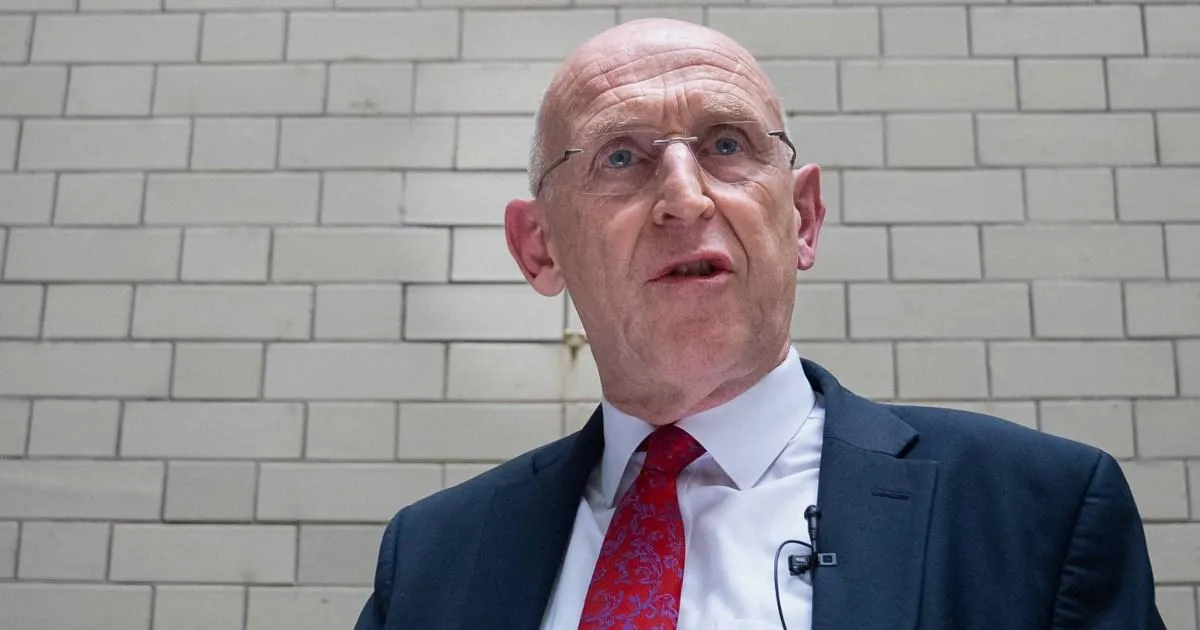
Today is one of those political mornings when the jargon gets stripped away and the choices suddenly feel personal. John Healey will carry the battered red box to the Commons and present the Autumn Budget, the first of Andy Burnham’s Labour premiership. The familiar photo opportunity outside Downing Street hides the nervous energy inside. Last month, the Chancellor warned the country to prepare for a “tough Budget,” and he didn’t soften the message: the ongoing war in Iran, he said, will have a “strong influence” on the decisions being taken. That is a heavy cloud for any finance minister to work under. Yet Healey also insisted he and the Prime Minister were “in lockstep in our determination to meet the fiscal rules.” For ordinary people, that means the Government is trying to balance the books while the world throws expensive surprises at it. The red box is a symbol, but what’s inside will determine whether families feel safer, whether renters can dream of owning a home, and whether pensioners can heat their houses this winter. There is always a gap between the political performance at the despatch box and the real-life consequences that follow. Today, that gap may feel especially narrow. Whatever the Treasury calls it, this is a Budget about priorities. The Labour leadership knows it won votes on a promise of change, and now it has to show that change in spreadsheets and policy papers. Healey’s early warnings suggest he would rather lower expectations and over-deliver than cheerlead and miss. But in a turbulent economic climate, “tough” can be code for “painful.” The pressure is on to convince voters that the pain is necessary and shared fairly. And with the conflict in Iran casting uncertainty over global energy prices, supply chains and defence spending, the Chancellor has less room to manoeuvre than he might have hoped. We’ll know soon enough whether the measures add up to something coherent. The speech begins at 12.30pm, but the consequences will play out for years.
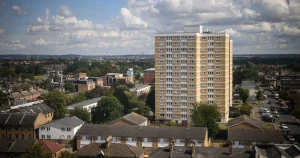
Housing is where the Budget could feel most concrete. Reports suggest more than £1 billion will be committed to social and affordable housing in England. For a country where housing has become the great fault-line between generations, that is not pocket change. It is also a signal that the Government understands the crisis cannot be solved by market forces alone. Alongside the money, mayors and regional leaders are expected to receive greater powers and more freedom to invest in house-building. This is a subtle but important shift. Instead of every decision being made in Westminster and filtered down through Whitehall, local leaders who know their own communities will get a chance to shape the cranes on their skylines. For anyone who has watched social housing waiting lists grow and young people long ago give up on buying a first home, this is the sort of announcement that feels less like politics and more like a lifeline. But the devil, of course, is in the detail. £1 billion sounds enormous until you divide it by the number of people who need a stable place to live. The Government will be hoping the extra powers for metro mayors unlock more than just central funding – that they change the incentives that have made house-building so slow and so bitterly contested. This Budget is unlikely to fix the housing crisis in one afternoon. It can, however, point the country in a different direction. And after years of underinvestment, even a change in direction can feel like momentum. For renters, for young families, for pensioners trying to downsize, and for workers who move to cities for jobs they can’t afford, housing is not just an economic indicator. It’s the foundation of everything. The fact that Healey is making it a headline part of his first Budget suggests the new Labour government has heard those stories. The real test will be whether the money reaches the ground, and whether the houses actually get built.
The Budget is not all big-ticket infrastructure and fiscal philosophy. Sometimes it is about smaller things that make ordinary life feel more civilised. Healey is expected to announce support for small breweries, for instance. That might seem like a niche concern next to global conflict and the cost of living, but independent brewers have been hammered by rising energy costs, the legacy of the pandemic, and now the pressure of doing business in an uncertain economy. A little help for them is a nod to the high-street businesses that give towns their identity. It is also the kind of announcement that shows a government paying attention to what happens outside Westminster. Then there is defence. Healey is thought to be planning billions in extra spending, and that line has taken on a darker edge after Wes Streeting’s warning that the UK must be ready for war in 1,000 days. That phrase – 1,000 days – is not long. It is roughly the length of a parliamentary backbench career, or a child’s time at primary school. For a Government to say that out loud is to admit that the peace we have taken for granted is no longer certain. Combined with a new campaign urging Brits to be ready for emergencies and disasters, the message is clear: the state is trying to prepare citizens for turbulence, while also investing in the equipment and people who would keep us safe. These two threads – the homely and the existential – may seem strange in a single Budget. But that is what a mature government has to balance. The pub and the barracks, the brewery and the battleship. The challenge for Healey is to find a narrative that joins them up, so voters don’t feel like these are just disconnected reactions to crises. The defence investment is not only about readiness; it is about jobs in the defence industry, about cutting-edge technology, about alliances. The support for breweries is not just nostalgia; it is about local economies, employment, and the role of a good local in keeping communities together. In a Budget that has to be tough, these smaller touches may be the ones that stop people feeling alienated from politics. They certainly won’t solve every problem. But they suggest that while the Chancellor is keeping his eyes on the storm, he hasn’t forgotten who is going through it.
Few things in the Budget will matter as much to older Britons as the future of the state pension. After last year’s increase, the full state pension landed just below the personal allowance threshold of £12,570. The triple lock – which guarantees the pension rises by the highest of inflation, average earnings or 2.5% – almost guarantees it will creep past that threshold this year. And once that happens, the pension becomes taxable for the first time in history. It is one of those quiet, technical disasters that suddenly becomes a moral scandal. The optics of a government taxing pensioners’ basic state pension are dreadful. Healey is predicted to announce an increase in the tax-free allowance for pensioners on low incomes to £13,036, which is roughly the expected level of the new state pension. If that happens, millions of pensioners will not have to fill out tax returns or watch their weekly income diminish. But the fact that such a fix is even needed shows how close the system has come to a breaking point. For pensioners, this isn’t just a technicality. It’s the difference between a comfortable week and a worrying one, between being able to put the heating on without calculating the cost and sitting in the cold. The state pension is not a luxury; it is a promise made by the state to people who worked their whole lives. If the Budget forced them to hand a slice of it back to the taxman, the political fallout would be enormous. That is why the reported solution is being greeted with relief, not just by older people but by anyone who believes in fair treatment. Still, there are questions. Will the allowance increase be permanent? Will it be means-tested? What happens next year, when the pension rises again and the threshold is again left behind? These are the kinds of details that get lost in the theatre of the Budget speech, but they are exactly the details that determine whether people feel the Government is on their side. Today, pensioners will be listening for their own name in Healey’s speech. Behind the headlines and the red box, that is the human reality of fiscal policy.
Another major theme is expected to be energy, in particular a series of “deep reforms” designed to bring down household bills. The most ambitious idea on the table is to “decouple” gas from electricity prices. That means moving away from a system where the price of gas sets the price of electricity, even when much of that electricity comes from wind or nuclear. It is a wonky concept with a very practical effect: your bills should reflect how the energy is actually generated, not the volatile price of fossil fuels that are tied to conflicts like the war in Iran. In a time of high global energy prices, such a change could be huge. The Chancellor is also reported to be looking at removing standing charges from gas bills, something Prime Minister Andy Burnham and Energy Secretary Miatta Fahnbulleh have been pushing. Standing charges are those fixed daily fees that can make your bill punishingly large even if you barely use any energy. For people trying to economise, they are a constant source of frustration. If the Government removes or reduces them, low users – including many pensioners – would be the biggest winners. Reforming energy pricing is not as glamorous as building houses or boosting defence, but it affects every single household in Britain. It is also one of the most tangible ways a government can fight the cost-of-living crisis while pursuing net-zero goals. If electricity prices stop being held hostage by gas, then renewable energy becomes not just greener but cheaper – and that is a message voters can feel in their finances. The difficulty is that energy markets are complex, and change can take years. Consumers want to see relief soon, not after another round of consultation and legislation. Healey knows this. That is why the Budget is expected to contain immediate measures as well as long-term reforms. Whether that means a different tariff structure, new subsidies, or a direct intervention in price-setting remains to be seen. But the direction is clear: the government wants to make energy not just more sustainable, but more affordable. In a world where wars in other regions can send your electricity bill soaring, that is not just economic policy. It is a form of national security.
Taken together, this Budget is an attempt to grapple with an impossible set of demands. It must be tough enough to reassure the markets, fair enough to reassure voters, modern enough to confront the climate crisis, and robust enough to face a more dangerous world. Healey and Burnham have said they are in lockstep, and voters will judge them by whether their actions match their words. Today’s announcements – on housing, pensions, energy, defence and the little things like breweries – are pieces of a bigger puzzle. No single measure will be enough. The test is whether they form a coherent story about the kind of country Britain wants to be. For everyone watching from the kitchen or the bus, the Budget is an odd mix of distant theatre and intimate consequences. You might not follow every fiscal rule or understand every formula, but you know what it means when the price of a pint goes up, when your landlord raises the rent, when your pension is taxed or your energy bill arrives. That is the real measure of a Budget. The numbers have to add up, yes. But they also have to add up to a life people can afford to live. Today’s speech will be followed by hours of analysis, reaction, and debate. The live coverage will try to translate the Treasury’s dense documentation into plain English. But no one should mistake the noise for the substance. The substance is in the details that emerge in the small print: how much of the housing money actually gets spent this year, whether the pension allowance is truly protected, whether the energy reforms become law before another winter, whether defence spending reaches the front lines quickly enough. Politics may be about power, but budgets are about justice. They are where a government reveals which promises it intends to keep and which it is quietly abandoning. The best Budgets are not instantly forgotten. They become the moment when people remember the state did something useful. The worst are those that never touch the things that actually matter. As Healey stands at the despatch box, he will have a chance to define not just the year ahead, but the character of the Burnham government. The red box has been carried, the speech is written, and now reality begins. For the rest of us, the question is simple: will this Budget make our lives better, or merely keep them from getting worse? We are about to find out.