



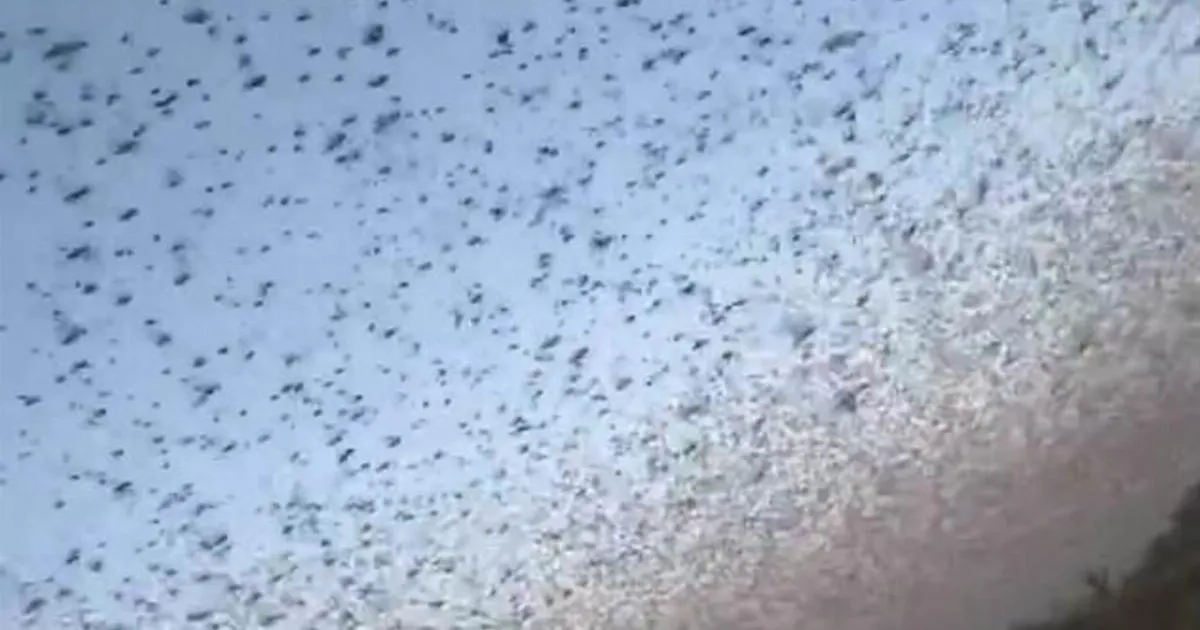
The quiet serenity of a Sunday in the Kizlyar district of Dagestan was shattered in an instant, transforming a typical afternoon into a scene straight out of a disaster film. Residents looked up in horror as the sky, once bright and clear, was suddenly choked by a massive, pulsing cloud of millions of locusts. The sheer scale of the swarm was enough to block out the sun, casting an eerie, apocalyptic shadow over the countryside. Terrified locals were forced to scramble for cover, diving into their cars to escape the swirling, winged wall of insects that descended upon the region, leaving many to wonder if this was the beginning of an uncontrollable environmental catastrophe.
Capturing the collective anxiety of the community, one local resident recorded the scene, his voice thick with disbelief and rising panic. “Where are they heading? What on earth is this?” he asked, his camera shaking as he tracked the massive cloud. The dread was palpable, particularly as people realized the sheer volume of the insects threatened not just their peace of mind, but their livelihood. With the swarm moving ominously toward nearby towns in the North Caucasus, the sentiment among the onlookers was visceral and raw: a frantic realization that if these creatures descended upon their homes and farms, they could effectively strip the land bare, leaving nothing in their wake.
While the sight of millions of insects blotting out the sky feels like a personal attack, the reality is more focused on survival. Despite the frantic calls of “they’re going to eat us alive,” locusts are not directly aggressive toward humans; they don’t bite or swarm in a way that targets people. However, the terror is rooted in a very real economic and existential threat. To a farmer, a swarm of locusts is a living, breathing natural disaster. These insects are world-class agricultural pests capable of consuming tens of thousands of hectares of vegetation in a single, devastating sweep. As they migrate, they turn vibrant, productive fields into barren wastelands, threatening the food security of entire regions.
The authorities in Dagestan have been working around the clock to manage the crisis, but the battle is far from straightforward. The Ministry of Agriculture and Food has noted that the situation is significantly complicated by local environmental regulations. Because many of these swarms originate in protected nature reserves, where the use of chemical pesticides is strictly prohibited by law, the authorities are often forced to wait. It is a frustrating game of cat and mouse; the government can only deploy their specialized equipment and containment teams once the pests migrate into areas where chemical intervention is legally permissible. This regulatory dance creates a dangerous lag time, allowing the locusts to wreak havoc before they can be effectively targeted.
This struggle is not unique to Dagestan; it is part of a much larger, recurring regional crisis. Across the Caucasus and Central Asia, these migratory swarms are a constant, looming threat that can cover as much as 93 miles in a single day. The scope of the problem is massive, with the United Nations Food and Agriculture Organisation estimating that up to 20 million people and 25 million hectares of farmland are currently at risk. In response, regional neighbors—including Kazakhstan and Uzbekistan—have begun to modernize their defense strategies. They are increasingly turning to technology, deploying unmanned aerial systems and advanced drones to track and neutralize these swarms before they reach critical crop-growing zones.
Ultimately, the events in Dagestan serve as a stark reminder of the fragile balance between human society and the natural world. Whether they are the Italian, Moroccan, or Asian Migratory species, these pests represent a persistent challenge that demands international cooperation and technological innovation. While the terrifying image of a darkened sky will linger in the memories of those who lived through that Sunday, it has also sparked a renewed commitment to safeguarding the region’s food supply. As these countries continue to refine their pest control tactics, the goal remains clear: to protect the land, support the farmers, and ensure that the next arrival of a swarm is met with a shield of science rather than just the hope that the locusts pass them by.