


Pattaya, Thailand’s most infamous seaside resort, is holding its breath this week. The city, long known for its neon-lit nightlife and crowded beaches, is preparing to welcome thousands of sailors from the USS Abraham Lincoln, a nuclear-powered aircraft carrier that has spent months at the center of global tensions. The ship’s arrival is a moment of enormous anticipation, but it is also one of deep contradiction. For the American sailors on board, this is not just a port call; it is a long-awaited reprieve after more than 250 days at sea, a record-breaking deployment that has stretched the limits of human endurance. For the people of Pattaya, the visit represents something equally profound: a chance to revive a local economy battered by years of pandemic losses, while also confronting the city’s complicated reputation. There is joy, there is nervousness, and there is a quiet, human story unfolding on both sides as the mighty vessel prepares to dock.
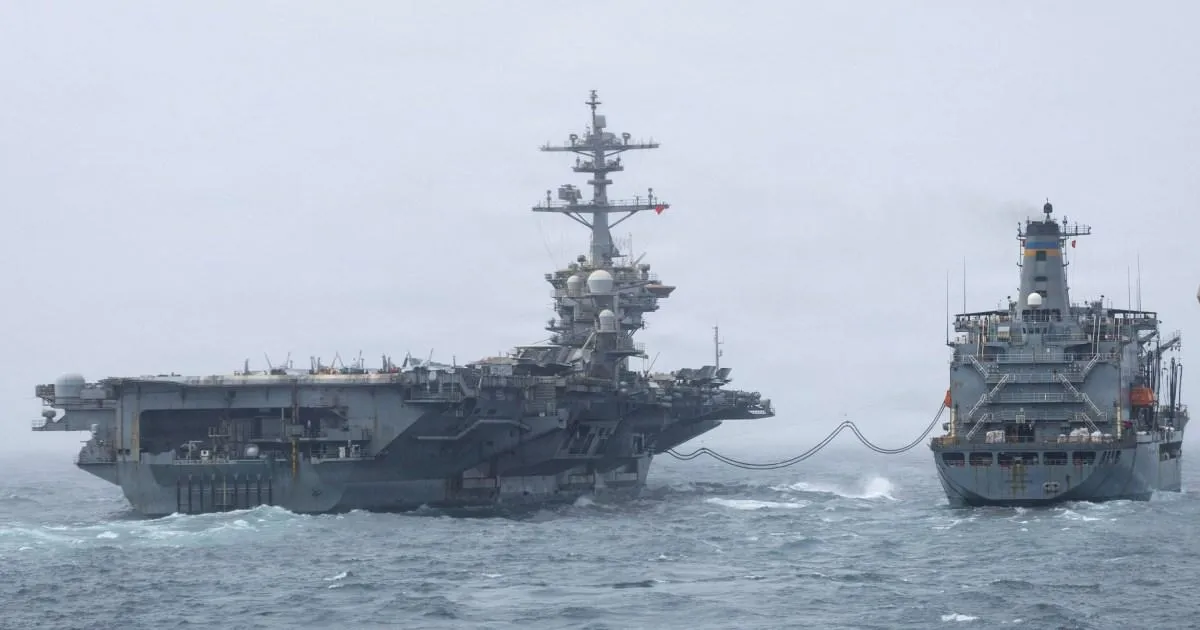
The USS Abraham Lincoln has been at the heart of some of the most intense military posturing in recent memory. Deployed to the Middle East in response to escalating tensions between the United States and Iran, the carrier and its crew have spent months operating in and around the Strait of Hormuz, one of the world’s most volatile waterways. The deployment was meant to show strength, but it has also exposed the very human costs of prolonged military operations. While the world focused on geopolitics, the sailors on board were living a more mundane and often difficult reality. Photographs allegedly taken by crew members began circulating online, showing what appeared to be meager, unappetizing meals served to the crew. The images sparked a wave of sympathy and scrutiny, with many questioning whether the military was taking proper care of its people. More troubling were reports that a number of sailors had attempted to throw themselves overboard, driven by exhaustion, isolation, and deteriorating mental health. Family members spoke to journalists, describing frantic calls with their loved ones and even recounting instances where spouses intervened to stop a fellow sailor from jumping into the sea. The Pentagon and Defense Secretary Pete Hegseth dismissed these claims as “more fake news,” but the stories resonated with a public increasingly aware of the invisible wounds carried by service members. A Navy official later acknowledged that extended deployments place significant strain on service members and their families, offering a rare admission of the emotional weight that accompanies such missions.
Now, as the ship finally sails toward Pattaya, the city is bracing itself for what comes next. On one hand, there is a palpable sense of excitement and economic hope. Local businesses, from hotels and restaurants to bars and street vendors, have been preparing for weeks. Banners welcoming the American military personnel have appeared along the streets, and the air is filled with the kind of optimism that only a large influx of foreign visitors can bring. On the other hand, the city is also tightening its rules. Thai authorities are keenly aware that Pattaya has a reputation, and they have promised to uphold the law. Police have conducted raids and increased patrols around the famous beach and the bustling nightlife districts, resulting in as many as fifty arrests for suspected prostitution. The message is clear: the city wants the sailors to enjoy themselves, but it will not tolerate actions that violate Thai law. This delicate balance between hospitality and enforcement captures the essence of Pattaya in its current moment—a place trying to move beyond its past while still clinging to the economic lifeblood that its entertainment industry provides.
At the center of this balancing act is Pattaya’s mayor, Poramet Ngampichet, who has been working closely with American officials to ensure the visit goes smoothly. He announced that, in coordination with the U.S. military, certain recreational activities would be off-limits, including parasailing and the use of cannabis. This is significant because Thailand took the historic step of legalizing medical marijuana four years ago, and dispensaries have since become common across the country. However, recreational use remains illegal, and the authorities are determined not to let the sailors’ arrival turn into a free-for-all. The mayor expressed his hopes for the future, saying, “For Pattaya to be seen as an important vacation spot is something that we have aimed for. We welcome more visits of the troops in the future, whether for a drill or a vacation, before they go back to the U.S.” His words reflect a broader ambition within Pattaya to rebrand itself as a nature and family destination, even as many old associations linger. Yet beneath the official statements lies a more complicated reality. The city’s economy depends heavily on tourism, and much of that tourism has historically been fueled by nightlife and adult entertainment. Sex work is illegal in Thailand, including open solicitation, but it exists in the shadows and has long been a draw for visitors. The police raids and arrests are a reminder that, at least during this high-profile visit, authorities are eager to present a more respectable face to the world.
But perhaps the most overlooked aspect of this story is the emotional state of the sailors themselves. Spending over 250 days at sea without setting foot on land or seeing family members is an extraordinary challenge. For many, the deployment has meant missed birthdays, anniversaries, and perhaps even the birth of a child. It has meant endless days of routine, separated by moments of intense fear and adrenaline. It has meant waking up every morning in the same cramped quarters, surrounded by the same faces, staring at the same endless horizon. The journey to Pattaya is not just a logistical stop; it is a lifeline. For the sailors, the chance to walk on solid ground, to feel the sun on their skin without the hum of the ship beneath them, to taste food that does not come from a military galley, and to interact with people who are not part of their daily routine—this is a small taste of freedom for which they have been longing. It is easy to reduce these men and women to symbols of military might or to figures in a geopolitical story, but they are individuals, many of them young, far from home, and carrying burdens that are not visible in photographs. They may have volunteered for military service, but they did not necessarily sign up for this kind of prolonged separation or the mental toll that comes with it.
As the USS Abraham Lincoln prepares to dock in Pattaya, the scene is set for a convergence of worlds. There are those who see the sailors as valued guests, bringing money and good cheer. There are those who see them as a potential problem, needing strict oversight and clear boundaries. And there are those, perhaps, who simply see them as tired, anxious people in need of a little compassion. The contrast between the glitz of the city and the grit of the ship is stark. Pattaya is a place of indulgence, where pleasure is sold and consumed in countless forms. The aircraft carrier is a place of discipline, where every moment is structured and purpose-driven. When the sailors pour into the streets of Pattaya, they will carry with them not just their wallets and their appetites, but also months of accumulated stress, loneliness, and longing. How they choose to release that pressure—and how the city responds—will define this moment. The local police chief has warned that any military personnel who break Thai law will be prosecuted, and that is a necessary reminder. But one hopes that the interaction will be more than a test of enforcement. Perhaps, in the crowded bars and quiet temple courtyards, there will be moments of genuine connection, where sailors and locals see each other not as stereotypes but as human beings, each with their own stories, struggles, and hopes.
In the end, the arrival of the USS Abraham Lincoln in Pattaya is a story about the intersection of power and humanity. The ship is a weapon of war, a symbol of American military reach, but the people on board are not machines. They are sons and daughters, parents and partners, who have spent the better part of a year in a floating steel city, waiting for this moment. Pattaya, for all its complicated reputation, offers them a kind of refuge—a place to remember what normal life feels like. For the city, the visit is an opportunity to show that it is more than its stereotypes, that it can be a warm and welcoming destination with something to offer beyond the old clichés. The economic impact is important, and the legal precautions are necessary, but the human element is what truly matters. If the sailors leave Pattaya with a sense of relief and renewed energy, and if the locals feel they have welcomed them with dignity and grace, then this will be a successful visit by the only measure that really counts. As the carrier looms on the horizon, there is no way to know exactly how the next few days will unfold. There will likely be laughter and celebration, perhaps some mistakes and regrets, and maybe a few quiet moments of kindness. That is the nature of human beings coming together. For now, the city waits, the sailors wait, and somewhere in between, the simple, messy, beautiful business of being human is about to take center stage on the beaches of Pattaya.