


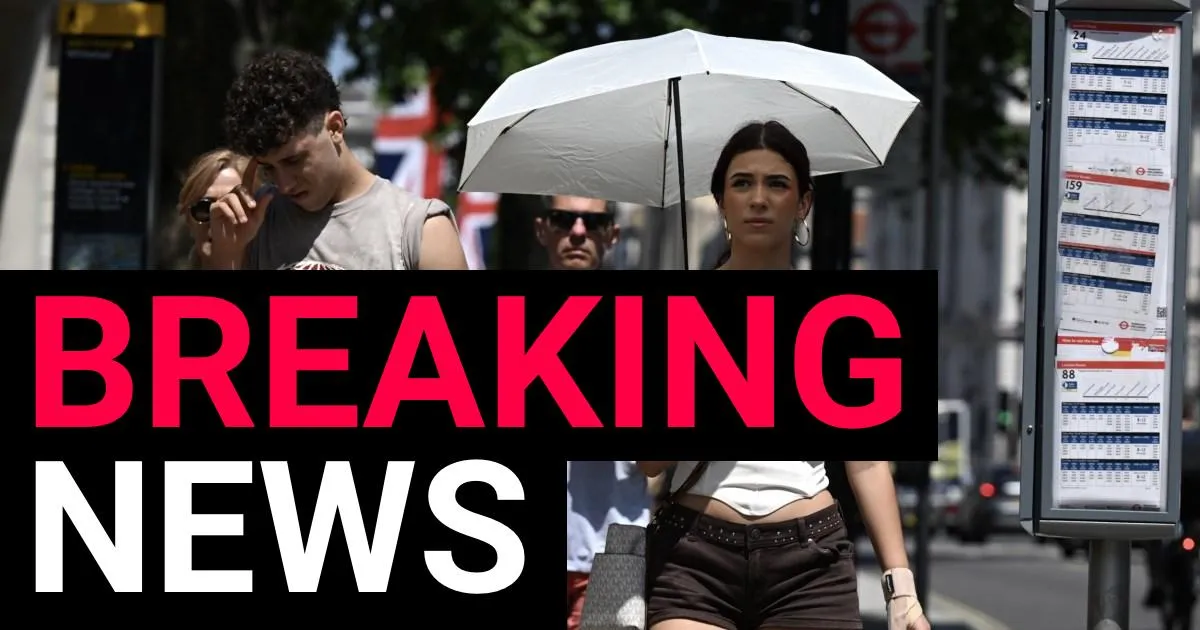
The recent heatwave sweeping through London turned a routine commute into a harrowing ordeal yesterday when a Great Northern train ground to a halt near a tunnel, trapping passengers in sweltering, airless carriages for nearly two hours. As temperatures climbed to some of the highest levels of the year, the train—which lacked functional air conditioning—quickly became a suffocating metal box. Among those caught in the chaos was 70-year-old Anne Cutting, who was simply trying to make her way to her cleaning job in Islington. For her and her fellow commuters, what should have been a standard journey transformed into a high-stakes emergency as the oxygen seemed to thin and the temperature inside the carriage spiked to dangerous levels.
The human cost of this breakdown was starkly visible through the experience of those onboard. Anne, who suffers from COPD, found herself fighting for every breath in the stifling heat, a terrifying prospect for someone with respiratory issues. Her husband, Gary, recounted the growing sense of panic that rippled through the carriage as the delay dragged on. The tipping point arrived when a fellow passenger, overwhelmed by the mounting claustrophobia and physical distress, suffered a panic attack and took the drastic measure of forcing the carriage doors open. This act of desperation not only highlighted the passengers’ loss of faith in the system but also the sheer physiological desperation that had set in after minutes stretched into an agonizing two hours.
From the outside, Gary Cutting watched in mounting frustration as he received fragmented and often conflicting information from the rail operator. To him, the response from Great Northern felt dismissive and poorly managed, failing to account for the vulnerability of people like his wife under such extreme, unforgiving conditions. He expressed a deep-seated resentment toward the lack of a proper contingency plan, noting that no effort was made to provide water or basic physical relief to the people trapped in the dark tunnel. For Anne, the recovery is now more than just physical; she has been left deeply shaken by the incident, with her once-routine confidence in the public transport network shattered by the trauma of being stranded and unable to breathe.
Defending their actions, a spokesperson for Great Northern issued a formal apology, acknowledging that the conditions faced by passengers were “difficult and very uncomfortable.” The company explained that the breakdown occurred at a complex intersection where the train shifts its power source from the third rail of the Northern City Line to overhead wires, a mechanical failure that proved difficult to rectify on-site. The official stance was that the company’s primary objective remained the safety of the commuters, which meant prioritizing attempts to restart the train or bring in a rescue locomotive, as they consider the interior of a train to be the safest environment during a breakdown, even if that environment was rapidly heating up.
However, the disconnect between that official protocol and the reality on the ground remains a significant point of contention. While the company insists that evacuating passengers along the tracks is a last resort due to the inherent dangers of the railway environment, the delay of over an hour and 45 minutes led to a scenario where passengers had effectively reached their breaking point before they were finally led on foot to Drayton Park station. This highlights a recurring issue in modern transport: how rigid safety protocols often clash with the immediate, visceral needs of people in crisis. When the “safest place” becomes an incubator for heat exhaustion and panic attacks, the lines of responsibility become painfully blurred.
Ultimately, this incident serves as a sobering reminder of the fragility of our infrastructure when faced with extreme weather. As climate patterns shift and record-breaking heat becomes more common, the lack of climate control on aging rail fleets is no longer just a comfort issue—it is a significant public health risk. Anne Cutting’s experience is a call to action for transport operators to re-evaluate how they prioritize passenger welfare during emergencies. Whether through better communication, immediate distribution of water, or more flexible evacuation triggers when temperatures rise, passengers deserve to be treated with more urgency than mere commuters on a schedule. Until such changes are implemented, many, like Anne, will find themselves looking at the train platform with a new, lingering sense of fear.