
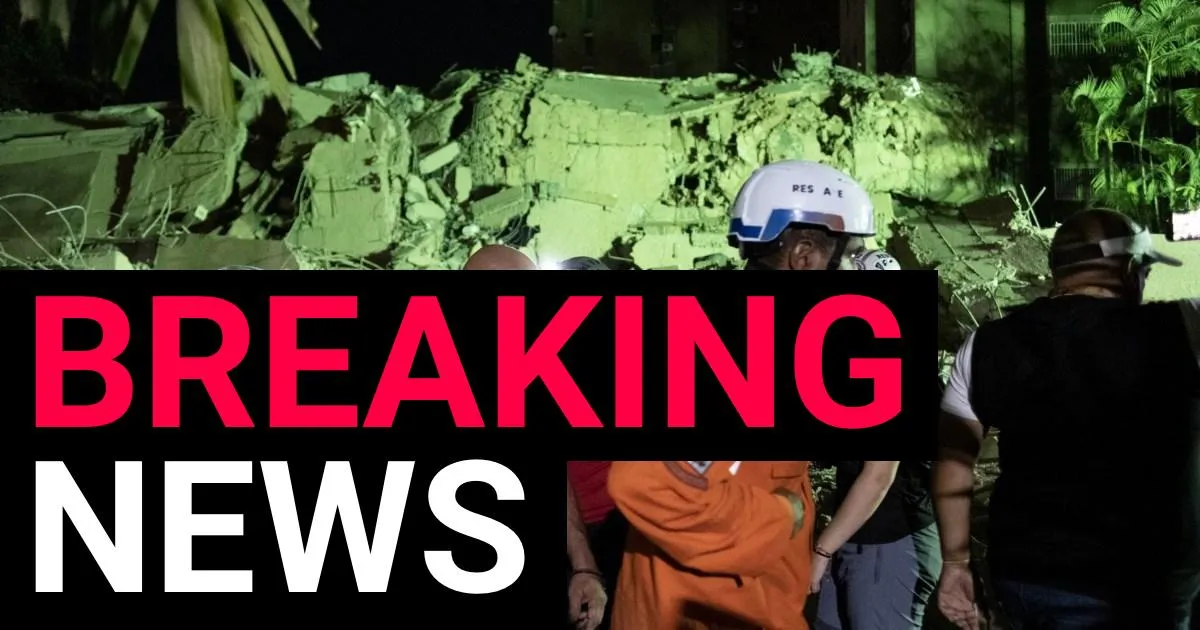
The world watched in collective shock as news broke of a catastrophic double earthquake that struck Venezuela, turning a quiet night into a landscape of desperation. While the region is accustomed to seismic activity due to its position between shifting tectonic plates, the sudden, back-to-back strikes—registering a staggering 7.2 magnitude—caught the nation completely off guard. As reports began to filter out, the scale of the destruction became apparent; buildings that had stood for generations were reduced to rubble in the blink of an eye, and the terrified cries of those trapped beneath the debris began to echo across the disaster-stricken zones.
The epicenter of the seismic activity was traced to the city of San Felipe, but the reach of the disaster extended far beyond, sending violent tremors through the capital of Caracas and surrounding areas. For the millions living in these regions, the experience was harrowing. The earth did not simply tremble; it buckled, causing widespread structural failure across residential districts and critical infrastructure. Now, more than 20 aftershocks continue to rattle the nerves of a population already reeling from the initial trauma, turning every passing hour into an agonizing test of endurance for those waiting for rescue or word from their loved ones.
In the wake of this tragedy, international attention has turned toward the escalating humanitarian crisis. Early projections from the United States Geological Survey have painted a grim picture, suggesting that the death toll could climb into the thousands. The physical damage is coupled with a crippled logistical network; the country’s primary international airport has been forced to shutter operations due to “significant damage,” which complicates the critical mission of bringing in emergency medical relief and international aid teams. The isolation created by these infrastructure failures only adds to the sense of urgency facing responders on the ground.
Political leaders across the globe have begun to acknowledge the magnitude of the situation, with Donald Trump among the first to break the silence on the international stage. In a message shared on Truth Social, he expressed his condolences, labeling the event a tragedy of massive scale. Highlighting an offer of assistance, he pledged that the United States stands “ready, willing, and able to help,” framing the response as an effort to support a people in their hour of greatest need. This outreach marks a significant moment in the disaster’s timeline, as the world waits to see how internal and external forces will coordinate to navigate the rubble and rescue survivors.
For the citizens of Venezuela, the current reality is one of profound uncertainty and grief. Families remain huddled in open spaces, fearful of returning to the skeletons of their homes while the ground continues to shift beneath their feet. The collapse of major thoroughfares and communication lines has turned the disaster zone into a fractured map of isolated communities fighting to survive. As the search and rescue missions intensify, the focus remains squarely on the survivors—those who have lost everything in an instance and are now relying on the kindness of neighbors and the promise of international intervention to begin the long, arduous process of recovery.
Ultimately, this disaster serves as a stark reminder of the fragile balance between humanity and the volatile power of the natural world. As we look toward the coming days, the reports will likely only get grimmer as the full extent of the architectural and human costs is tallied. Yet, amidst the dust and the broken concrete, the human spirit is fighting to hold its ground. Whether through the help of neighboring nations or the resilience of the local community, the focus is now on recovery. The world stands in wait, hoping that the promised help arrives in time to pull the survivors from the wreckage and offer some semblance of hope to a country grappling with the weight of this massive, life-altering catastrophe.