

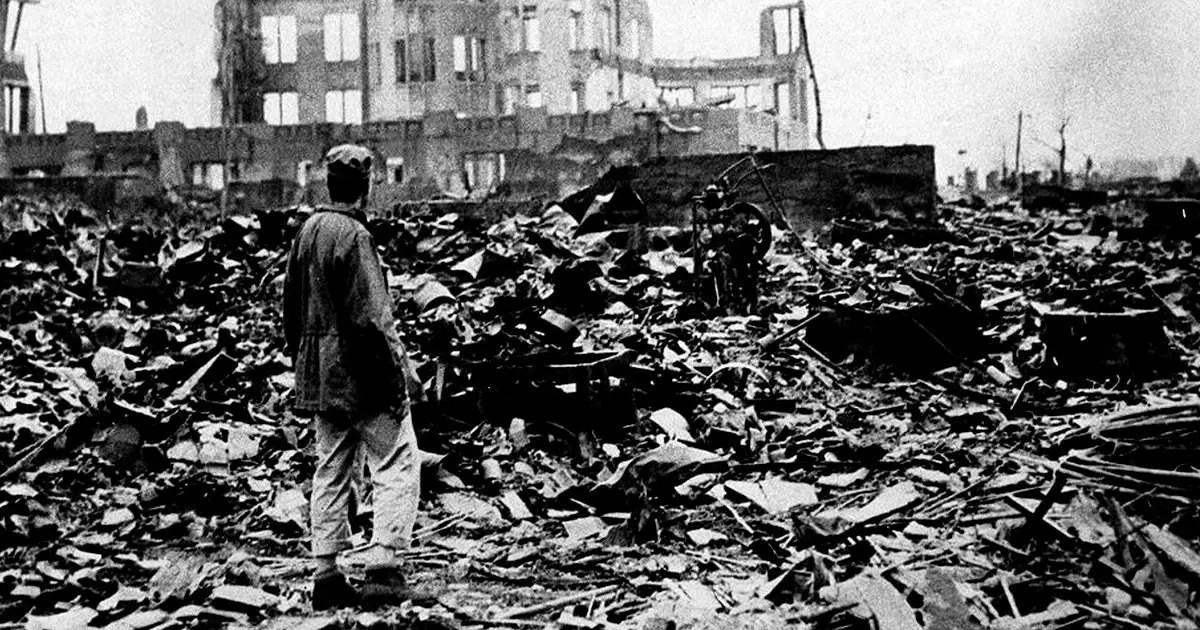
The story of Hiroshima is often reduced to cold statistics: 70,000 incinerated in a singular heartbeat, with the death toll swelling to 150,000 by year’s end as radiation and trauma claimed those who survived the initial blast. Yet, behind these staggering numbers lie individual lives, fragments of stories that were almost lost to the erosion of time. One such account, a 230-page memoir penned in 1947 by Reverend Kiyoshi Tanimoto, has recently resurfaced from the depths of Yale’s Beinecke Rare Book and Manuscript Library. Tucked away among the archives of journalist John Hersey—who built a lasting friendship with the clergyman while documenting the aftermath—this document serves as a visceral, haunting bridge to a past that humanity cannot afford to forget.
Kiyoshi Tanimoto was spared the immediate devastation by the simple providence of being out of town on that fateful day in August 1945. However, upon hearing the news, he did not flee; he turned toward the horror. His memoir captures the sensory overload of a world ending: the dark, oppressive clouds swallowing the horizon, the sudden, inexplicable outbreaks of fire across the city, and the chilling appearance of “black rain,” thick drops as large as blackberries falling from a contaminated sky. These pages provide a rare, intimate look at a man racing down the Koi highway, paralyzed by the gnawing terror of not knowing whether his home and his church had been erased from existence.
Writing the memoir was an agonizing necessity for Tanimoto, a task his daughter, Koko Tanimoto Kondo, noted was incredibly difficult for him to face. He spent his life grappling with the memories of the suffering he witnessed—a city transformed into a graveyard and the physical toll dealt to the innocent. His church became a makeshift sanctuary where he sheltered twenty-five young women, their bodies ravaged by the bomb’s cruelty. He felt a profound burden to translate that trauma into a written legacy, driven by the singular, desperate hope that by bearing witness, he could ensure such a catastrophe would never be visited upon another soul.
This rediscovery arrives at a poignant moment, as the number of living survivors—the hibakusha—dwindles to fewer than 100,000. As time claims those who remember the blast firsthand, the importance of their testimony grows. Advocates like Florian Eblenkamp of the International Campaign to Abolish Nuclear Weapons (ICAN) argue that these voices are our most vital defense against repeating the past. The legacy of the bomb is not just a historical event to be studied; it is a living warning. To honor those who perished, and those who survived, we are tasked with the moral imperative of ensuring that nuclear weapons are never treated as mere political pawns or abstract deterrents in a geopolitical game.
Among the most harrowing pieces of data to surface from the wreckage is the reality that 38,000 of those killed were children. When we speak of nuclear warfare as an “abstract” idea, we often strip the concept of its true cost: the end of childhoods, the breaking of families, and the permanent scarring of the collective human conscience. Tanimoto’s reflections remind us that there is nothing abstract about a mother scrambling to find her children or a city being fundamentally dismantled in an instant. The weapons, in their raw and terrifying capability, represent a gamble with the very survival of the human race that we continue to take at our own peril.
Ultimately, the memoir of Kiyoshi Tanimoto acts as a mirror, forcing us to confront the fragility of our world. He passed away in 1986, but his voice remains a clear, unwavering call for peace. As we stand decades removed from the firestorms of Hiroshima, the temptation to view the event as ancient history is persistent. Yet, by reading the words of those who walked through the smoke and the black rain, we are reminded that the threat remains a reality that persists in the modern age. We must listen to survivors not out of duty, but out of necessity, recognizing that the only way to genuinely honor the dead is to ensure that the instruments of such total destruction are finally silenced forever.