
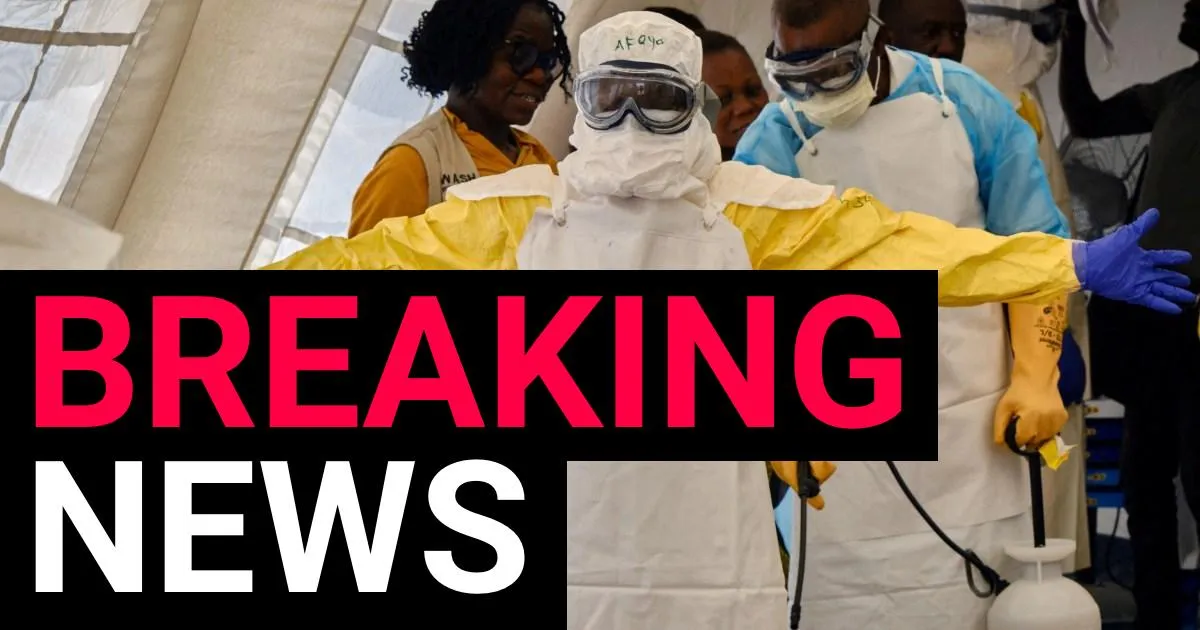
The recent news that a doctor returning to France from a humanitarian mission in the Democratic Republic of the Congo (DRC) has tested positive for Ebola serves as a sobering reminder of the global interconnectedness of health crises. While French authorities have acted swiftly to isolate the patient and conduct rigorous contact tracing, the incident highlights the perilous conditions currently plaguing the DRC. For a month, the country has been grappling with its largest and most volatile Ebola outbreak, a situation that is increasingly difficult to contain due to the convergence of disease, civil unrest, and a critical lack of basic infrastructure. Thankfully, officials emphasize that the general risk to Europe remains low, but the situation for those on the ground in the heart of the outbreak is dire.
The statistics emerging from the DRC paint a harrowing picture: nearly 800 people have been infected, and more than 260 have lost their lives. However, experts from organizations like Oxfam warn that these figures are likely significant underestimations. The traditional methods used to fight the virus—namely effective contact tracing and sterile medical environments—are currently buckling under pressure. In the northeastern province of Ituri, for example, the scarcity of clean water is a national tragedy. In many towns, only a small fraction of the population has access to functioning hygiene facilities or fresh water, making the simple act of washing hands—the most fundamental step in preventing the spread of a virus—a luxury that most do not have.
What makes this particular chapter of the epidemic so alarming is the specific strain of the virus involved: Bundibugyo. Unlike other variants, this rare strain of Ebola lacks an established vaccine or a standard clinical treatment plan, leaving doctors with very few tools to combat the infection. The U.S. Centers for Disease Control and Prevention has confirmed that this is the largest outbreak of the Bundibugyo strain ever documented. With no pharmaceutical shield to rely on, the burden falls entirely on containment strategy. When that strategy is hampered by regional conflict or inadequate resources, the virus is granted a terrifying level of freedom to move through vulnerable populations.
The human element of this tragedy is compounded by the ongoing violence that has displaced millions of Congolese citizens. The conflict has not only uprooted families but has also shattered the medical landscape, with an estimated 70 health facilities being destroyed. In some regions, the ratio of doctors to residents is hauntingly low—roughly 0.2 doctors for every 1,000 people. This shortage is exacerbated by the fact that many patients in volatile areas like North Kivu are only being identified as having contracted Ebola after they have already passed away. Without the ability to catch these cases early, the virus continues to circulate undetected among family members and neighbors who have no idea they have been exposed.
Contact tracing, which is essentially the “first line of defense” against any epidemic, is currently operating at less than 50% efficiency in the affected regions. In a world where we rely on swift medical intervention, these numbers reveal the reality of a system pushed to its breaking point. The health workers on the ground, many of whom risk their own lives, are fighting an uphill battle against geography, civil instability, and a lack of basic utility infrastructure. Without the ability to sanitize health centers, isolate the sick, and track every person who has interacted with an infected individual, the cycle of transmission continues to outpace the efforts of those trying to break it.
Ultimately, this outbreak is a profound human rights issue as much as it is a medical one. While the story of a doctor returning to France draws headlines for its proximity to Western readers, the true story is found in the villages of the DRC, where thousands are living under the constant threat of a silent predator. As we look at these reports, it is important to remember that behind every data point—every infection and every death—is a person struggling in a environment where basic survival is interrupted by conflict. Containing Ebola here requires more than just medicine; it requires a commitment to restoring the infrastructure and stability that allow people to protect their own health and the health of their communities.